Bockhorn Jessica, Prat Aleix, Chang Ya-Fang, Liu Xia, Huang Simo, Shang Meng, Nwachukwu Chika, Gomez-Vega Maria J, Harrell J Chuck, Olopade Olufunmilayo I, Perou Charles M, Liu Huiping
The Ben May Department for Cancer Research, The University of Chicago, Chicago, Illinois. Stanford Cancer Institute, Stanford University, Stanford, California.
Translational Genomics Group, Vall d'Hebron Institute of Oncology (VHIO), Barcelona, Spain. Department of Medical Oncology, Hospital Clínic, Universitat de Barcelona, Barcelona, Spain.
Cancer Res. 2014 Dec 15;74(24):7406-17. doi: 10.1158/0008-5472.CAN-14-1188. Epub 2014 Oct 22.
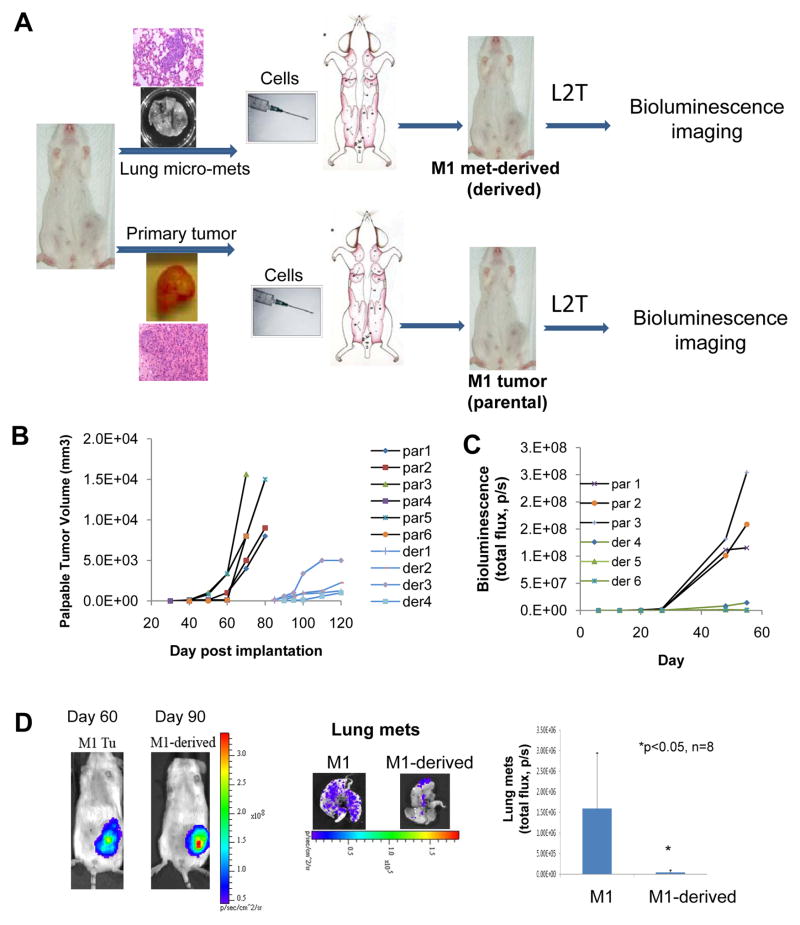
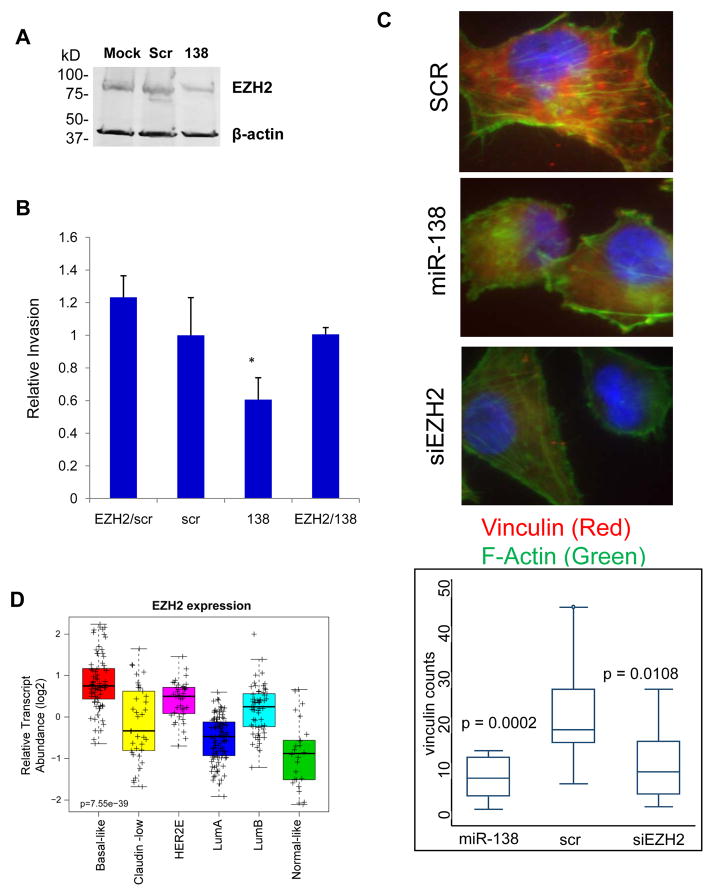
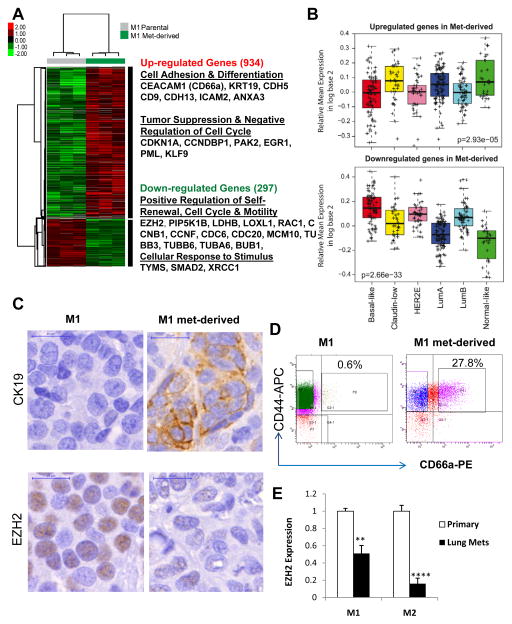
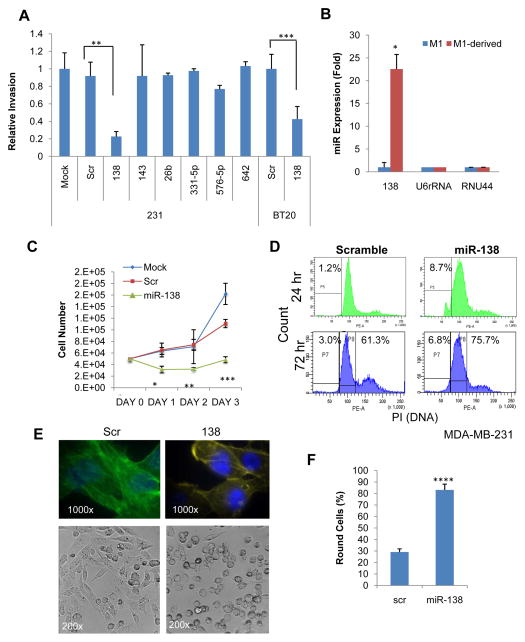
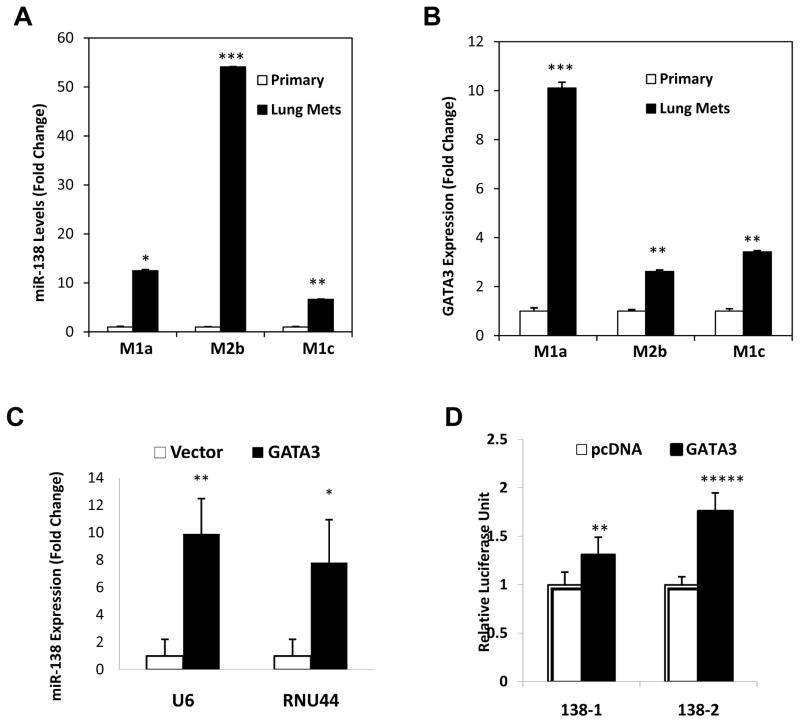
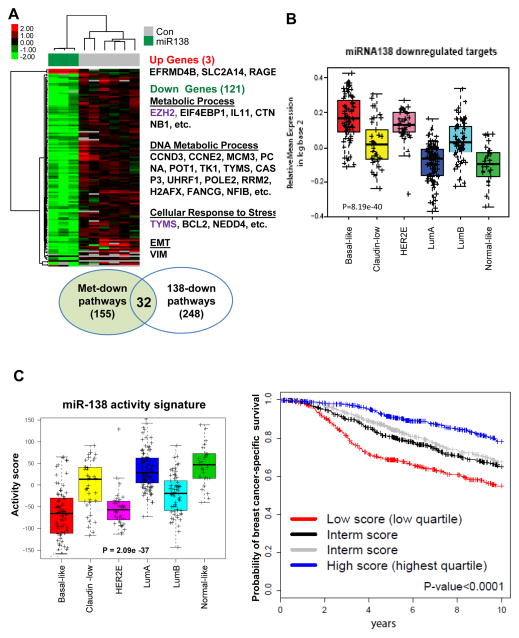
Patient-derived human-in-mouse xenograft models of breast cancer (PDX models) that exhibit spontaneous lung metastases offer a potentially powerful model of cancer metastasis. In this study, we evaluated the malignant character of lung micrometastases that emerge in such models after orthotopic implantation of human breast tumor cells into the mouse mammary fat pad. Interestingly, relative to the parental primary breast tumors, the lung metastasis (met)-derived mammary tumors exhibited a slower growth rate and a reduced metastatic potential with a more differentiated epithelial status. Epigenetic correlates were determined by gene array analyses. Lung met-derived tumors displayed differential expression of negative regulators of cell proliferation and metabolism and positive regulators of mammary epithelial differentiation. Clinically, this signature correlated with breast tumor subtypes. We identified hsa-miR-138 (miR-138) as a novel regulator of invasion and epithelial-mesenchymal transition in breast cancer cells, acting by directly targeting the polycomb epigenetic regulator EZH2. Mechanistic investigations showed that GATA3 transcriptionally controlled miR-138 levels in lung metastases. Notably, the miR-138 activity signature served as a novel independent prognostic marker for patient survival beyond traditional pathologic variables, intrinsic subtypes, or a proliferation gene signature. Our results highlight the loss of malignant character in some lung micrometastatic lesions and the epigenetic regulation of this phenotype.
表现出自发性肺转移的患者来源的乳腺癌人源化小鼠异种移植模型(PDX模型)提供了一种潜在的强大癌症转移模型。在本研究中,我们评估了将人乳腺肿瘤细胞原位植入小鼠乳腺脂肪垫后,在此类模型中出现的肺微转移灶的恶性特征。有趣的是,相对于亲代原发性乳腺肿瘤,肺转移(met)衍生的乳腺肿瘤生长速度较慢,转移潜能降低,上皮状态更分化。通过基因阵列分析确定表观遗传相关性。肺met衍生的肿瘤显示出细胞增殖和代谢负调节因子以及乳腺上皮分化正调节因子的差异表达。临床上,这种特征与乳腺肿瘤亚型相关。我们鉴定出hsa-miR-138(miR-138)是乳腺癌细胞侵袭和上皮-间质转化的新型调节因子,其作用方式是直接靶向多梳蛋白表观遗传调节因子EZH2。机制研究表明,GATA3转录调控肺转移灶中miR-138的水平。值得注意的是,miR-138活性特征作为一种新型独立预后标志物,可用于预测患者生存期,超越传统病理变量、内在亚型或增殖基因特征。我们的结果突出了一些肺微转移病变中恶性特征的丧失以及该表型的表观遗传调控。