Oninla Vincent O, Breiden Bernadette, Babalola Jonathan O, Sandhoff Konrad
LIMES Institute, Membrane Biology and Lipid Biochemistry Unit, Kekulé-Institut für Organische Chemie und Biochemie, Universität Bonn, D-53121 Bonn, Germany Department of Chemistry, University of Ibadan, Ibadan, Nigeria.
LIMES Institute, Membrane Biology and Lipid Biochemistry Unit, Kekulé-Institut für Organische Chemie und Biochemie, Universität Bonn, D-53121 Bonn, Germany.
J Lipid Res. 2014 Dec;55(12):2606-19. doi: 10.1194/jlr.M054528. Epub 2014 Oct 22.
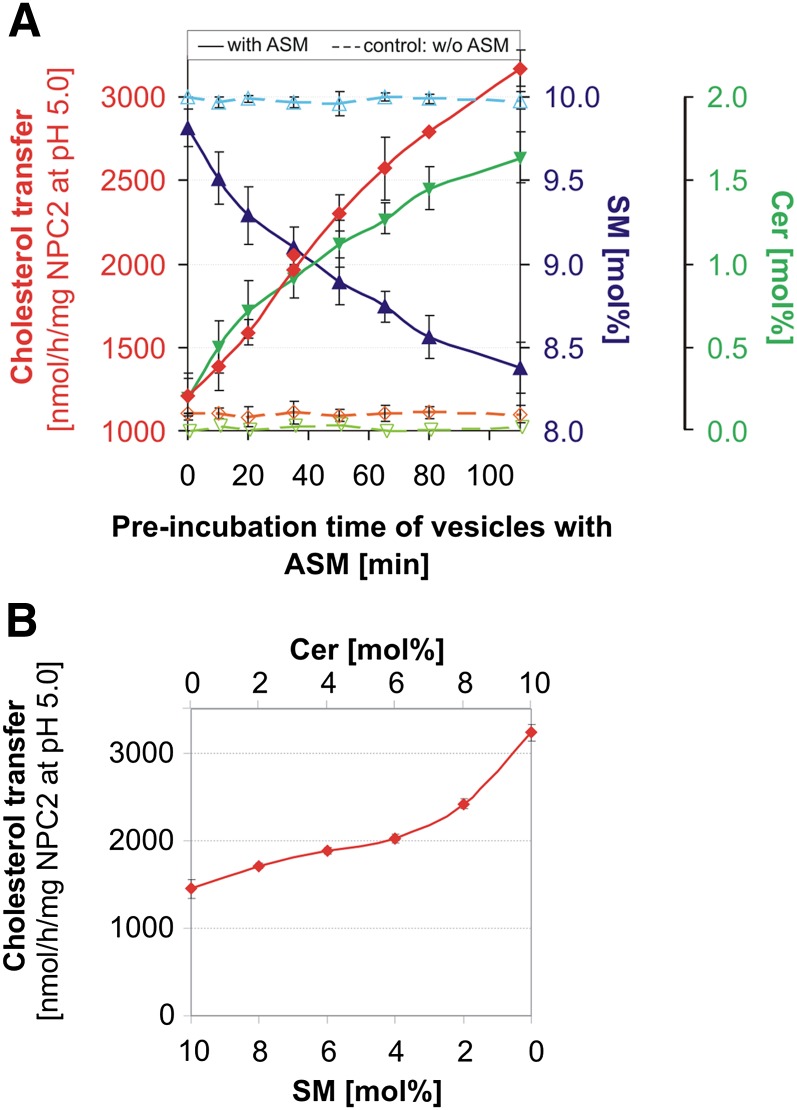
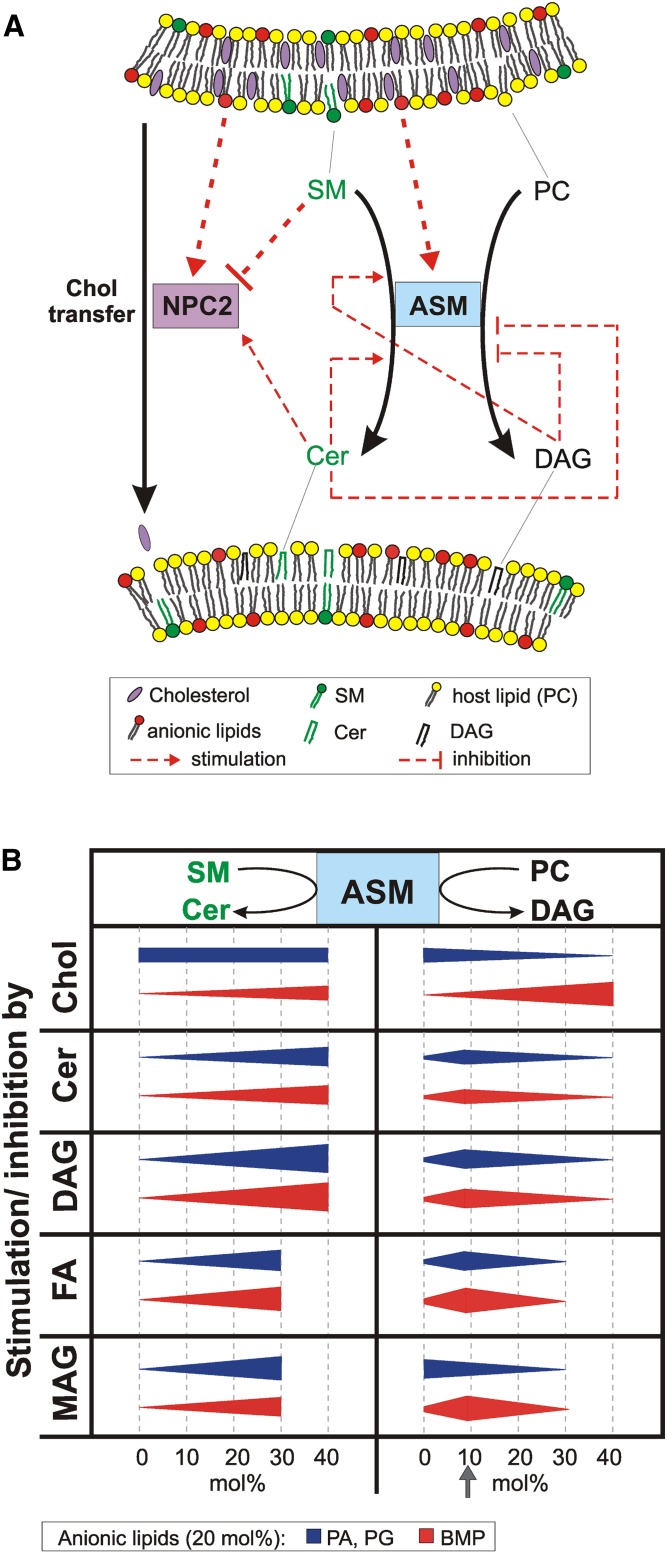
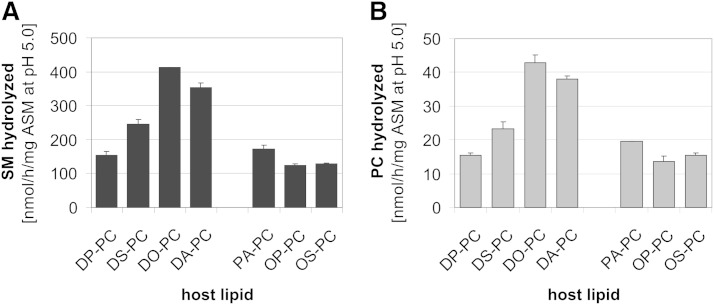
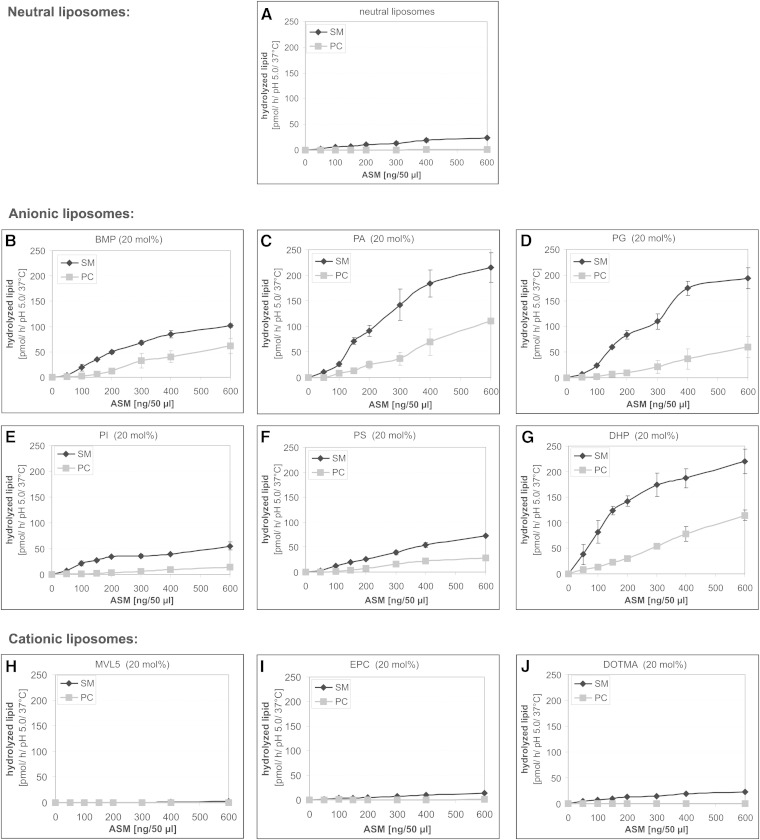
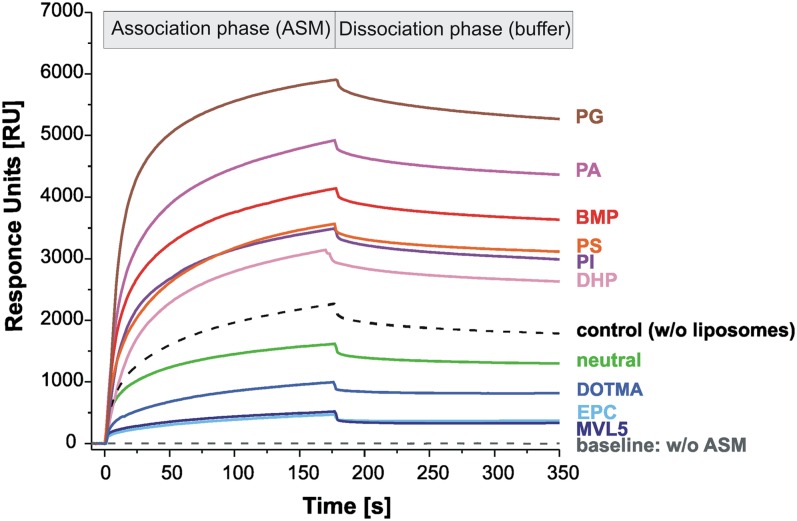
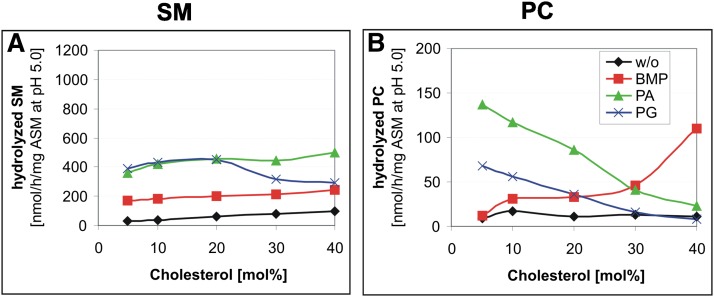
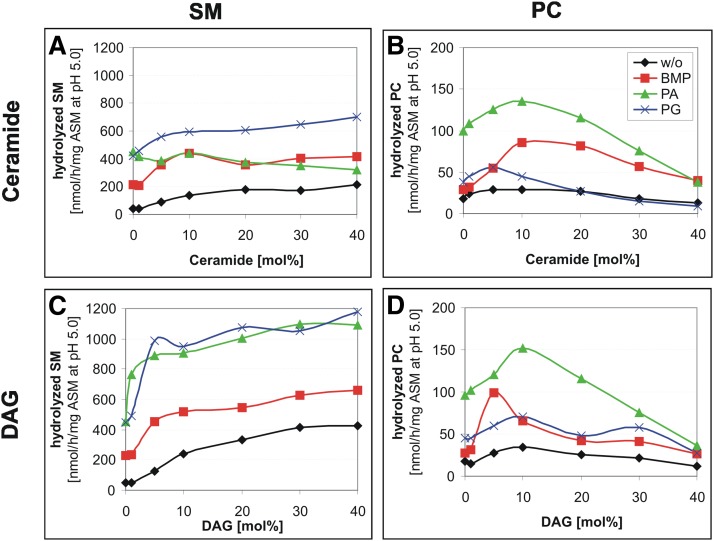
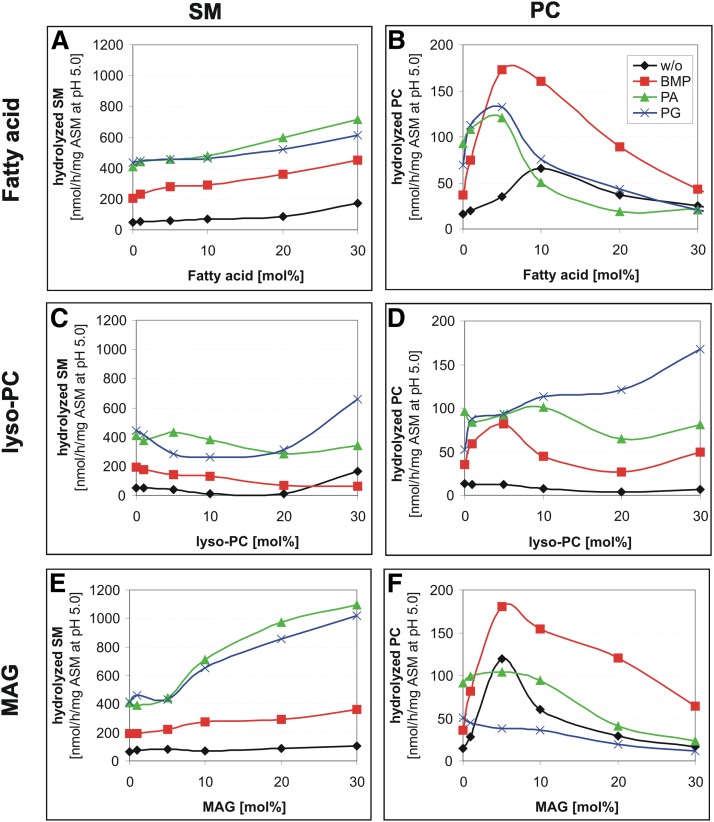
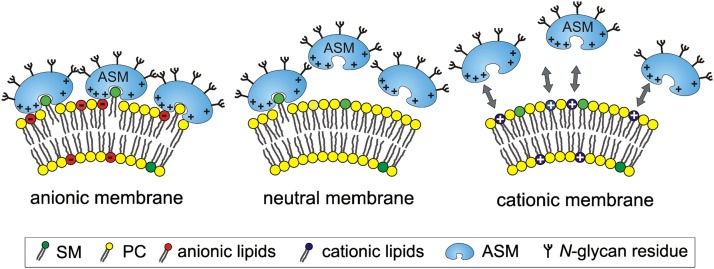
During endocytosis, membrane components move to intraluminal vesicles of the endolysosomal compartment for digestion. At the late endosomes, cholesterol is sorted out mainly by two sterol-binding proteins, Niemann-Pick protein type C (NPC)1 and NPC2. To study the NPC2-mediated intervesicular cholesterol transfer, we developed a liposomal assay system. (Abdul-Hammed, M., B. Breiden, M. A. Adebayo, J. O. Babalola, G. Schwarzmann, and K. Sandhoff. 2010. Role of endosomal membrane lipids and NPC2 in cholesterol transfer and membrane fusion. J. Lipid Res. 51: 1747-1760.) Anionic lipids stimulate cholesterol transfer between liposomes while SM inhibits it, even in the presence of anionic bis(monoacylglycero)phosphate (BMP). Preincubation of vesicles containing SM with acid sphingomyelinase (ASM) (SM phosphodiesterase, EC 3.1.4.12) results in hydrolysis of SM to ceramide (Cer), which enhances cholesterol transfer. Besides SM, ASM also cleaves liposomal phosphatidylcholine. Anionic phospholipids derived from the plasma membrane (phosphatidylglycerol and phosphatidic acid) stimulate SM and phosphatidylcholine hydrolysis by ASM more effectively than BMP, which is generated during endocytosis. ASM-mediated hydrolysis of liposomal SM was also stimulated by incorporation of diacylglycerol (DAG), Cer, and free fatty acids into the liposomal membranes. Conversely, phosphatidylcholine hydrolysis was inhibited by incorporation of cholesterol, Cer, DAG, monoacylglycerol, and fatty acids. Our data suggest that SM degradation by ASM is required for physiological secretion of cholesterol from the late endosomal compartment, and is a key regulator of endolysosomal lipid digestion.
在胞吞作用过程中,膜成分会转移至内溶酶体区室的腔内小泡进行消化。在晚期内体中,胆固醇主要由两种固醇结合蛋白,即尼曼-皮克C型蛋白(NPC)1和NPC2进行分选。为了研究NPC2介导的囊泡间胆固醇转移,我们开发了一种脂质体检测系统。(阿卜杜勒-哈米德,M.,B. 布雷登,M. A. 阿德巴约,J. O. 巴巴洛拉,G. 施瓦茨曼,以及K. 桑德霍夫。2010年。内体膜脂质和NPC2在胆固醇转移及膜融合中的作用。《脂质研究杂志》51卷:1747 - 1760页。)阴离子脂质可刺激脂质体之间的胆固醇转移,而鞘磷脂(SM)则会抑制这种转移,即使存在阴离子双(单酰甘油)磷酸酯(BMP)时也是如此。将含有SM的囊泡与酸性鞘磷脂酶(ASM)(SM磷酸二酯酶,EC 3.1.4.12)预孵育,会导致SM水解为神经酰胺(Cer),从而增强胆固醇转移。除了SM,ASM还会裂解脂质体中的磷脂酰胆碱。源自质膜的阴离子磷脂(磷脂酰甘油和磷脂酸)比内吞作用过程中产生的BMP更有效地刺激ASM对SM和磷脂酰胆碱的水解。将二酰基甘油(DAG)、Cer和游离脂肪酸掺入脂质体膜中也会刺激ASM介导的脂质体SM水解。相反,将胆固醇、Cer、DAG、单酰甘油和脂肪酸掺入脂质体膜中会抑制磷脂酰胆碱的水解。我们的数据表明,ASM介导的SM降解是晚期内体区室中胆固醇生理分泌所必需的,并且是内溶酶体脂质消化的关键调节因子。