Spasojevic Milica, Paredes-Juarez Genaro A, Vorenkamp Joop, de Haan Bart J, Schouten Arend Jan, de Vos Paul
Department of Polymer Chemistry, Zernike Institute for Advanced Materials, University of Groningen, Groningen, The Netherlands; Departments of Pathology and Laboratory Medicine, section of Medical Biology, division of immunoendocrinology, University of Groningen, Groningen, The Netherlands.
Departments of Pathology and Laboratory Medicine, section of Medical Biology, division of immunoendocrinology, University of Groningen, Groningen, The Netherlands.
PLoS One. 2014 Oct 27;9(10):e109837. doi: 10.1371/journal.pone.0109837. eCollection 2014.
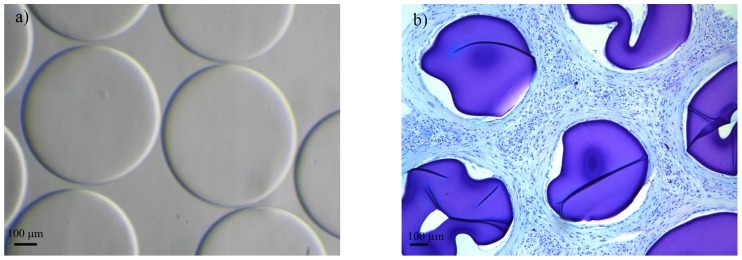
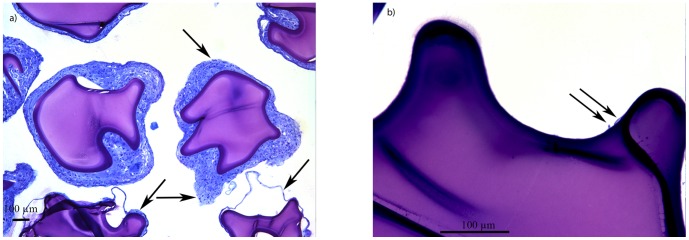
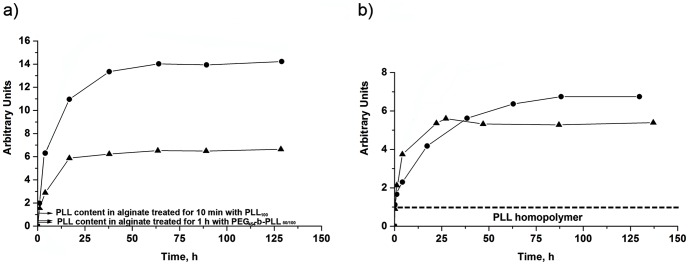
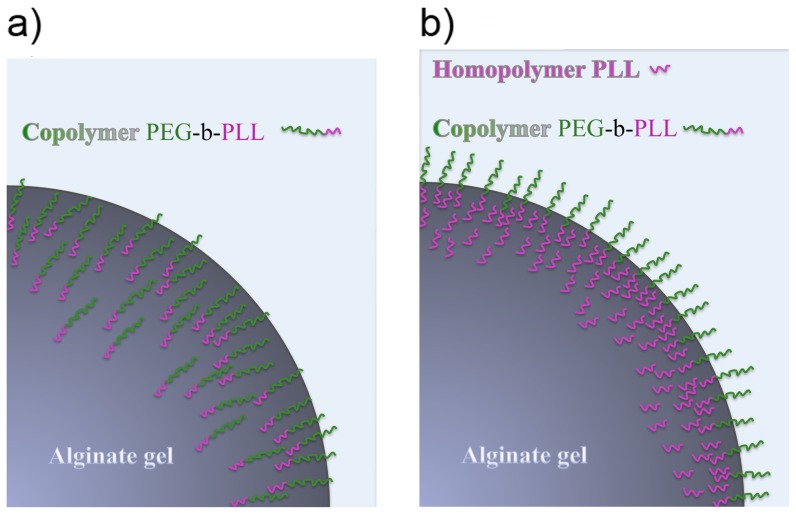
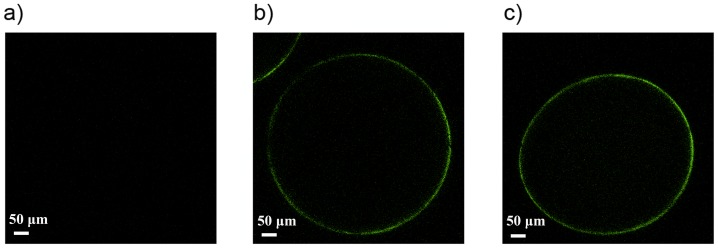
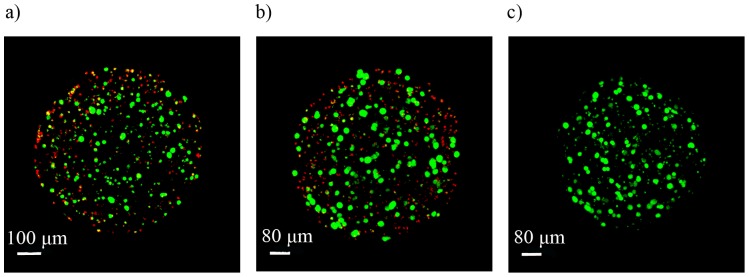
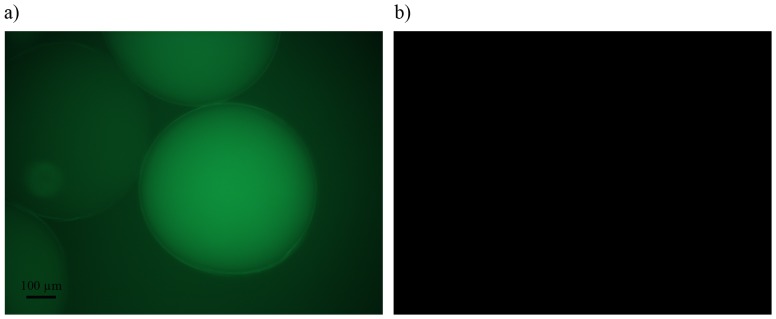
Large-scale application of alginate-poly-L-lysine (alginate-PLL) capsules used for microencapsulation of living cells is hampered by varying degrees of success, caused by tissue responses against the capsules in the host. A major cause is proinflammatory PLL which is applied at the surface to provide semipermeable properties and immunoprotection. In this study, we investigated whether application of poly(ethylene glycol)-block-poly(L-lysine hydrochloride) diblock copolymers (PEG-b-PLL) can reduce the responses against PLL on alginate-matrices. The application of PEG-b-PLL was studied in two manners: (i) as a substitute for PLL or (ii) as an anti-biofouling layer on top of a proinflammatory, but immunoprotective, semipermeable alginate-PLL100 membrane. Transmission FTIR was applied to monitor the binding of PEG-b-PLL. When applied as a substitute for PLL, strong host responses in mice were observed. These responses were caused by insufficient binding of the PLL block of the diblock copolymers confirmed by FTIR. When PEG-b-PLL was applied as an anti-biofouling layer on top of PLL100 the responses in mice were severely reduced. Building an effective anti-biofouling layer required 50 hours as confirmed by FTIR, immunocytochemistry and XPS. Our study provides new insight in the binding requirements of polyamino acids necessary to provide an immunoprotective membrane. Furthermore, we present a relatively simple method to mask proinflammatory components on the surface of microcapsules to reduce host responses. Finally, but most importantly, our study illustrates the importance of combining physicochemical and biological methods to understand the complex interactions at the capsules' surface that determine the success or failure of microcapsules applicable for cell-encapsulation.
用于活细胞微囊化的海藻酸盐-聚-L-赖氨酸(海藻酸盐-PLL)胶囊的大规模应用因宿主对胶囊的组织反应而在不同程度上受到阻碍。一个主要原因是用于提供半透性和免疫保护的表面促炎PLL。在本研究中,我们调查了聚(乙二醇)-嵌段-聚(L-盐酸赖氨酸)二嵌段共聚物(PEG-b-PLL)的应用是否可以减少对海藻酸盐基质上PLL的反应。PEG-b-PLL的应用通过两种方式进行研究:(i)作为PLL的替代品,或(ii)作为促炎但具有免疫保护作用的半透性海藻酸盐-PLL100膜顶部的抗生物污损层。应用透射傅里叶变换红外光谱(FTIR)监测PEG-b-PLL的结合情况。当用作PLL的替代品时,在小鼠中观察到强烈的宿主反应。这些反应是由FTIR证实的二嵌段共聚物的PLL嵌段结合不足引起的。当PEG-b-PLL作为抗生物污损层应用于PLL100顶部时,小鼠中的反应显著降低。FTIR、免疫细胞化学和X射线光电子能谱(XPS)证实,构建有效的抗生物污损层需要50小时。我们的研究为提供免疫保护膜所需的聚氨基酸的结合要求提供了新的见解。此外,我们提出了一种相对简单的方法来掩盖微胶囊表面的促炎成分,以减少宿主反应。最后但同样重要的是,我们的研究说明了结合物理化学和生物学方法来理解决定适用于细胞封装的微胶囊成败的胶囊表面复杂相互作用的重要性。