Li Xiaohui, Huang Lei, Zhang Yafen, Ouyang Zhigang, Hong Yongbo, Zhang Huijuan, Li Dayong, Song Fengming
BMC Plant Biol. 2014 Oct 28;14:286. doi: 10.1186/s12870-014-0286-3.
The SR/CAMTA proteins represent a small family of transcription activators that play important roles in plant responses to biotic and abiotic stresses. Seven SlSR/CAMTA genes were identified in tomato as tomato counterparts of SR/CAMTA; however, the involvement of SlSRs/CAMTAs in biotic and abiotic stress responses is not clear. In this study, we performed functional analysis of the SlSR/CAMTA family for their possible functions in defense response against pathogens and tolerance to drought stress.
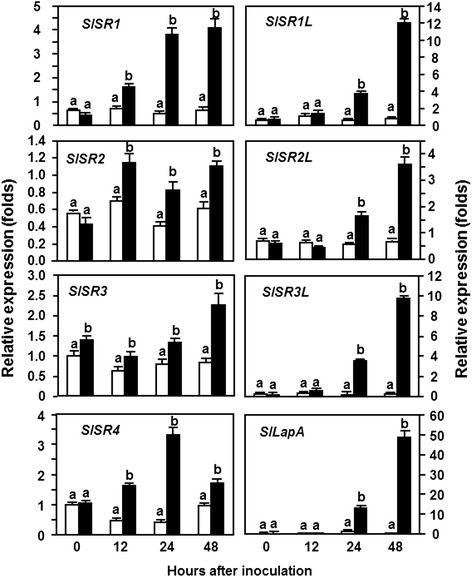
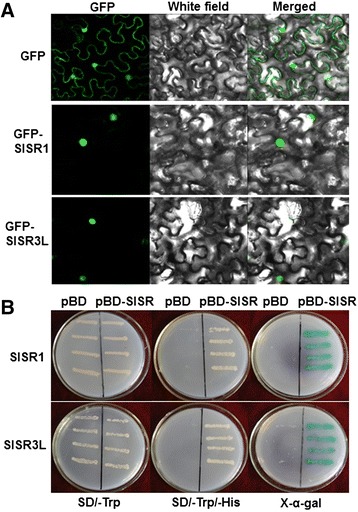
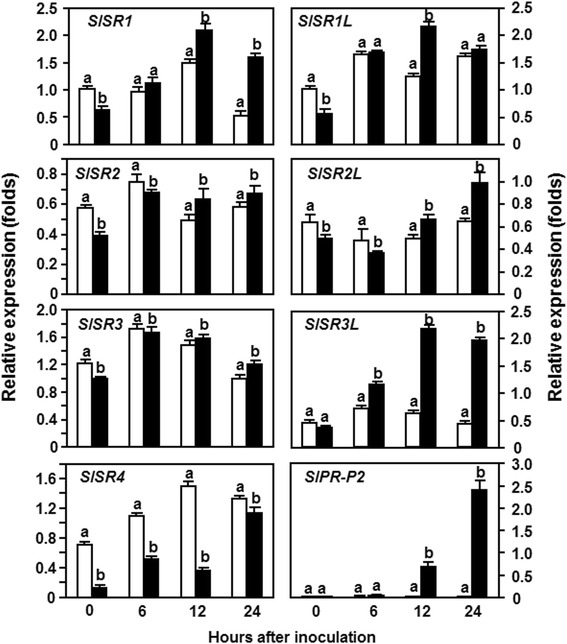
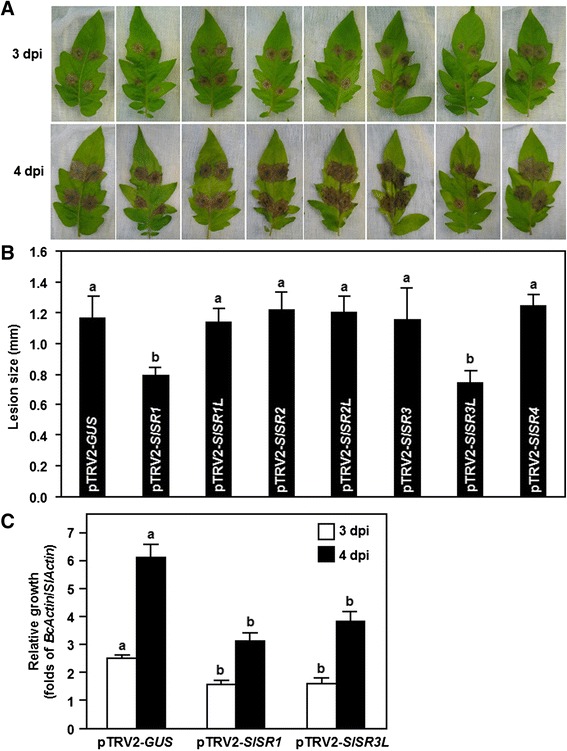
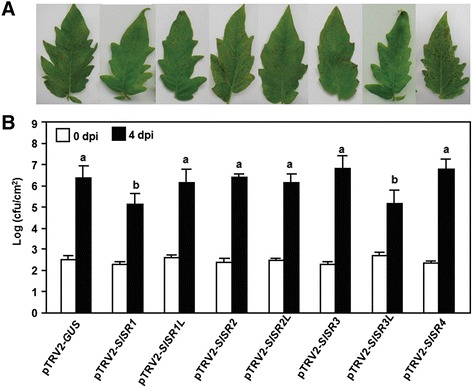
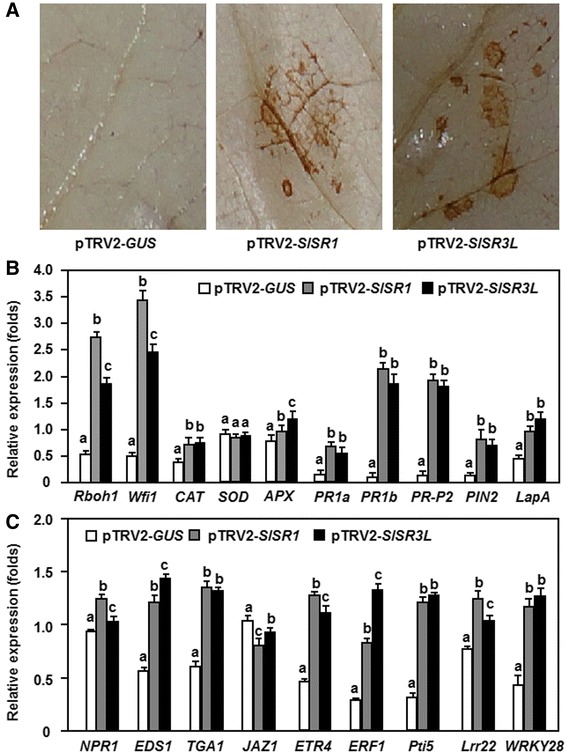
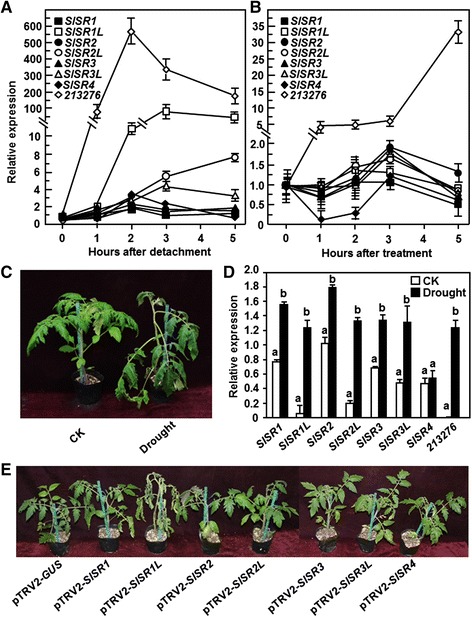
Expression of SlSRs was induced with distinct patterns by Botrytis cinerea and Pseudomonas syringae pv. tomato (Pst) DC3000. Virus-induced gene silencing (VIGS)-based knockdown of either SlSR1 or SlSR3L in tomato resulted in enhanced resistance to B. cinerea and Pst DC3000 and led to constitutive accumulation of H2O2, elevated expression of defense genes, marker genes for pathogen-associated molecular pattern-triggered immunity, and regulatory genes involved in the salicylic acid- and ethylene-mediated signaling pathways. Furthermore, the expression of SlSR1L and SlSR2L in detached leaves and whole plants was significantly induced by drought stress. Silencing of SlSR1L led to decreased drought stress tolerance, accelerated water loss in leaves, reduced root biomass and attenuated expression of drought stress responsive genes in tomato. The SlSR1 and SlSR3L proteins were localized in the nucleus of plant cells when transiently expressed in Nicotiana benthamiana and had transcriptional activation activity in yeast.
VIGS-based functional analyses demonstrate that both SlSR1 and SlSR3L in the tomato SlSR/CAMTA family are negative regulators of defense response against B. cinerea and Pst DC3000 while SlSR1L is a positive regulator of drought stress tolerance in tomato.
SR/CAMTA蛋白是一个转录激活因子小家族,在植物对生物和非生物胁迫的响应中发挥重要作用。在番茄中鉴定出7个SlSR/CAMTA基因作为SR/CAMTA的番茄对应物;然而,SlSRs/CAMTAs在生物和非生物胁迫响应中的作用尚不清楚。在本研究中,我们对SlSR/CAMTA家族进行了功能分析,以探究它们在抵御病原体防御反应和干旱胁迫耐受性方面的可能功能。
灰葡萄孢菌和番茄丁香假单胞菌番茄致病变种(Pst)DC3000以不同模式诱导SlSRs的表达。基于病毒诱导基因沉默(VIGS)的番茄SlSR1或SlSR3L基因敲低导致对灰葡萄孢菌和Pst DC3000的抗性增强,并导致H2O2的组成型积累、防御基因表达升高、病原体相关分子模式触发免疫的标记基因以及参与水杨酸和乙烯介导信号通路的调控基因表达升高。此外,干旱胁迫显著诱导了离体叶片和整株植物中SlSR1L和SlSR2L的表达。SlSR1L基因沉默导致番茄干旱胁迫耐受性降低、叶片水分流失加速、根生物量减少以及干旱胁迫响应基因表达减弱。当在本氏烟草中瞬时表达时,SlSR1和SlSR3L蛋白定位于植物细胞核中,并在酵母中具有转录激活活性。
基于VIGS的功能分析表明,番茄SlSR/CAMTA家族中的SlSR1和SlSR3L都是抵御灰葡萄孢菌和Pst DC3000防御反应的负调控因子,而SlSR1L是番茄干旱胁迫耐受性的正调控因子。