Liu Bo, Ouyang Zhigang, Zhang Yafen, Li Xiaohui, Hong Yongbo, Huang Lei, Liu Shixia, Zhang Huijuan, Li Dayong, Song Fengming
National Key Laboratory for Rice Biology, Institute of Biotechnology, Zhejiang University, Hangzhou, China.
PLoS One. 2014 Jul 10;9(7):e102067. doi: 10.1371/journal.pone.0102067. eCollection 2014.
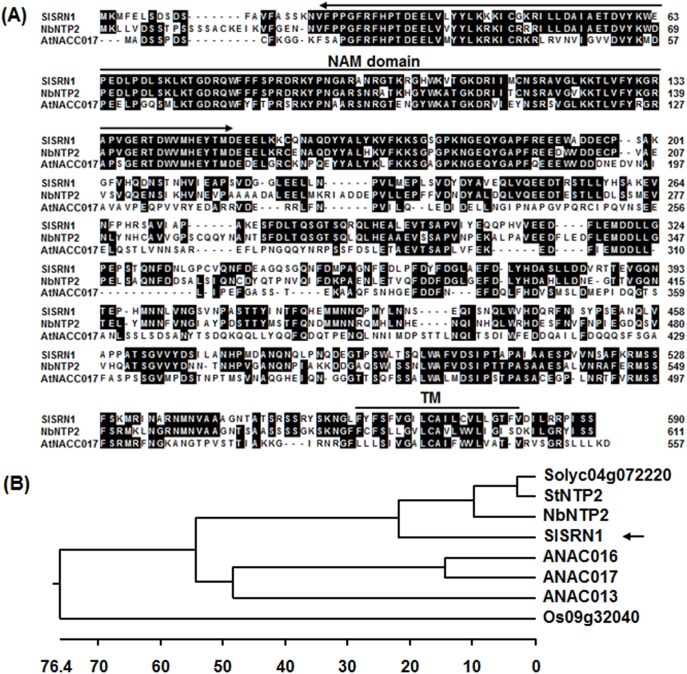
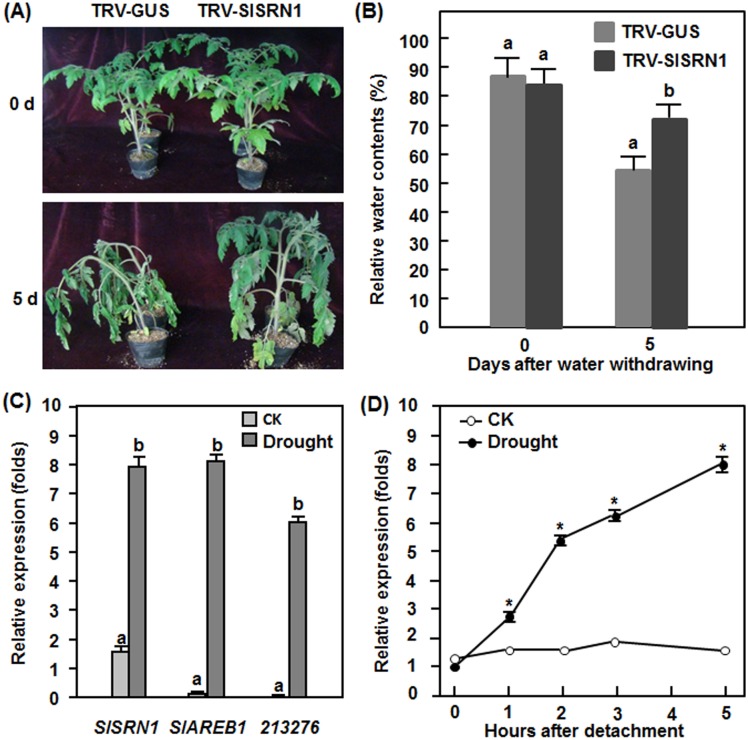
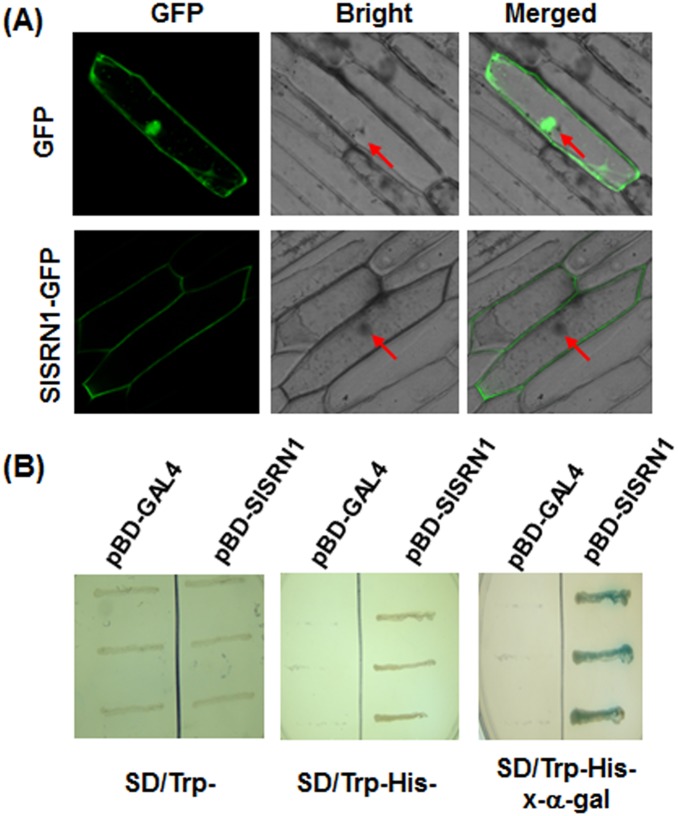
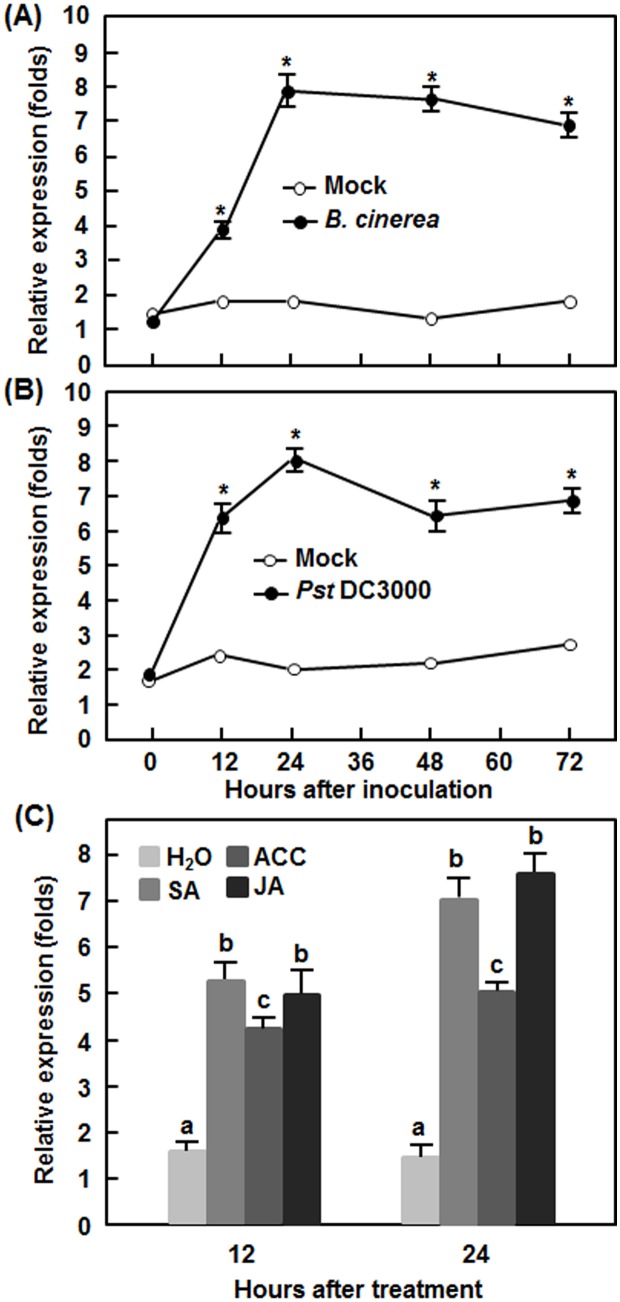
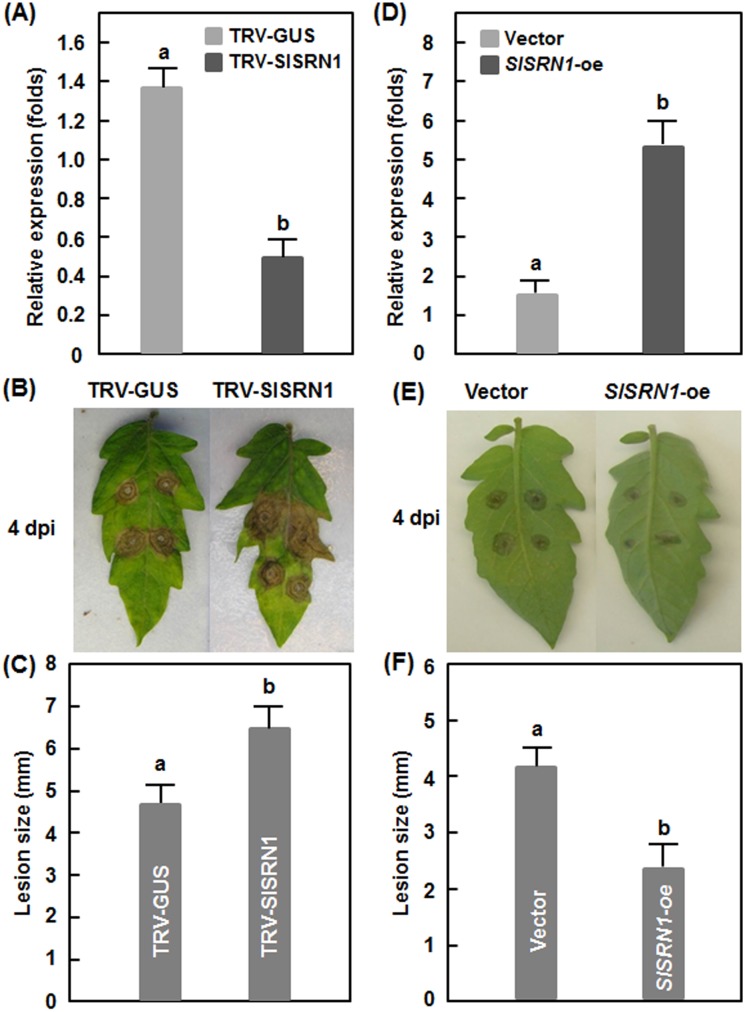
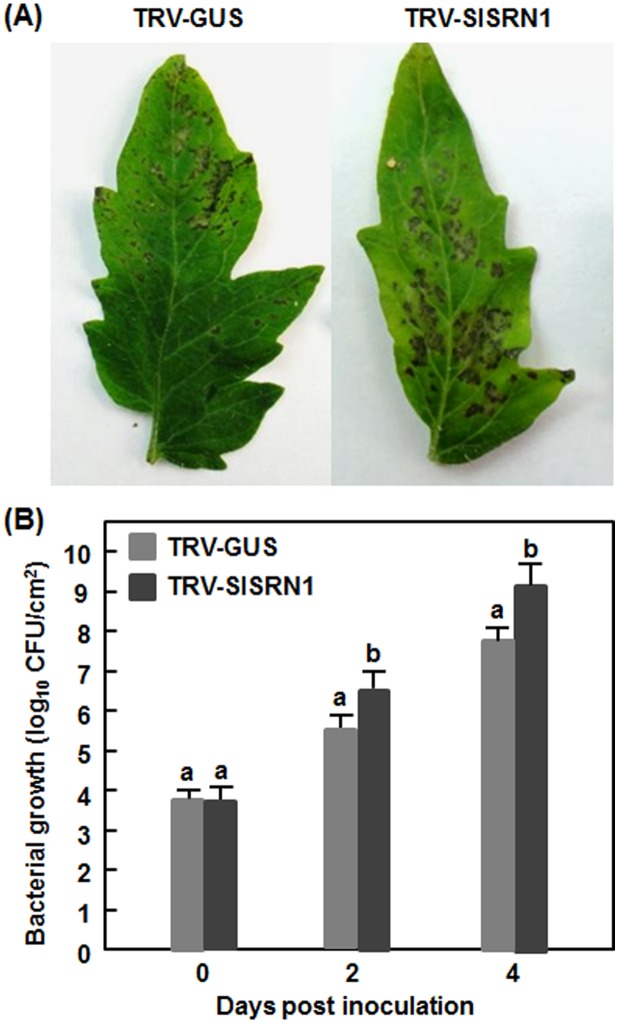
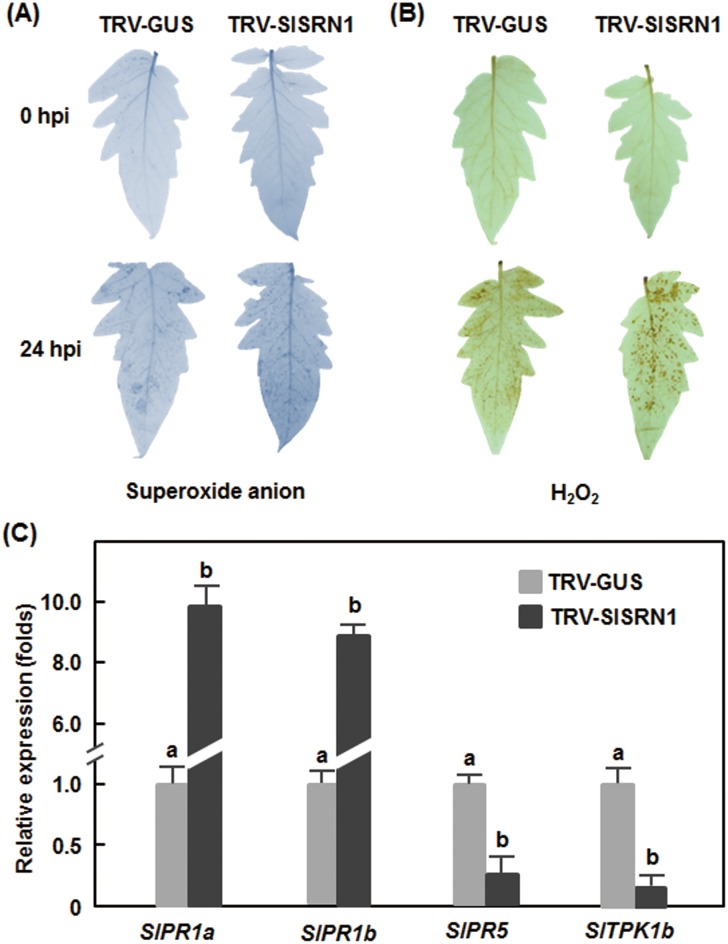
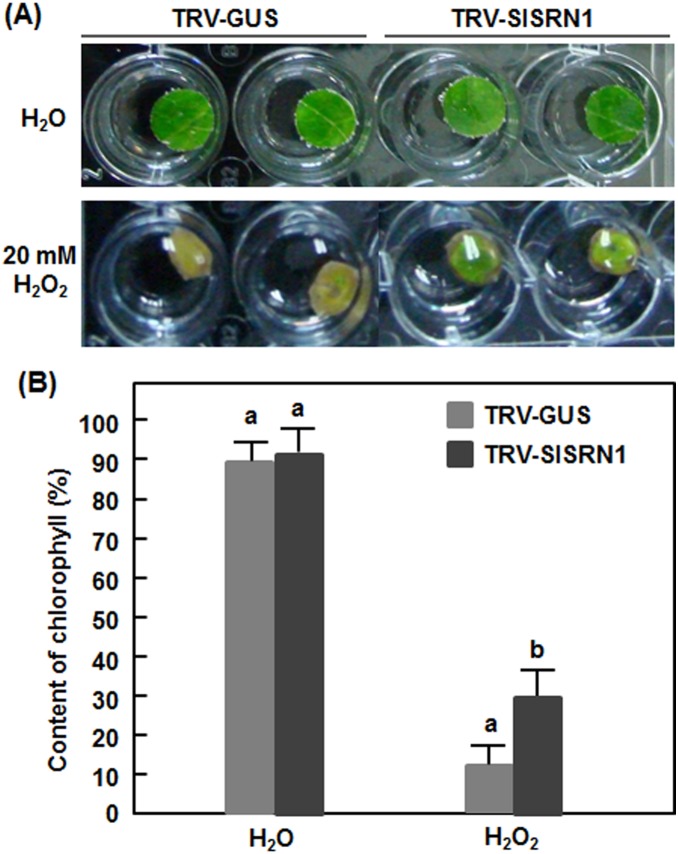
Biotic and abiotic stresses are major unfavorable factors that affect crop productivity worldwide. NAC proteins comprise a large family of transcription factors that play important roles in plant growth and development as well as in responses to biotic and abiotic stresses. In a virus-induced gene silencing-based screening to identify genes that are involved in defense response against Botrytis cinerea, we identified a tomato NAC gene SlSRN1 (Solanum lycopersicum Stress-related NAC1). SlSRN1 is a plasma membrane-localized protein with transactivation activity in yeast. Expression of SlSRN1 was significantly induced by infection with B. cinerea or Pseudomonas syringae pv. tomato (Pst) DC3000, leading to 6-8 folds higher than that in the mock-inoculated plants. Expression of SlSRN1 was also induced by salicylic acid, jasmonic acid and 1-amino cyclopropane-1-carboxylic acid and by drought stress. Silencing of SlSRN1 resulted in increased severity of diseases caused by B. cinerea and Pst DC3000. However, silencing of SlSRN1 resulted in increased tolerance against oxidative and drought stresses. Furthermore, silencing of SlSRN1 accelerated accumulation of reactive oxygen species but attenuated expression of defense genes after infection by B. cinerea. Our results demonstrate that SlSRN1 is a positive regulator of defense response against B. cinerea and Pst DC3000 but is a negative regulator for oxidative and drought stress response in tomato.
生物和非生物胁迫是影响全球作物生产力的主要不利因素。NAC蛋白是一个大型转录因子家族,在植物生长发育以及对生物和非生物胁迫的响应中发挥重要作用。在一项基于病毒诱导基因沉默的筛选中,为了鉴定参与对灰霉病菌防御反应的基因,我们鉴定出一个番茄NAC基因SlSRN1(番茄应激相关NAC1)。SlSRN1是一种定位于质膜的蛋白,在酵母中具有反式激活活性。SlSRN1的表达在受到灰霉病菌或番茄丁香假单胞菌番茄致病变种(Pst)DC3000侵染后显著诱导,导致其表达量比模拟接种植株高6至8倍。SlSRN1的表达也受到水杨酸、茉莉酸和1-氨基环丙烷-1-羧酸以及干旱胁迫的诱导。沉默SlSRN1导致由灰霉病菌和Pst DC3000引起的病害严重程度增加。然而,沉默SlSRN1导致对氧化和干旱胁迫的耐受性增加。此外,沉默SlSRN1加速了活性氧的积累,但减弱了灰霉病菌侵染后防御基因的表达。我们的结果表明,SlSRN1是番茄对灰霉病菌和Pst DC3000防御反应的正调控因子,但在番茄氧化和干旱胁迫反应中是负调控因子。