Sogin Emilia M, Anderson Paul, Williams Philip, Chen Chii-Shiarng, Gates Ruth D
Hawaii Institute of Marine Biology, Kaneohe, Hawaii, United States of America; University of Hawaii at Manoa, Honolulu, Hawaii, United States of America.
College of Charleston, Charleston, South Carolina, United States of America.
PLoS One. 2014 Oct 29;9(10):e111274. doi: 10.1371/journal.pone.0111274. eCollection 2014.
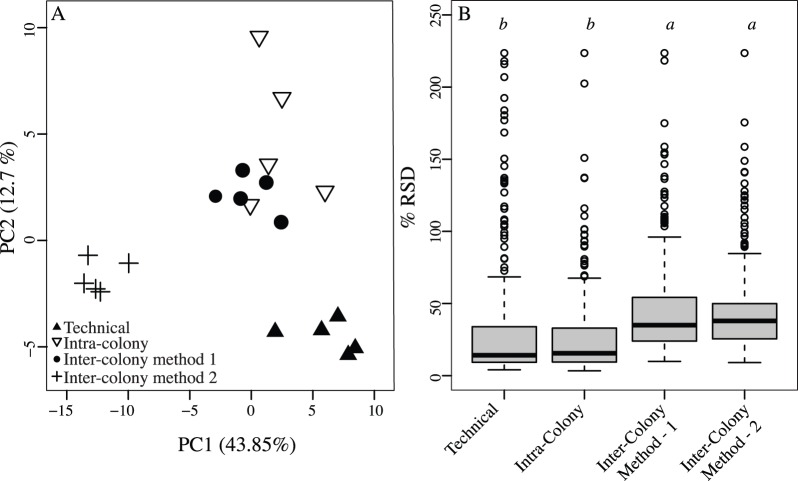
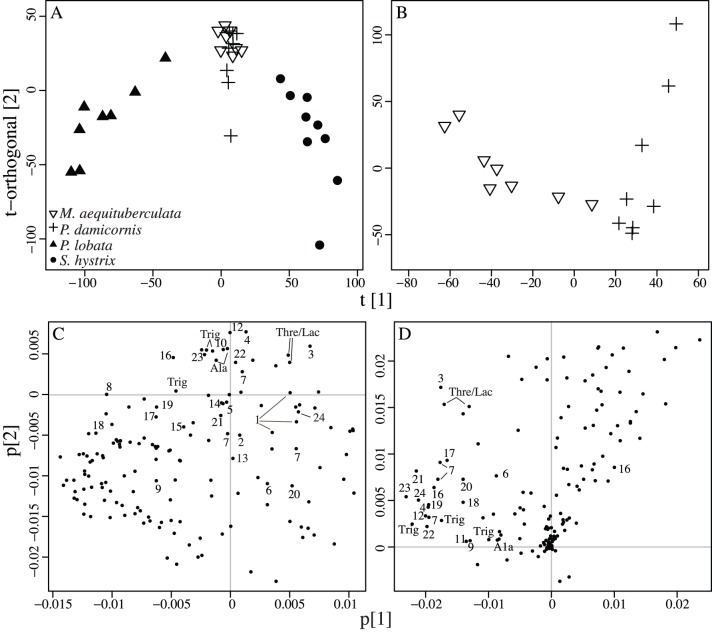
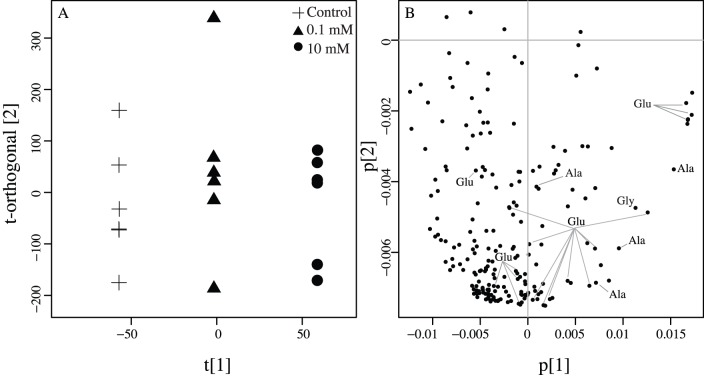
In light of global reef decline new methods to accurately, cheaply, and quickly evaluate coral metabolic states are needed to assess reef health. Metabolomic profiling can describe the response of individuals to disturbance (i.e., shifts in environmental conditions) across biological models and is a powerful approach for characterizing and comparing coral metabolism. For the first time, we assess the utility of a proton-nuclear magnetic resonance spectroscopy (1H-NMR)-based metabolomics approach in characterizing coral metabolite profiles by 1) investigating technical, intra-, and inter-sample variation, 2) evaluating the ability to recover targeted metabolite spikes, and 3) assessing the potential for this method to differentiate among coral species. Our results indicate 1H-NMR profiling of Porites compressa corals is highly reproducible and exhibits low levels of variability within and among colonies. The spiking experiments validate the sensitivity of our methods and showcase the capacity of orthogonal partial least squares discriminate analysis (OPLS-DA) to distinguish between profiles spiked with varying metabolite concentrations (0 mM, 0.1 mM, and 10 mM). Finally, 1H-NMR metabolomics coupled with OPLS-DA, revealed species-specific patterns in metabolite profiles among four reef-building corals (Pocillopora damicornis, Porites lobata, Montipora aequituberculata, and Seriatopora hystrix). Collectively, these data indicate that 1H-NMR metabolomic techniques can profile reef-building coral metabolomes and have the potential to provide an integrated picture of the coral phenotype in response to environmental change.
鉴于全球珊瑚礁衰退,需要新的方法来准确、廉价且快速地评估珊瑚的代谢状态,以评估珊瑚礁的健康状况。代谢组学分析可以描述个体在不同生物模型中对干扰(即环境条件变化)的反应,是表征和比较珊瑚代谢的有力方法。我们首次评估了基于质子核磁共振波谱(1H-NMR)的代谢组学方法在表征珊瑚代谢物谱方面的效用,具体包括:1)研究技术、样本内和样本间的差异;2)评估回收目标代谢物加标的能力;3)评估该方法区分不同珊瑚物种的潜力。我们的结果表明,压缩孔珊瑚的1H-NMR分析具有高度可重复性,在群体内部和群体之间的变异性较低。加标实验验证了我们方法的灵敏度,并展示了正交偏最小二乘判别分析(OPLS-DA)区分不同代谢物浓度(0 mM、0.1 mM和10 mM)加标谱的能力。最后,1H-NMR代谢组学与OPLS-DA相结合,揭示了四种造礁珊瑚(鹿角杯形珊瑚、扁脑珊瑚、均等瘤脑珊瑚和刺星珊瑚)代谢物谱中的物种特异性模式。总体而言,这些数据表明,1H-NMR代谢组学技术可以描绘造礁珊瑚的代谢组,并有可能提供珊瑚表型对环境变化响应的综合图景。