Brito Anghel, Ramirez Javier E, Areche Carlos, Sepúlveda Beatriz, Simirgiotis Mario J
Laboratorio de Productos Naturales, Departamento de Química, Facultad de Ciencias Básicas, Universidad de Antofagasta, Av. Coloso S-N, Antofagasta 1240000, Chile.
Departamento de Química, Facultad de Ciencias, Universidad de Chile, Casilla 653, Santiago 7800024, Chile.
Molecules. 2014 Oct 29;19(11):17400-21. doi: 10.3390/molecules191117400.
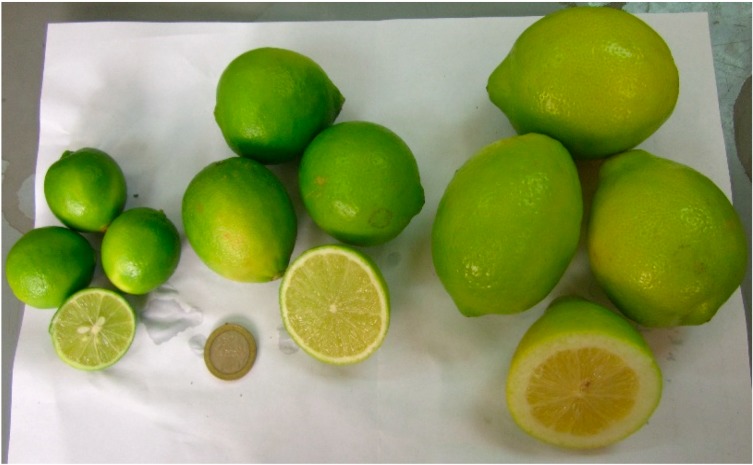
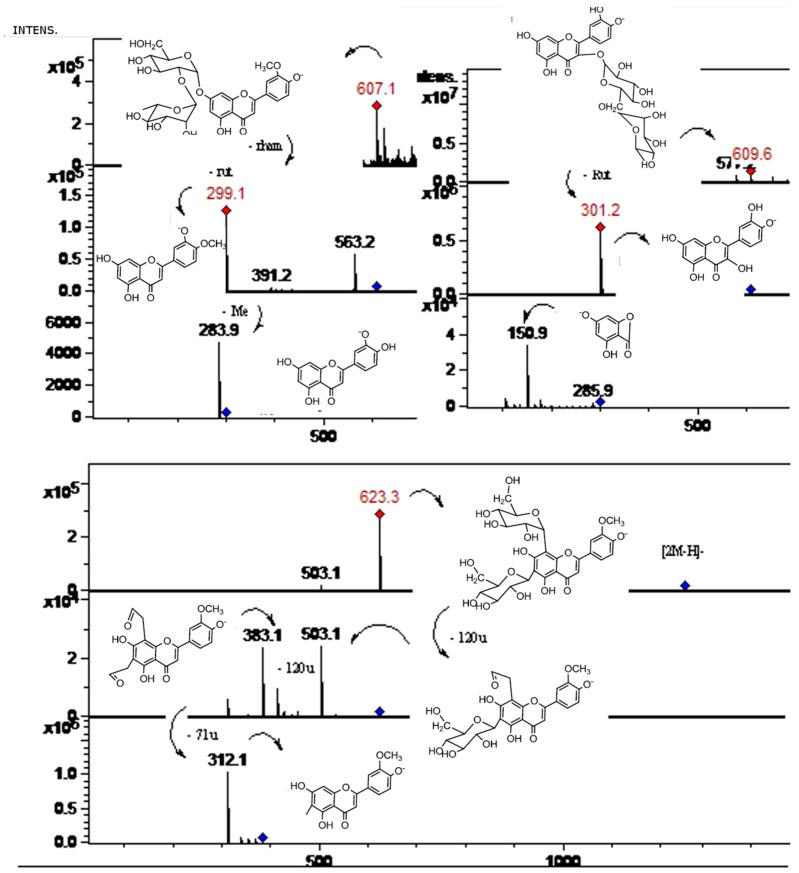
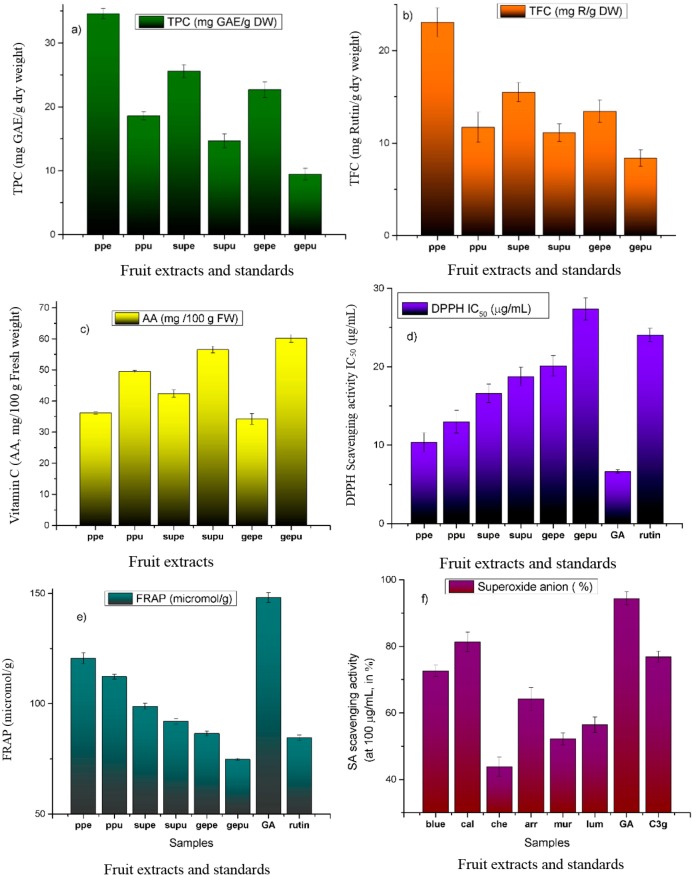
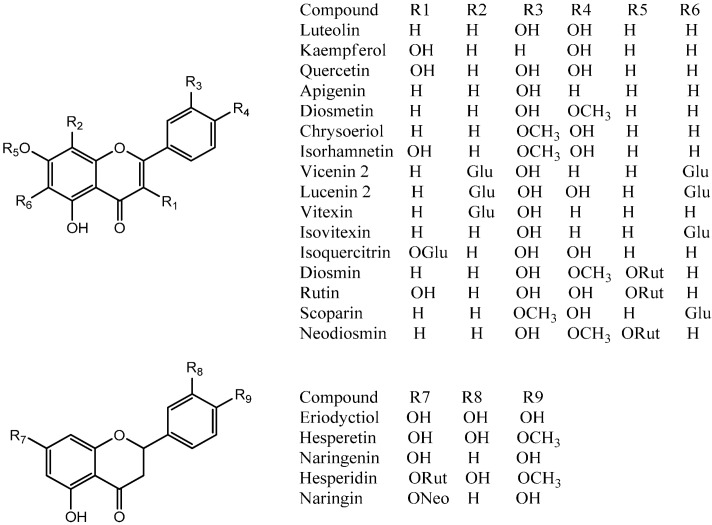
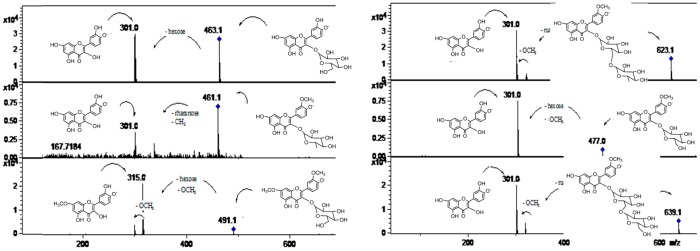
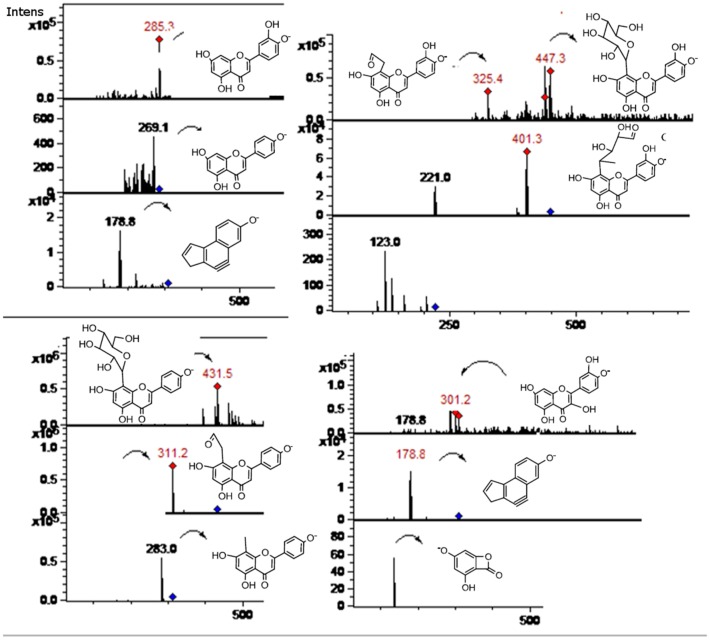
Peels and edible pulp from three species of citrus including Citrus aurantifolia (varieties pica and sutil) and Citrus x lemon var. Genova widely cultivated and consumed in Northern Chile (I and II region) were analyzed for phenolic compounds and antioxidant activity for the first time. A high performance electrospray ionization mass spectrometry (HPLC-UV-ESI-MS) method was developed for the rapid identification of phenolics in extracts from peels and juices of all species. Several flavonoids including one kaempferol-O-hexoside (peak 16) and one hesperidin derivative (peak 22) three quercetin derivatives (peaks 4, 19 and 36), five isorhamnetin derivatives (peaks 5, 23, 24, 26 and 29) four luteolin derivatives (peaks 14, 25, 27 and 40), seven apigenin derivatives (peaks 2, 3, 12, 20, 34, 35 and 39), seven diosmetin derivatives (peaks 7-9, 17, 21, 31 and 37), three chrysoeriol derivatives (peaks 10, 18 and 30), and four eryodictiol derivatives (peaks 6, 13, 15 and 38) were identified in negative and positive mode using full scan mass measurements and MSn fragmentations. Ascorbic acid content was higher in the pulps of the varieties Genova and Sutil (60.13 ± 1.28 and 56.53 ± 1.06 mg ascorbic acid per g dry weight, respectively) while total phenolic content was higher in Pica peels followed by Sutil peels (34.59 ± 0.81 and 25.58 ± 1.02 mg/g GAE dry weight, respectively). The antioxidant capacity was also higher for Pica peels (10.34 ± 1.23 µg/mL in the DPPH assay and 120.63 ± 2.45 µM trolox equivalents/g dry weight in the FRAP assay). The antioxidant features together with the high polyphenolic contents can support at least in part, the usage of the peel extracts as nutraceutical supplements, especially to be used as anti-ageing products.
首次对智利北部(第一和第二大区)广泛种植和食用的三种柑橘类水果的果皮和可食用果肉进行了酚类化合物和抗氧化活性分析,这三种柑橘包括墨西哥莱檬(皮卡和苏蒂尔品种)以及热那亚柠檬。开发了一种高效电喷雾电离质谱法(HPLC-UV-ESI-MS),用于快速鉴定所有品种果皮和果汁提取物中的酚类物质。通过全扫描质量测量和MSn碎片化,在正负模式下鉴定出了几种黄酮类化合物,包括一种山奈酚-O-己糖苷(峰16)、一种橙皮苷衍生物(峰22)、三种槲皮素衍生物(峰4、19和36)、五种异鼠李素衍生物(峰5、23、24、26和29)、四种木犀草素衍生物(峰14、25、27和40)、七种芹菜素衍生物(峰2、3、12、20、34、35和39)、七种香叶木素衍生物(峰7-9、17、21、31和37)、三种 Chrysoeriol 衍生物(峰10、18和30)以及四种圣草酚衍生物(峰6、13、15和38)。热那亚和苏蒂尔品种的果肉中抗坏血酸含量较高(分别为每克干重60.13±1.28和56.53±1.06毫克抗坏血酸),而皮卡果皮中的总酚含量较高,其次是苏蒂尔果皮(分别为34.59±0.81和25.58±1.02毫克/克干重GAE)。皮卡果皮的抗氧化能力也较高(DPPH测定中为10.34±1.23微克/毫升,FRAP测定中为120.63±2.45微摩尔 Trolox 当量/克干重)。抗氧化特性以及高多酚含量至少可以部分支持将果皮提取物用作营养补充剂,特别是用作抗衰老产品。