Liu Qin, Wang Xinjing, Shen Baiyong, Zhao Liangchao, Zhan Qian, Zhao Shulin, Wen Chenlei, Deng Xiaxing, Peng Chenghong, Li Hongwei
Department of General Surgery, Ruijin Hospital, Shanghai Jiaotong University School of Medicine, Shanghai Institute of Digestive Surgery, Shanghai 200025, P.R. China.
Oncol Lett. 2014 Dec;8(6):2399-2402. doi: 10.3892/ol.2014.2533. Epub 2014 Sep 12.
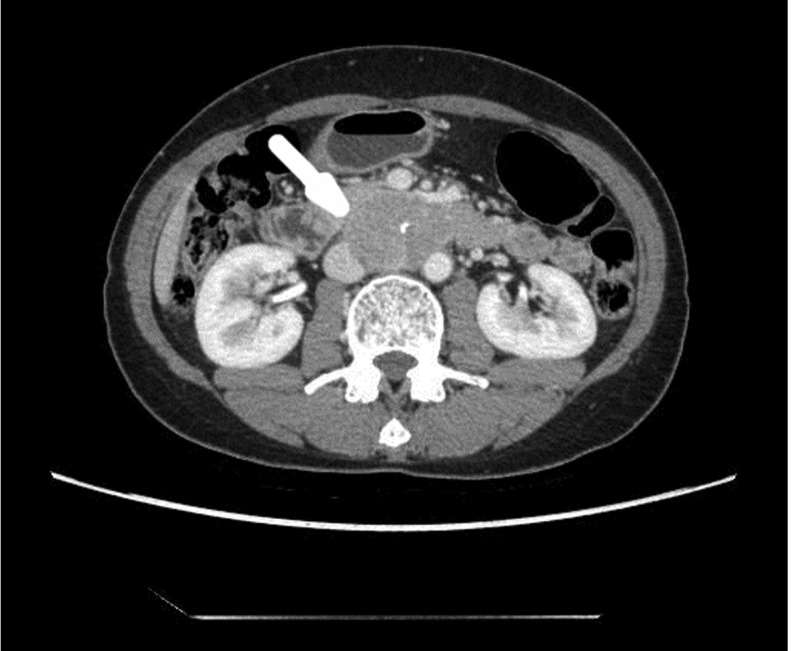
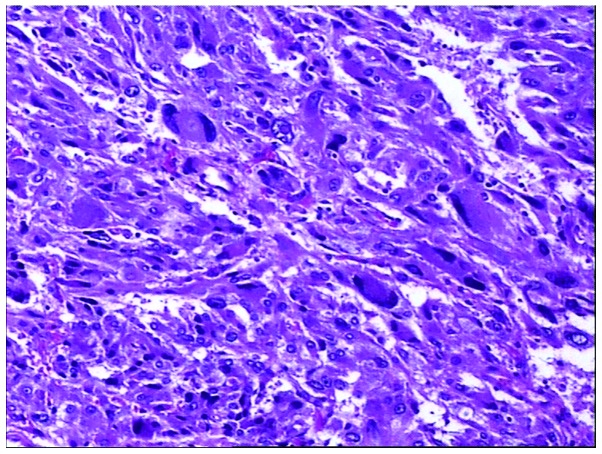
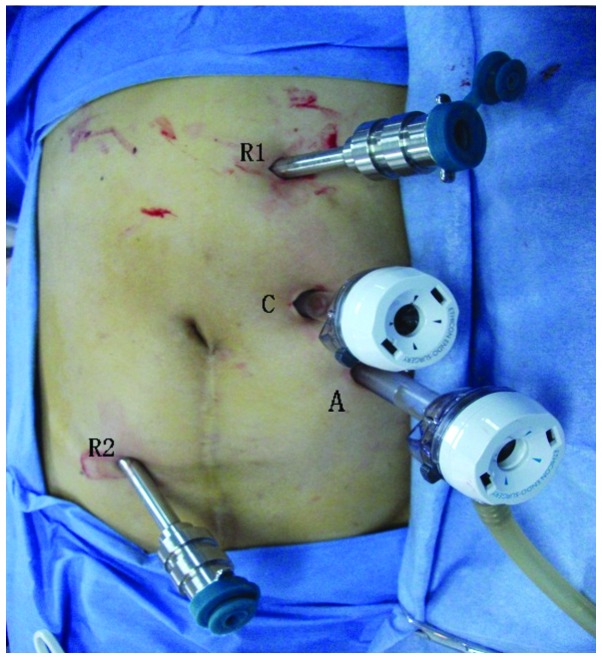
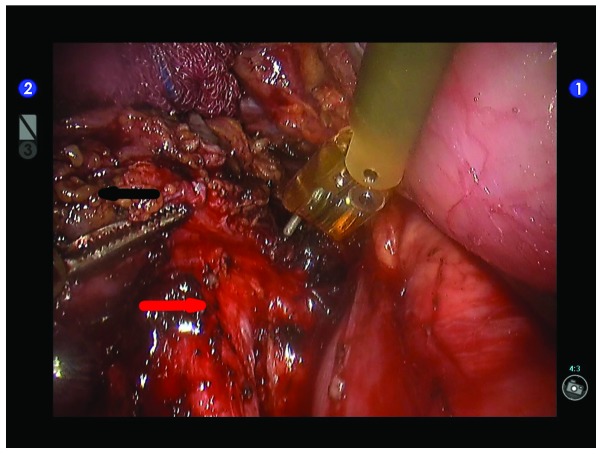
The aim of the present study was to report the initial clinical experience of adopting the da Vinci Surgical System (Intuitive Surgical, Inc., Sunnyvale, CA, USA) to perform a retroperitoneal tumor resection. The patient was a 56-year-old female who presented with a five-year history of hypertension. Abdominal dynamic computed tomography (CT) and positron emission tomography-CT scans revealed a mass measuring ~6 cm in diameter that was located anterior to the abdominal aorta, and between the abdominal aorta and the inferior vena cava (at the level of the third lumbar vertebra). The tumor was excised via a five-port, robot-assisted, transperitoneal laparoscopic approach. Careful dissection of the tumor away from the abdominal aorta and the inferior vena cava was accomplished without resulting in major vascular injury. There were no complications and the patient was discharged in a good condition on the eleventh postoperative day. Pathological analysis of a tumor specimen demonstrated a benign pheochromocytoma (PHEO). During the three-month follow-up, no recurrence was identified through CT scans or measurement of the patient's endocrine hormone levels. Thus, the da Vinci robot-assisted laparoscopic system may be safely employed in the treatment of extra-adrenal PHEOs that occur in difficult locations for which a laparoscopic surgical excision may be challenging.
本研究的目的是报告采用达芬奇手术系统(直观外科公司,美国加利福尼亚州桑尼维尔)进行腹膜后肿瘤切除术的初步临床经验。患者为一名56岁女性,有5年高血压病史。腹部动态计算机断层扫描(CT)和正电子发射断层扫描-CT显示,一个直径约6厘米的肿块位于腹主动脉前方,腹主动脉和下腔静脉之间(第三腰椎水平)。通过五孔机器人辅助经腹腹腔镜手术切除肿瘤。小心地将肿瘤从腹主动脉和下腔静脉分离,未造成重大血管损伤。无并发症发生,患者术后第11天状况良好出院。肿瘤标本的病理分析显示为良性嗜铬细胞瘤(PHEO)。在三个月的随访中,通过CT扫描或测量患者的内分泌激素水平未发现复发。因此,达芬奇机器人辅助腹腔镜系统可安全用于治疗发生在腹腔镜手术切除具有挑战性的困难部位的肾上腺外嗜铬细胞瘤。