Garcia Ricardo A, Yan Mujing, Search Debra, Zhang Rongan, Carson Nancy L, Ryan Carol S, Smith-Monroy Constance, Zheng Joanna, Chen Jian, Kong Yan, Tang Huaping, Hellings Samuel E, Wardwell-Swanson Judith, Dinchuk Joseph E, Psaltis George C, Gordon David A, Glunz Peter W, Gargalovic Peter S
Cardiovascular Drug Discovery, Bristol-Myers Squibb Company, Pennington, New Jersey, United States of America.
Applied Genomics, Bristol-Myers Squibb Company, Pennington, New Jersey, United States of America.
PLoS One. 2014 Oct 31;9(10):e111385. doi: 10.1371/journal.pone.0111385. eCollection 2014.
P2Y(6), a purinergic receptor for UDP, is enriched in atherosclerotic lesions and is implicated in pro-inflammatory responses of key vascular cell types and macrophages. Evidence for its involvement in atherogenesis, however, has been lacking. Here we use cell-based studies and three murine models of atherogenesis to evaluate the impact of P2Y(6) deficiency on atherosclerosis.
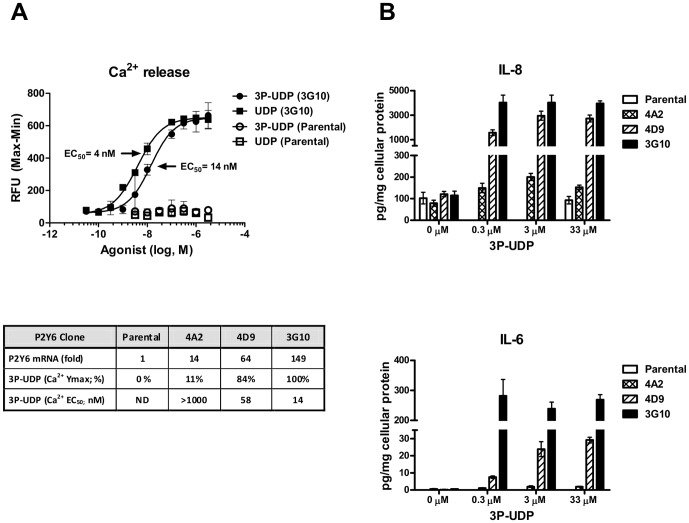
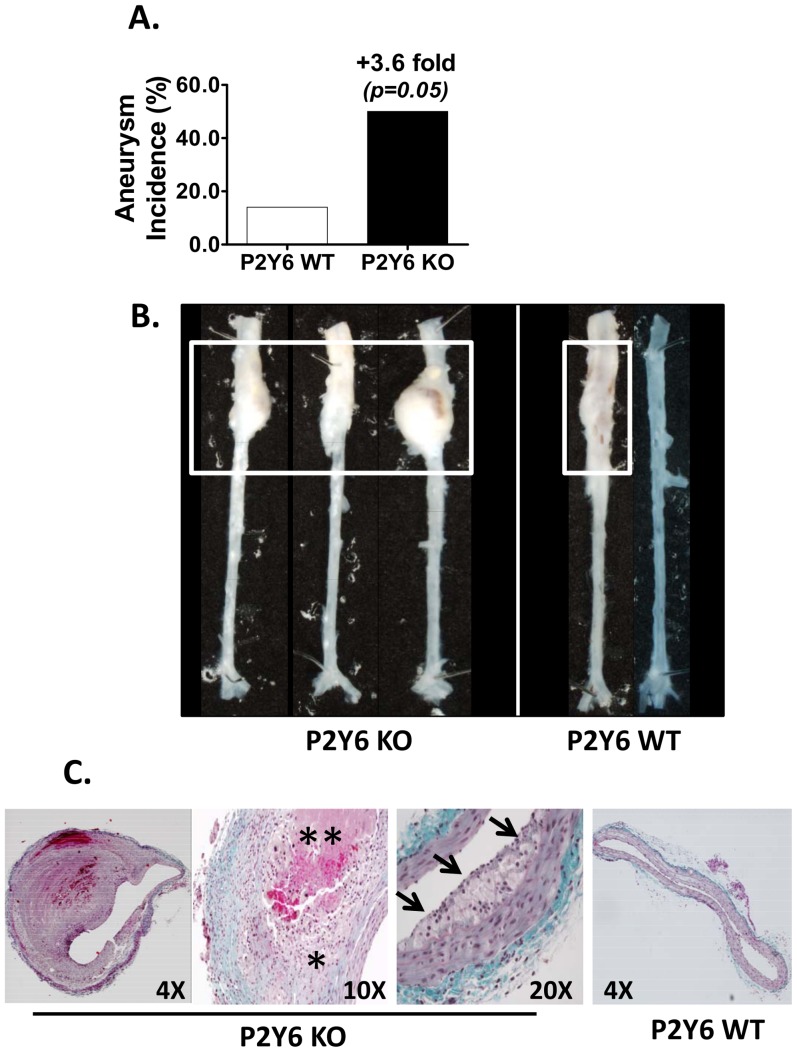
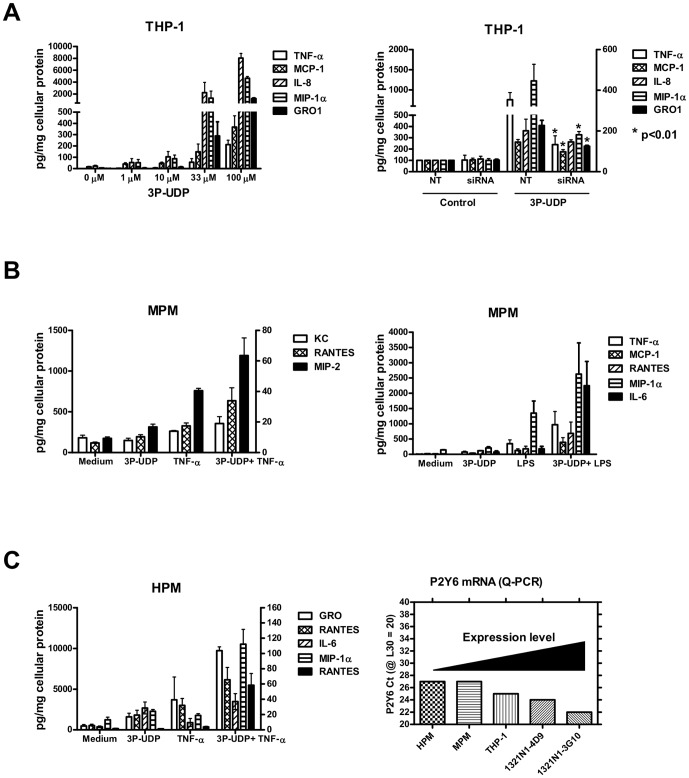
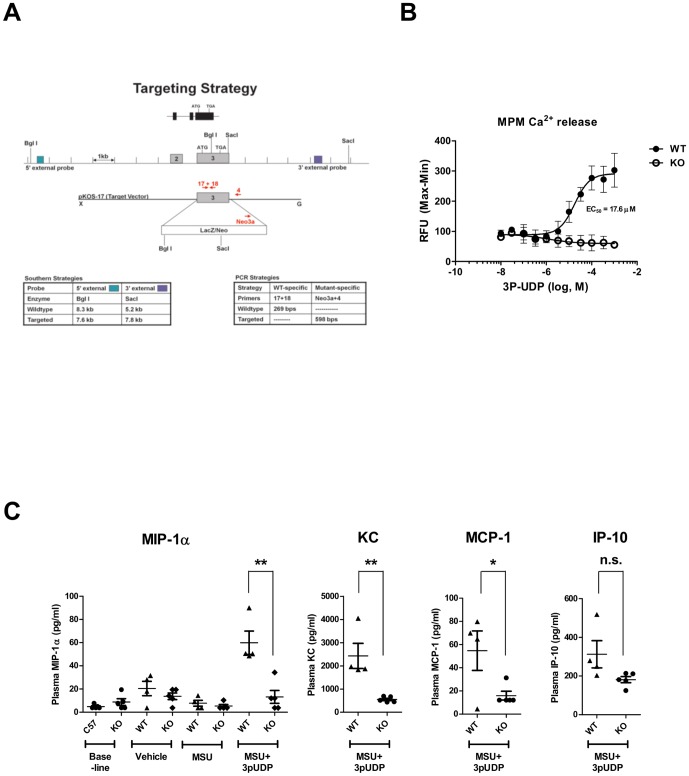
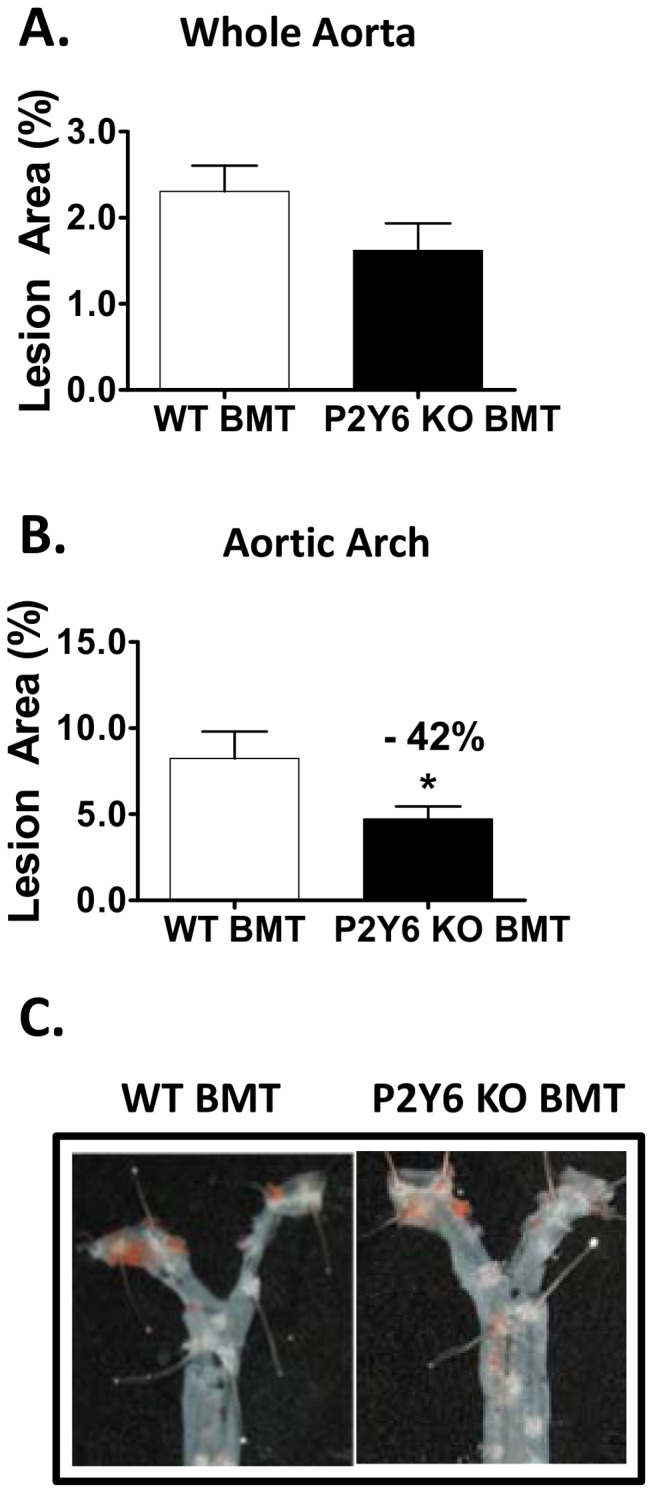
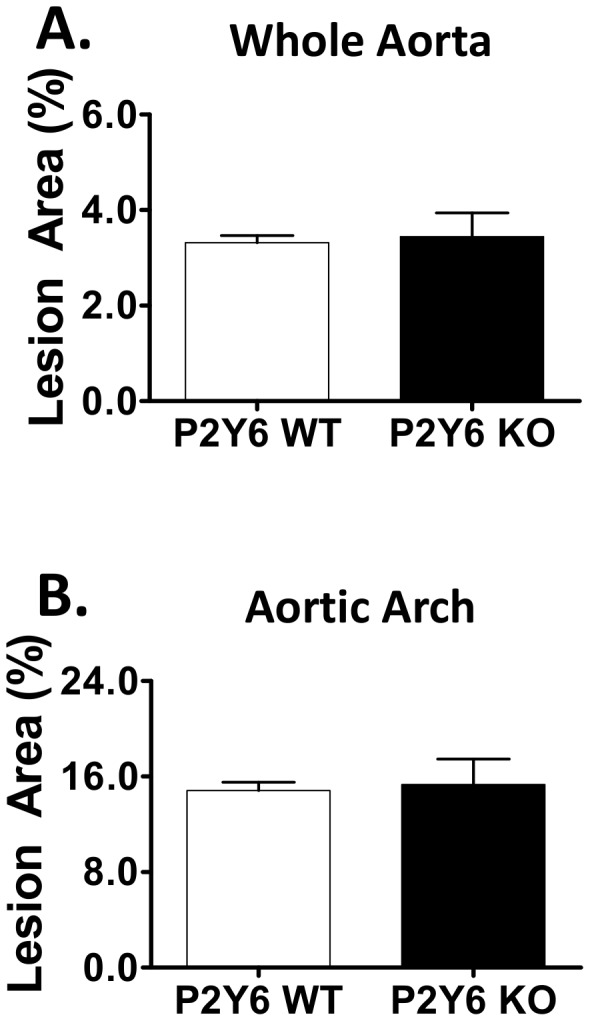
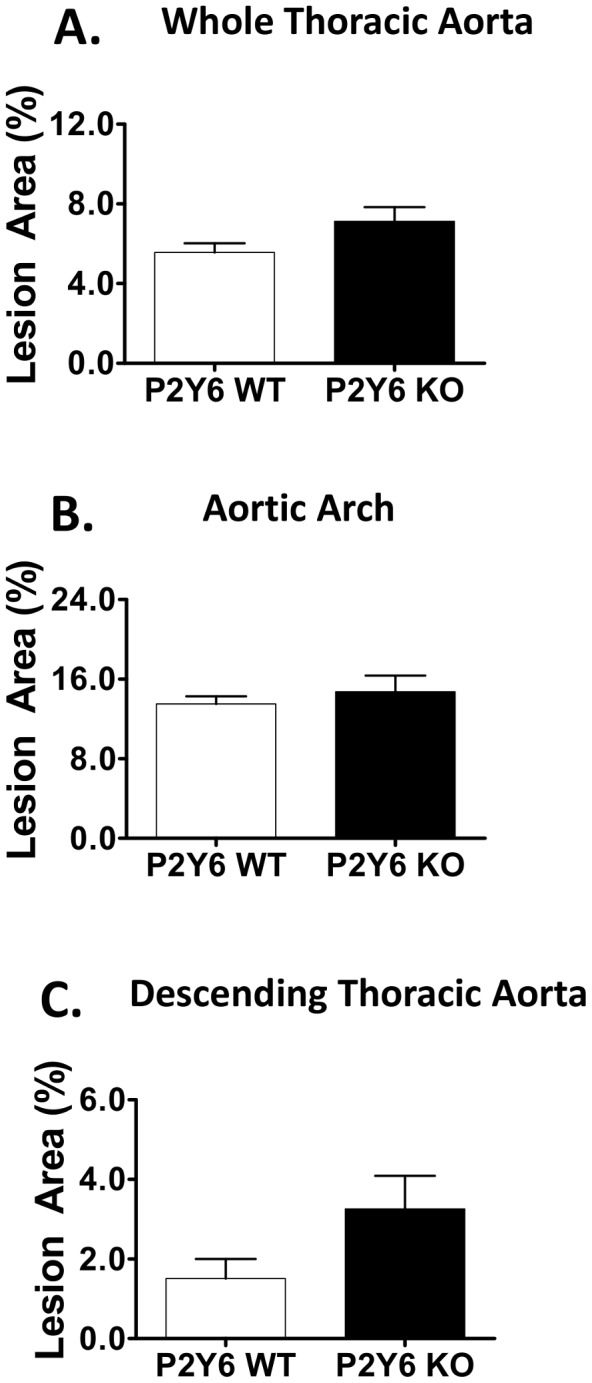
METHODOLOGY/PRINCIPAL FINDINGS: Cell-based studies in 1321N1 astrocytoma cells, which lack functional P2Y(6) receptors, showed that exogenous expression of P2Y(6) induces a robust, receptor- and agonist-dependent secretion of inflammatory mediators IL-8, IL-6, MCP-1 and GRO1. P2Y(6)-mediated inflammatory responses were also observed, albeit to a lesser extent, in macrophages endogenously expressing P2Y(6) and in acute peritonitis models of inflammation. To evaluate the role of P2Y(6) in atherosclerotic lesion development, we used P2Y(6)-deficient mice in three mouse models of atherosclerosis. A 43% reduction in aortic arch plaque was observed in high fat-fed LDLR knockout mice lacking P2Y(6) receptors in bone marrow-derived cells. In contrast, no effect on lesion development was observed in fat-fed whole body P2Y(6)xLDLR double knockout mice. Interestingly, in a model of enhanced vascular inflammation using angiotensin II, P2Y(6) deficiency enhanced formation of aneurysms and exhibited a trend towards increased atherosclerosis in the aorta of LDLR knockout mice.
P2Y(6) receptor augments pro-inflammatory responses in macrophages and exhibits a pro-atherogenic role in hematopoietic cells. However, the overall impact of whole body P2Y(6) deficiency on atherosclerosis appears to be modest and could reflect additional roles of P2Y(6) in vascular disease pathophysiologies, such as aneurysm formation.
P2Y(6)是一种UDP嘌呤能受体,在动脉粥样硬化病变中高度表达,并与关键血管细胞类型和巨噬细胞的促炎反应有关。然而,缺乏其参与动脉粥样硬化发生发展的证据。在此,我们利用细胞研究和三种动脉粥样硬化小鼠模型来评估P2Y(6)缺乏对动脉粥样硬化的影响。
方法/主要发现:在缺乏功能性P2Y(6)受体的1321N1星形细胞瘤细胞中进行的细胞研究表明,P2Y(6)的外源性表达可诱导炎症介质IL-8、IL-6、MCP-1和GRO1产生强大的、受体和激动剂依赖性分泌。在内源性表达P2Y(6)的巨噬细胞和急性腹膜炎炎症模型中也观察到了P2Y(6)介导的炎症反应,尽管程度较轻。为了评估P2Y(6)在动脉粥样硬化病变发展中的作用模型中使用了P2Y(6)缺陷小鼠。在骨髓来源细胞中缺乏P2Y(6)受体的高脂喂养LDLR基因敲除小鼠中,观察到主动脉弓斑块减少了43%。相比之下,在高脂喂养的全身P2Y(6)×LDLR双基因敲除小鼠中,未观察到对病变发展有影响。有趣的是,在使用血管紧张素II增强血管炎症的模型中,P2Y(6)缺乏增强了动脉瘤的形成,并在LDLR基因敲除小鼠的主动脉中呈现出动脉粥样硬化增加的趋势。
P2Y(6)受体增强巨噬细胞中的促炎反应,并在造血细胞中发挥促动脉粥样硬化作用。然而,全身P2Y(6)缺乏对动脉粥样硬化的总体影响似乎较小,这可能反映了P2Y(6)在血管疾病病理生理学中的其他作用,如动脉瘤形成。