Choy Seow Huey, Al-Mekhlafi Hesham M, Mahdy Mohammed A K, Nasr Nabil N, Sulaiman Maria, Lim Yvonne A L, Surin Johari
Department of Parasitology, Faculty of Medicine, University of Malaya, 50603 Kuala Lumpur, Malaysia.
1] Department of Parasitology, Faculty of Medicine, University of Malaya, 50603 Kuala Lumpur, Malaysia [2] Department of Parasitology, Faculty of Medicine and Health Sciences, Sana'a University, Sana'a, Yemen.
Sci Rep. 2014 Nov 4;4:6909. doi: 10.1038/srep06909.
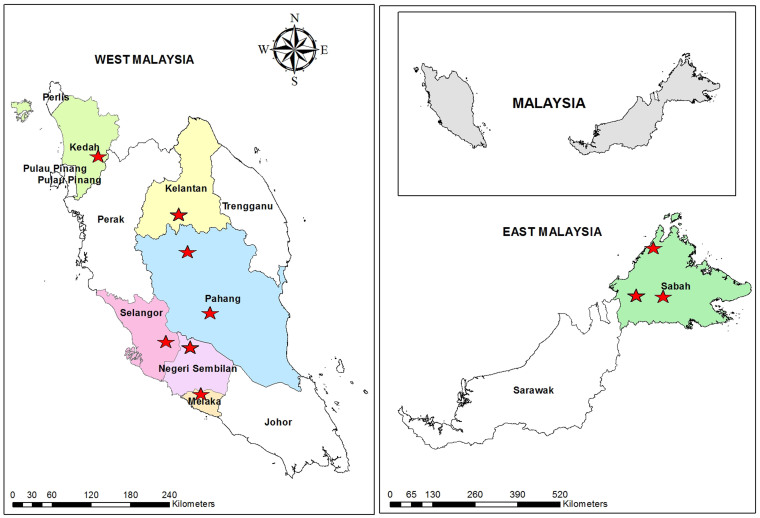
This study was carried out to investigate the prevalence and risk factors of Giardia infection among indigenous people in rural Malaysia. Faecal samples were collected from 1,330 participants from seven states of Malaysia and examined by wet mount and formalin-ether sedimentation methods while demographic, socioeconomic and environmental information was collected using a pre-tested questionnaire. The overall prevalence of Giardia infection was 11.6% and was significantly higher among those aged ≤ 12 years compared to their older counterparts. Multivariate logistic regression identified age of ≤ 12 years, lacking of toilet at household, not washing hands before eating, not washing hands after playing with animals, not boiling water before consumption, bathing in the river, and not wearing shoes when outside as the significant risk factors of Giardia infection among these communities. Based on a multilocus genotyping approach (including tpi, gdh and bg gene sequences), 69 isolates were identified as assemblage A, and 69 as assemblage B. No association between the assemblages and presence of symptoms was found. Providing proper sanitation, as well as provision of clean drinking water and proper health education regarding good personal hygiene practices will help significantly in reducing the prevalence and burden of Giardia infection in these communities.
本研究旨在调查马来西亚农村原住民中贾第虫感染的患病率及危险因素。从马来西亚七个州的1330名参与者中采集粪便样本,采用湿片法和福尔马林-乙醚沉淀法进行检测,同时使用预先测试的问卷收集人口统计学、社会经济和环境信息。贾第虫感染的总体患病率为11.6%,12岁及以下人群的患病率显著高于年龄较大者。多因素逻辑回归分析确定,12岁及以下、家中无厕所、饭前不洗手、与动物玩耍后不洗手、饮用前不煮沸水、在河中洗澡以及外出时不穿鞋是这些社区中贾第虫感染的显著危险因素。基于多位点基因分型方法(包括tpi、gdh和bg基因序列),69株分离株被鉴定为A群,69株为B群。未发现不同基因群与症状出现之间存在关联。提供适当的卫生设施、清洁的饮用水以及关于良好个人卫生习惯的适当健康教育,将有助于显著降低这些社区中贾第虫感染的患病率和负担。