Pahr Sandra, Selb Regina, Weber Milena, Focke-Tejkl Margarete, Hofer Gerhard, Dordić Andela, Keller Walter, Papadopoulos Nikolaos G, Giavi Stavroula, Mäkelä Mika, Pelkonen Anna, Niederberger Verena, Vrtala Susanne, Valenta Rudolf
Division of Immunopathology, Department of Pathophysiology and Allergy Research, Center of Pathophysiology, Infectiology and Immunology, Medical University of Vienna, Vienna, Austria; Christian Doppler Laboratory for the Development of Allergen Chips, Medical University of Vienna, Vienna, Austria.
Department of ENT, Medical University of Vienna, Vienna, Austria.
PLoS One. 2014 Nov 4;9(11):e111483. doi: 10.1371/journal.pone.0111483. eCollection 2014.
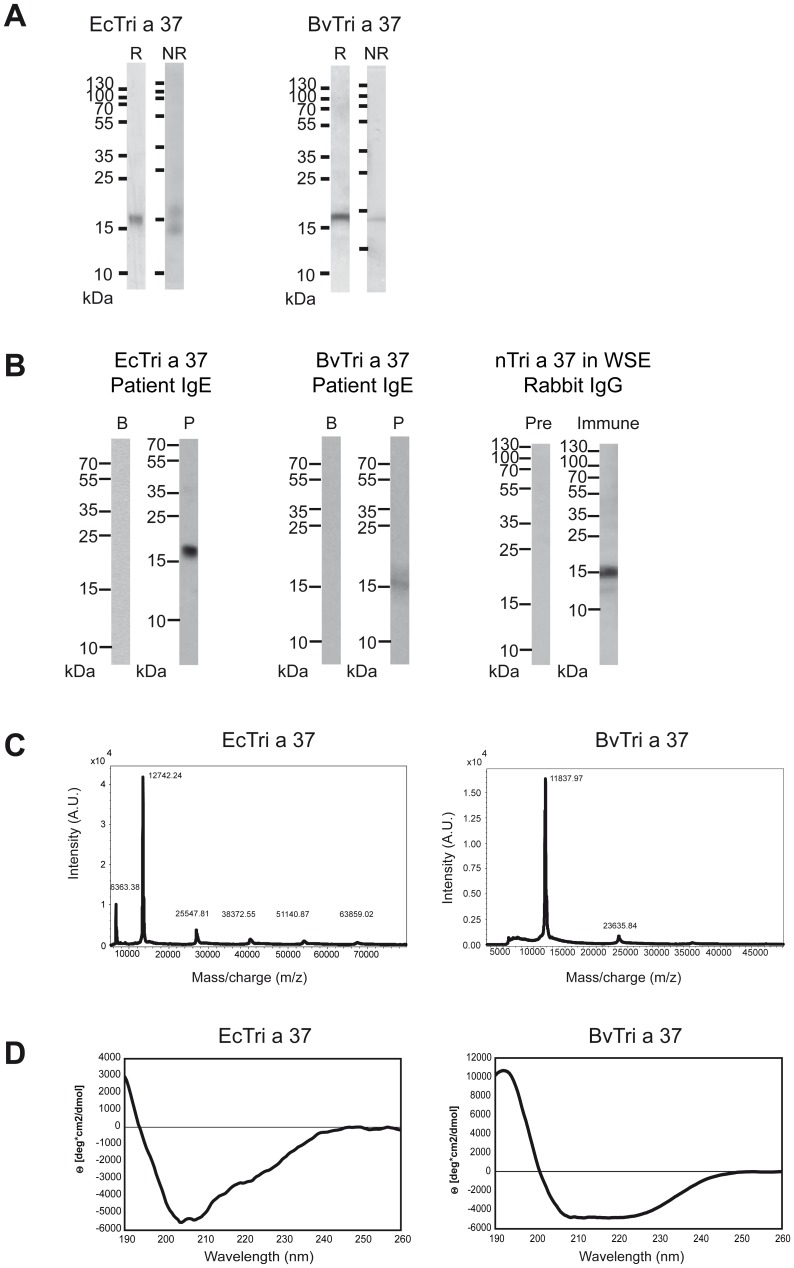
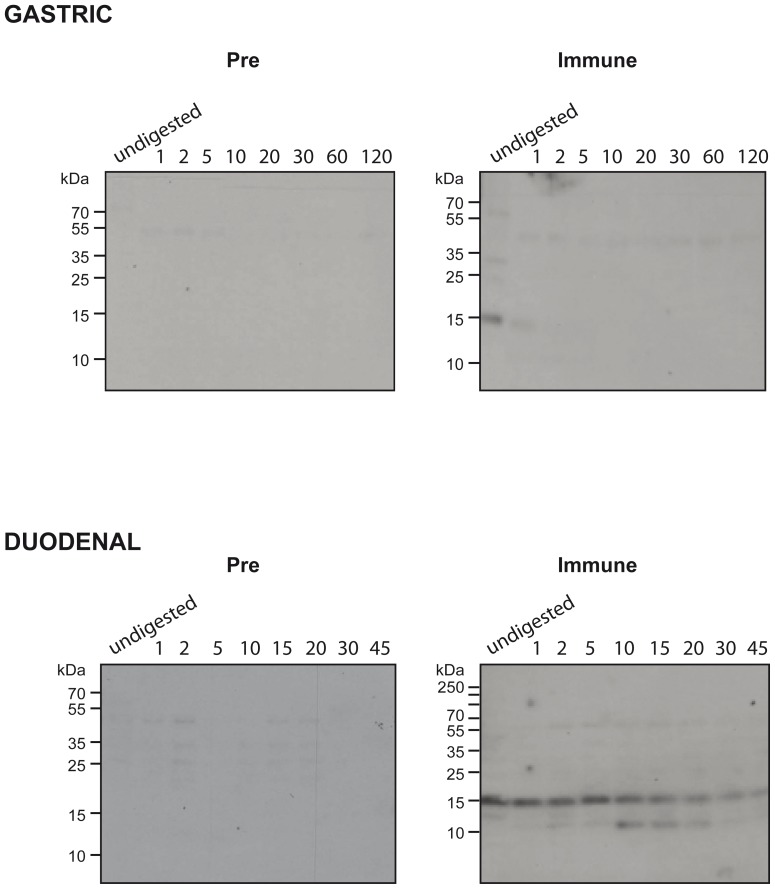
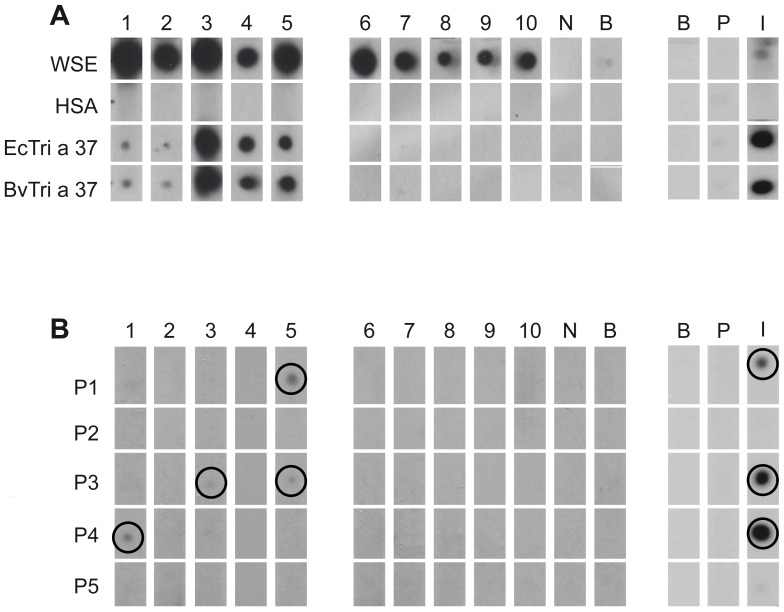
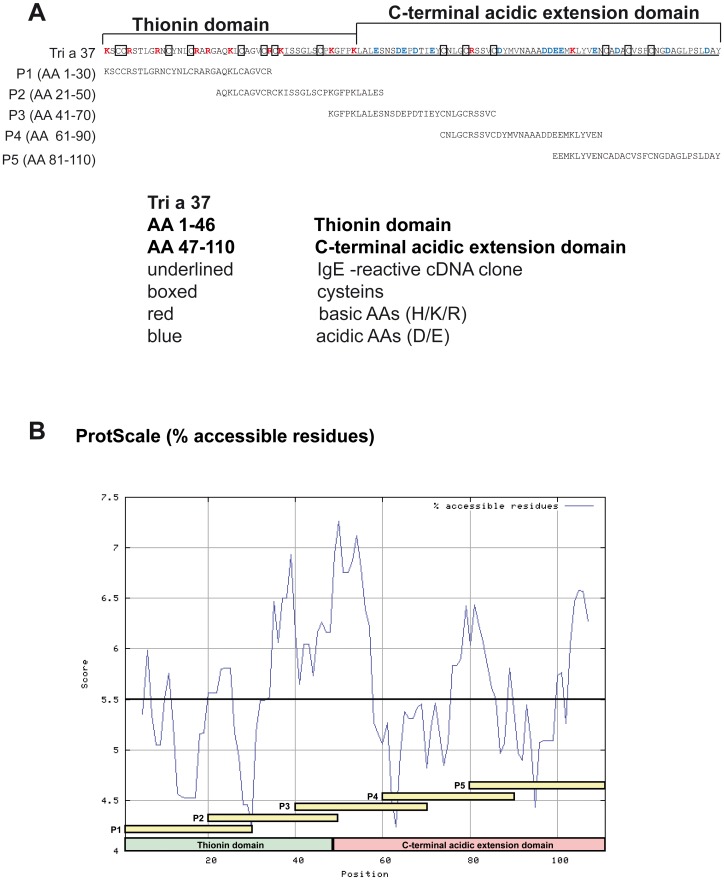
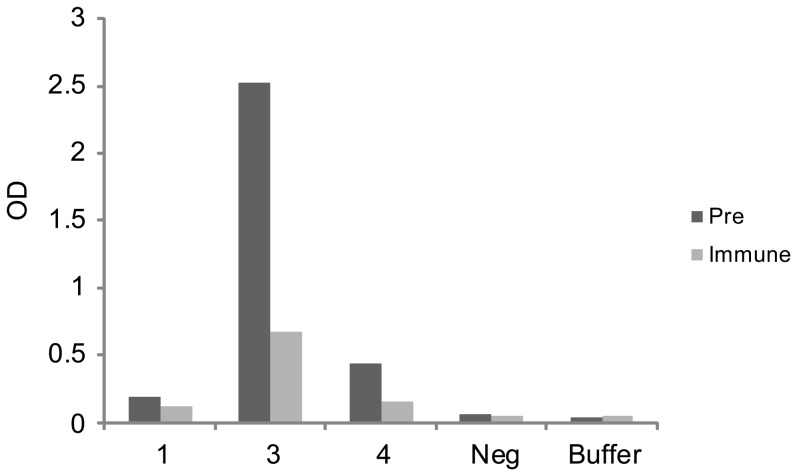
Wheat is an important staple food and potent allergen source. Recently, we isolated a cDNA coding for wheat alpha-purothionin which is recognized by wheat food allergic patients at risk for severe wheat-induced allergy. The purpose of the present study was the biochemical, biophysical and IgE epitope characterization of recombinant alpha-purothionin. Synthetic genes coding for alpha-purothionin were expressed in a prokaryotic system using Escherichia coli and in a eukaryotic expression system based on baculovirus-infected Sf9-insect cells. Recombinant proteins were purified and characterized by SDS-PAGE, mass spectrometry, circular dichroism, chemical cross-linking and size exclusion chromatography. Five overlapping peptide were synthesized for epitope mapping. Alpha-purothionin-specific rabbit antibodies were raised to perform IgE-inhibition experiments and to study the resistance to digestion. The IgE reactivity of the proteins and peptides from ten wheat food allergic patients was studied in non-denaturing RAST-based binding assays. Alpha-purothionin was expressed in the prokaryotic (EcTri a 37) and in the eukaryotic system (BvTri a 37) as a soluble and monomeric protein. However, circular dichroism analysis revealed that EcTri a 37 was unfolded whereas BvTri a 37 was a folded protein. Both proteins showed comparable IgE-reactivity and the epitope mapping revealed the presence of sequential IgE epitopes in the N-terminal basic thionin domain (peptide1:KSCCRSTLGRNCYNLCRARGAQKLCAGVCR) and in the C-terminal acidic extension domain (peptide3:KGFPKLALESNSDEPDTIEYCNLGCRSSVC, peptide4:CNLGCRSSVCDYMVNAAADDEEMKLYVEN). Natural Tri a 37 was digested under gastric conditions but resistant to duodenal digestion. Immunization with EcTri a 37 induced IgG antibodies which recognized similar epitopes as IgE antibodies from allergic patients and inhibited allergic patients' IgE binding. Reactivity to Tri a 37 does not require a folded protein and the presence of sequential IgE epitopes indicates that sensitization to alpha-purothionin occurs via the gut. Both allergens can be used for in-vitro diagnosis of wheat food allergy. The induction of blocking IgG antibodies suggests the usefulness for immunotherapy.
小麦是一种重要的主食和强效过敏原来源。最近,我们分离出了一个编码小麦α-硫氧还蛋白的cDNA,该蛋白可被有严重小麦诱导过敏风险的小麦食物过敏患者识别。本研究的目的是对重组α-硫氧还蛋白进行生化、生物物理和IgE表位特征分析。编码α-硫氧还蛋白的合成基因在原核系统中利用大肠杆菌进行表达,并在基于杆状病毒感染的Sf9昆虫细胞的真核表达系统中进行表达。重组蛋白经纯化后,通过SDS-PAGE、质谱分析、圆二色性、化学交联和尺寸排阻色谱法进行表征。合成了五个重叠肽用于表位定位。制备了α-硫氧还蛋白特异性兔抗体,用于进行IgE抑制实验和研究其对消化的抗性。在基于非变性RAST的结合试验中,研究了来自10名小麦食物过敏患者的蛋白质和肽的IgE反应性。α-硫氧还蛋白在原核系统(EcTri a 37)和真核系统(BvTri a 37)中均表达为可溶性单体蛋白。然而,圆二色性分析表明,EcTri a 37是未折叠的,而BvTri a 37是折叠蛋白。两种蛋白均表现出相当的IgE反应性,表位定位显示在N端碱性硫氧还蛋白结构域(肽1:KSCCRSTLGRNCYNLCRARGAQKLCAGVCR)和C端酸性延伸结构域(肽3:KGFPKLALESNSDEPDTIEYCNLGCRSSVC,肽4:CNLGCRSSVCDYMVNAAADDEEMKLYVEN)中存在连续的IgE表位。天然Tri a 37在胃部条件下可被消化,但对十二指肠消化具有抗性。用EcTri a 37免疫诱导产生的IgG抗体识别与过敏患者的IgE抗体相似的表位,并抑制过敏患者的IgE结合。对Tri a 37的反应性不需要折叠蛋白,连续IgE表位的存在表明对α-硫氧还蛋白的致敏是通过肠道发生的。两种过敏原均可用于小麦食物过敏的体外诊断。阻断性IgG抗体的诱导表明其对免疫治疗有用。