Burgess Stacey L, Buonomo Erica, Carey Maureen, Cowardin Carrie, Naylor Caitlin, Noor Zannatun, Wills-Karp Marsha, Petri William A
Division of Infectious Diseases and International Health, Department of Medicine, University of Virginia Health System, Charlottesville, Virginia, USA.
Department of Environmental Health Sciences, Johns Hopkins Bloomberg School of Public Health, Baltimore, Maryland, USA.
mBio. 2014 Nov 4;5(6):e01817. doi: 10.1128/mBio.01817-14.
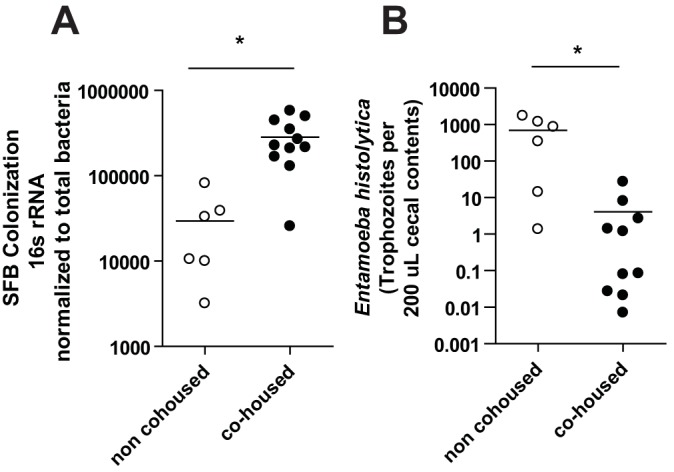
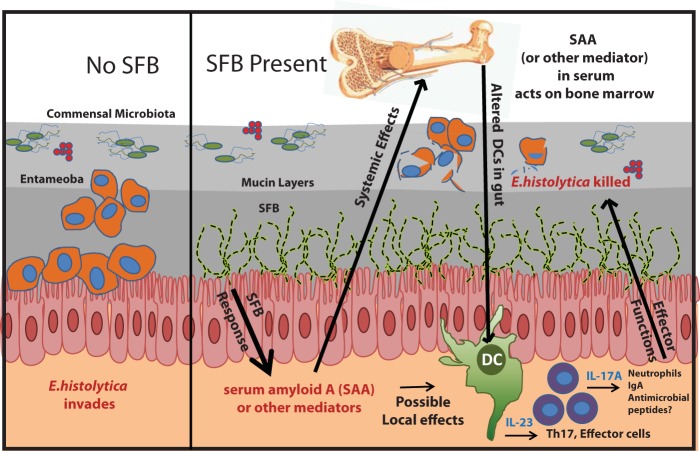
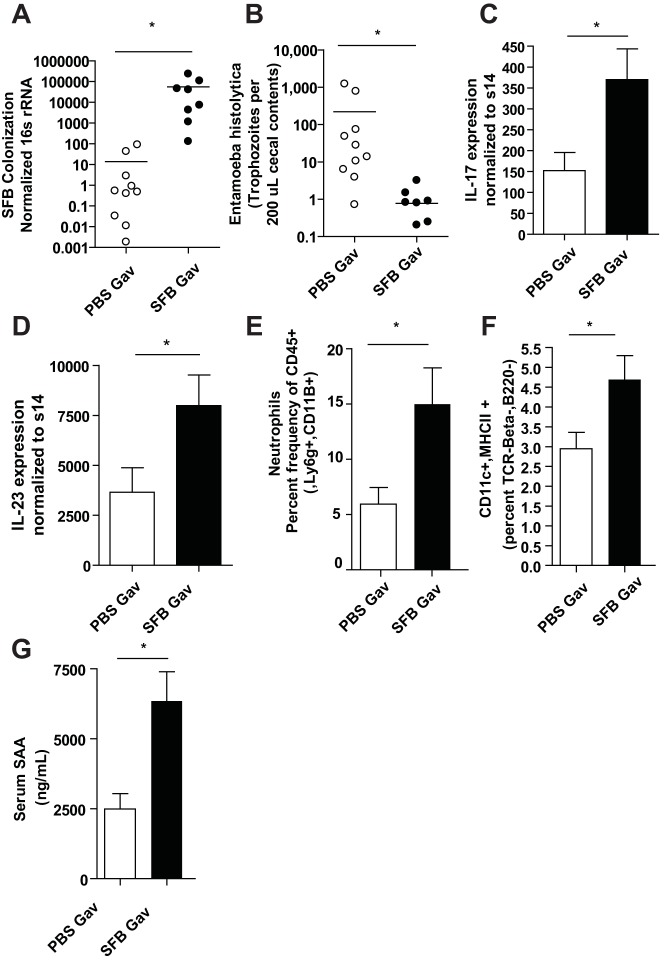
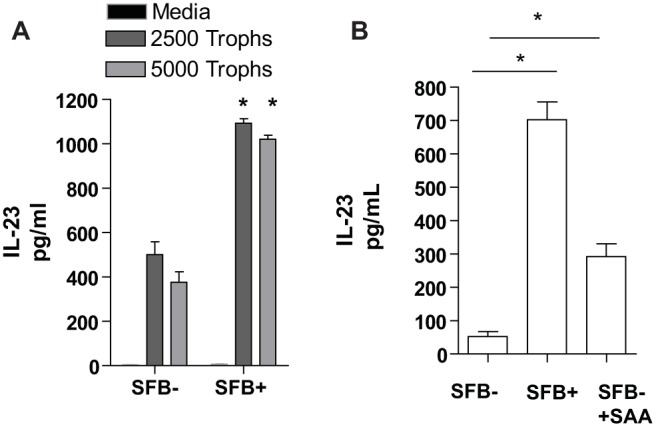
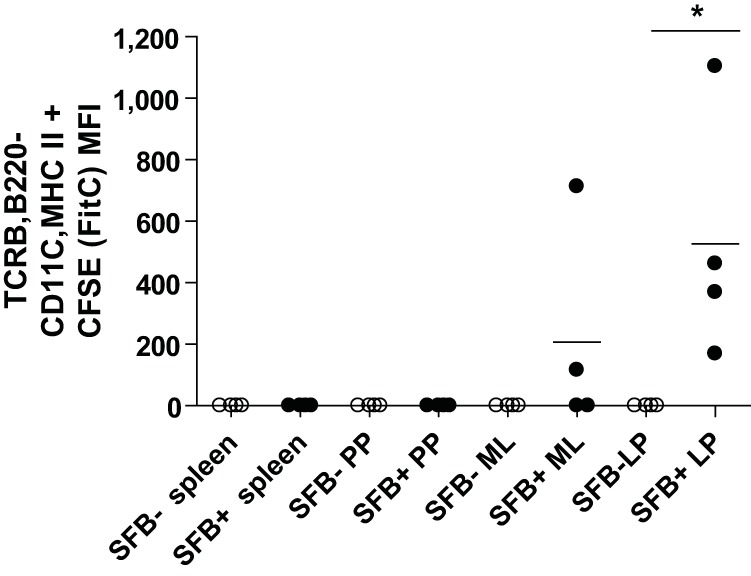
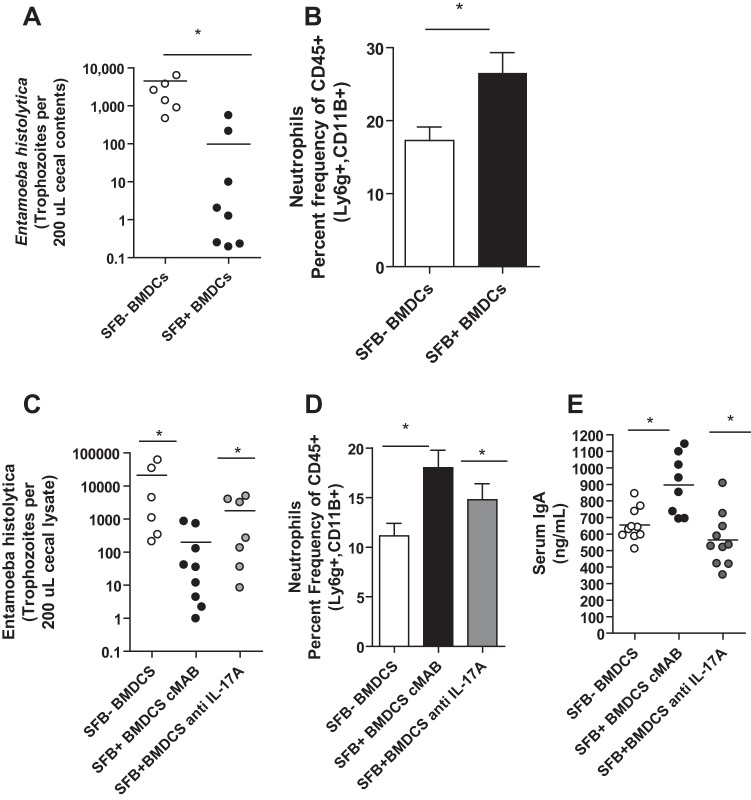
There is an emerging paradigm that the human microbiome is central to many aspects of health and may have a role in preventing enteric infection. Entamoeba histolytica is a major cause of amebic diarrhea in developing countries. It colonizes the colon lumen in close proximity to the gut microbiota. Interestingly, not all individuals are equally susceptible to E. histolytica infection. Therefore, as the microbiota is highly variable within individuals, we sought to determine if a component of the microbiota could regulate susceptibility to infection. In studies utilizing a murine model, we demonstrated that colonization of the gut with the commensal Clostridia-related bacteria known as segmented filamentous bacteria (SFB) is protective during E. histolytica infection. SFB colonization in this model was associated with elevated cecal levels of interleukin 17A (IL-17A), dendritic cells, and neutrophils. Bone marrow-derived dendritic cells (BMDCs) from SFB-colonized mice had higher levels of IL-23 production in response to stimulation with trophozoites. Adoptive transfer of BMDCs from an SFB(+) to an SFB(-) mouse was sufficient to provide protection against E. histolytica. IL-17A induction during BMDC transfer was necessary for this protection. This work demonstrates that intestinal colonization with a specific commensal bacterium can provide protection during amebiasis in a murine model. Most importantly, this work demonstrates that the microbiome can mediate protection against an enteric infection via extraintestinal effects on bone marrow-derived dendritic cells.
Entamoeba histolytica is the causative agent of amebiasis, an infectious disease that contributes significantly to morbidity and mortality due to diarrhea in the developing world. We showed in a murine model that colonization with the commensal members of the Clostridia known as SFB provides protection against E. histolytica and that dendritic cells from SFB-colonized mice alone can recapitulate protection. Understanding interactions between enteropathogens, commensal intestinal bacteria, and the mucosal immune response, including dendritic cells, will help in the development of effective treatments for this disease and other infectious and inflammatory diseases. The demonstration of immune-mediated protection due to communication from the microbiome to the bone marrow represents an emerging field of study that will yield unique approaches to the development of these treatments.
一种新出现的范式认为,人类微生物群对健康的许多方面至关重要,可能在预防肠道感染中发挥作用。溶组织内阿米巴是发展中国家阿米巴痢疾的主要病因。它在靠近肠道微生物群的结肠腔内定殖。有趣的是,并非所有个体对溶组织内阿米巴感染的易感性都相同。因此,由于个体内的微生物群高度可变,我们试图确定微生物群的一个组成部分是否可以调节感染易感性。在利用小鼠模型的研究中,我们证明,用被称为分节丝状菌(SFB)的共生梭菌相关细菌定殖肠道在溶组织内阿米巴感染期间具有保护作用。在该模型中,SFB定殖与盲肠中白细胞介素17A(IL-17A)、树突状细胞和中性粒细胞水平升高有关。来自SFB定殖小鼠的骨髓来源树突状细胞(BMDC)在受到滋养体刺激时产生更高水平的IL-23。将BMDC从SFB(+)小鼠过继转移到SFB(-)小鼠足以提供针对溶组织内阿米巴的保护。在BMDC转移期间诱导IL-17A对于这种保护是必要的。这项工作表明,在小鼠模型中,用一种特定的共生细菌定殖肠道可以在阿米巴病期间提供保护。最重要的是,这项工作表明,微生物群可以通过对骨髓来源树突状细胞的肠外作用介导对肠道感染的保护。
溶组织内阿米巴是阿米巴病的病原体,阿米巴病是一种传染病,在发展中世界因腹泻导致显著的发病率和死亡率。我们在小鼠模型中表明,用被称为SFB的梭菌共生成员定殖可提供针对溶组织内阿米巴的保护,并且仅来自SFB定殖小鼠的树突状细胞就能重现这种保护。了解肠道病原体、共生肠道细菌和包括树突状细胞在内的黏膜免疫反应之间的相互作用,将有助于开发针对这种疾病以及其他感染性和炎症性疾病的有效治疗方法。微生物群与骨髓之间通过通信实现免疫介导保护的证明代表了一个新兴的研究领域,这将产生开发这些治疗方法的独特途径。