Department of Genetics, Stanford University School of Medicine, Stanford, California, USA.
Division of Infectious Diseases and International Health, Department of Medicine, University of Virginia School of Medicine, Charlottesville, Virginia, USA.
mBio. 2018 Sep 18;9(5):e01668-18. doi: 10.1128/mBio.01668-18.
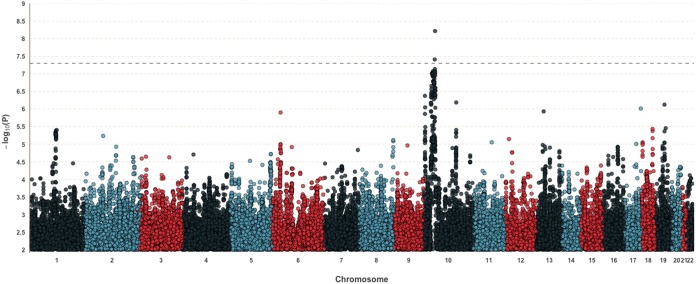
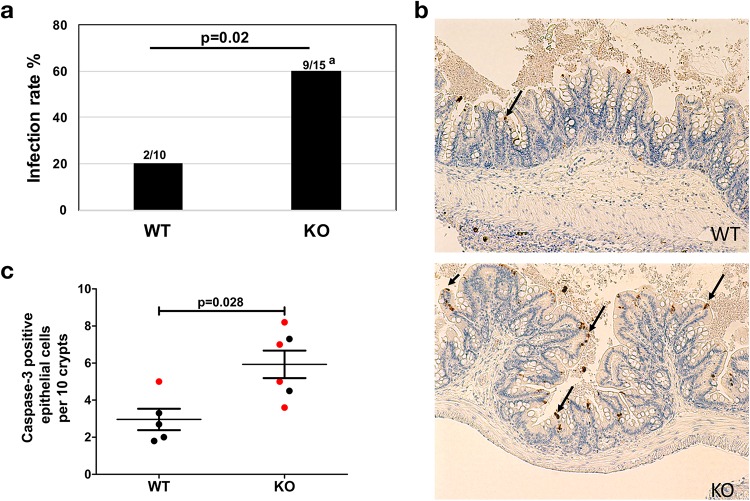
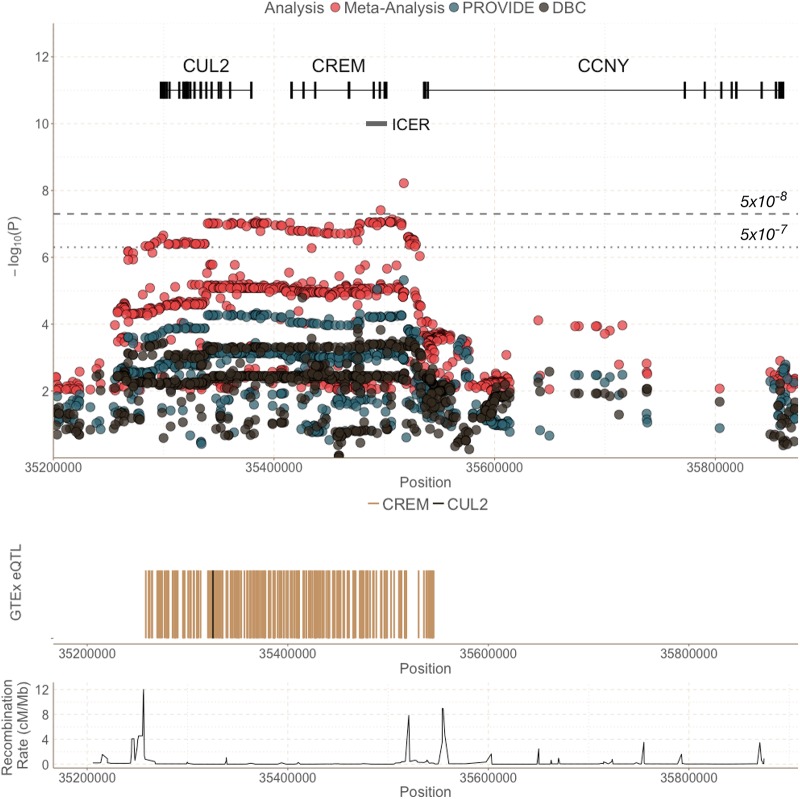
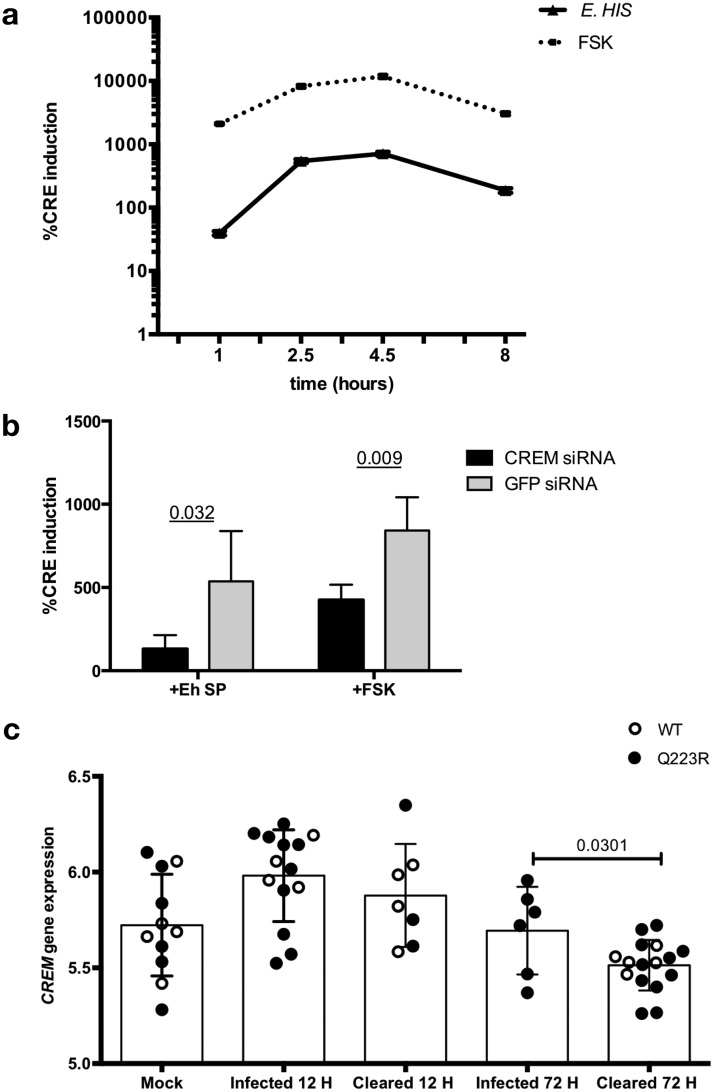
is the etiologic agent of amebic dysentery, though clinical manifestation of infection is highly variable ranging from subclinical colonization to invasive disease. We hypothesize that host genetics contribute to the variable outcomes of infection; thus, we conducted a genome-wide association study (GWAS) in two independent birth cohorts of Bangladeshi infants monitored for susceptibility to disease in the first year of life. Children with at least one diarrheal episode positive for (cases) were compared to children with no detectable infection in the same time frame (controls). Meta-analyses under a fixed-effect inverse variance weighting model identified multiple variants in a region of chromosome 10 containing loci associated with symptomatic infection. An intergenic insertion between and (rs58000832) achieved genome-wide significance ( value from meta-analysis [] = 6.05 × 10), and each additional risk allele of rs58000832 conferred 2.42 increased odds of a diarrhea-associated infection. The most strongly associated single nucleotide polymorphism (SNP) within a gene was in an intron of (rs58468612; = 8.94 × 10), which has been implicated as a susceptibility locus for inflammatory bowel disease (IBD). Gene expression resources suggest associated loci are related to the lower expression of Increased expression is also observed in early infection. Further, mice were more susceptible to amebic colitis. These genetic associations reinforce the pathological similarities observed in gut inflammation between infection and IBD. Diarrhea is the second leading cause of death for children globally, causing 760,000 deaths each year in children less than 5 years old. Amebic dysentery contributes significantly to this burden, especially in developing countries. The identification of host factors that control or enable enteric pathogens has the potential to transform our understanding of disease predisposition, outcomes, and treatments. Our discovery of the transcriptional regulator cAMP-responsive element modulator (CREM) as a genetic modifier of susceptibility to amebic disease has implications for understanding the pathogenesis of other diarrheal infections. Further, emerging evidence for CREM in IBD susceptibility suggests that CREM is a critical regulator of enteric inflammation and may have broad therapeutic potential as a drug target across intestinal inflammatory diseases.
是阿米巴痢疾的病原体,尽管感染的临床表现差异很大,从无症状定植到侵袭性疾病都有。我们假设宿主遗传学对感染的不同结果有贡献;因此,我们在两个独立的孟加拉国婴儿出生队列中进行了一项全基因组关联研究(GWAS),这些婴儿在生命的第一年中易患疾病。至少有一次腹泻发作阳性的儿童(病例)与同一时间段内未检测到的儿童(对照)进行了比较。在固定效应逆方差加权模型下进行的荟萃分析确定了染色体 10 上一个区域中的多个变体,该区域包含与症状性感染相关的基因座。位于和 之间的基因间插入(rs58000832)达到了全基因组显著水平(荟萃分析 [] = 6.05×10),每个 rs58000832 的风险等位基因增加了腹泻相关 感染的 2.42 倍的几率。在一个基因的内含子中,与最强相关的单核苷酸多态性(SNP)是(rs58468612; = 8.94×10),该 SNP 已被认为是炎症性肠病(IBD)的易感基因座。基因表达资源表明,相关基因座与 较低的表达有关。还观察到早期 感染中 表达增加。此外, 感染的 小鼠更容易发生 阿米巴结肠炎。这些遗传关联加强了肠道炎症中观察到的与感染和 IBD 之间的病理相似性。腹泻是全球儿童的第二大死因,每年导致全球 5 岁以下儿童死亡 76 万人。阿米巴痢疾对此负担有重大贡献,特别是在发展中国家。鉴定控制或使肠道病原体能够发挥作用的宿主因素有可能改变我们对疾病易感性、结果和治疗的理解。我们发现环磷酸腺苷反应元件调节剂(CREM)作为阿米巴病易感性的转录调节因子,这对理解其他腹泻感染的发病机制具有重要意义。此外,CREM 在 IBD 易感性方面的新证据表明,CREM 是肠道炎症的关键调节剂,作为一种药物靶点,在肠道炎症性疾病中具有广泛的治疗潜力。