Ribeiro Mara Fernandes, Zhu Hongyan, Millard Ronald W, Fan Guo-Chang
Department of Pharmacology and Cell Biophysics, University of Cincinnati College of Medicine, Cincinnati, OH 45267, USA.
Curr Angiogenes. 2013;2(1):54-59. doi: 10.2174/22115528113020020001.
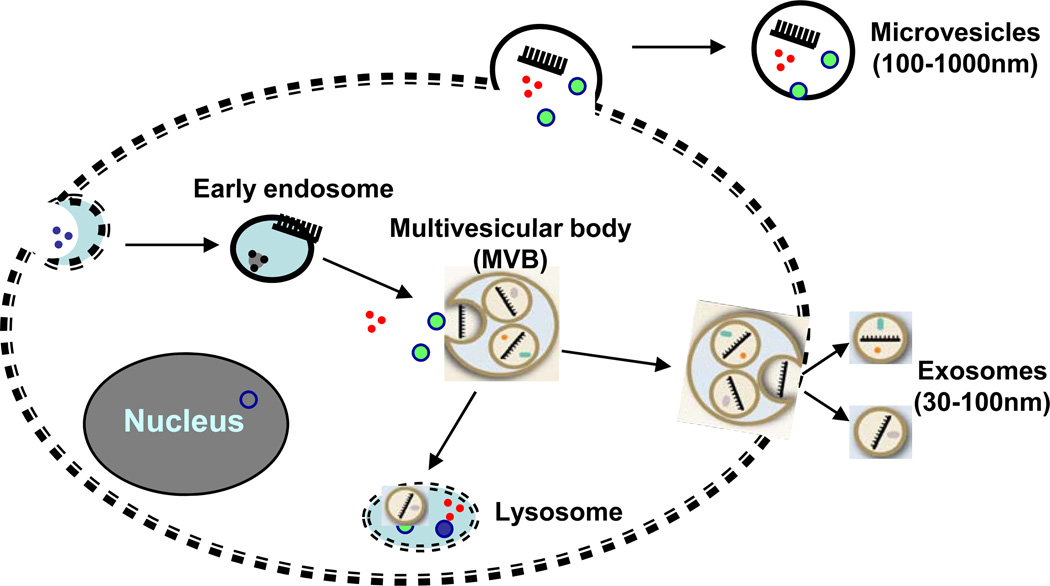
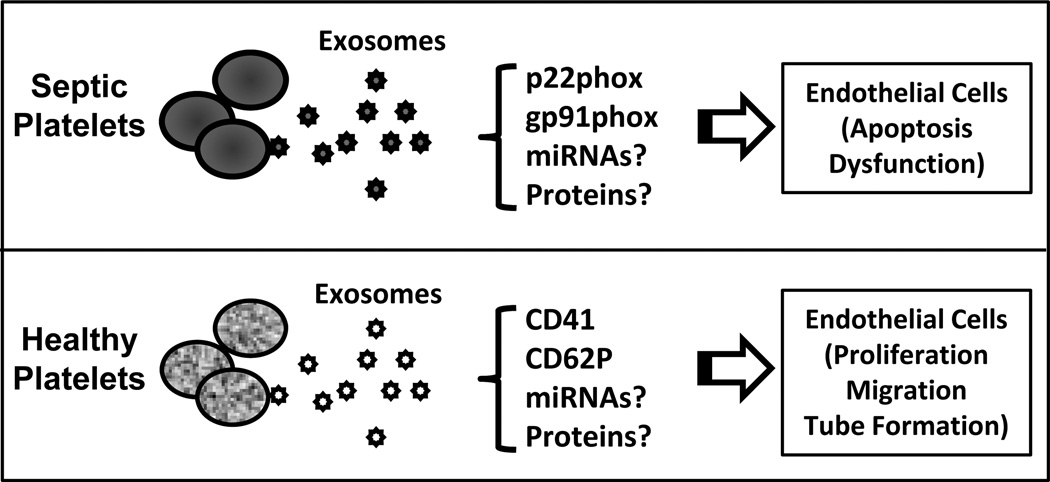
Exosomes, a group of small vesicles (30-100 nm), originate when the inward budding of the endosomal membrane forms multivesicular bodies (MVBs). Exosomes are released into the extracellular space when the MVBs fuse with the plasma membrane. Numerous studies have indicated that exosomes play critical roles in mediating cell-to-cell communication. Also, exosomes are believed to possess a powerful capacity in regulating cell survival/death, inflammation and tumor metastasis, depending on the particular array of molecules contained within a particular population of exosomes. This mini-review will summarize dual roles of exosomes derived from different types of cells (i.e. endothelial cells, tumor cells, platelets, bone-marrow stem cells, cardiomyocytes, myocardial progenitor cells and among others) in endothelial cell proliferation, migration and tube-like formation. In particular, this review will focus on the therapeutic potential of exosomes as a natural nano-particle for delivering pro-/anti-angiogenic factors (proteins, mRNAs and microRNAs) into endothelial cells.
外泌体是一组小囊泡(30 - 100纳米),当内体膜向内出芽形成多泡体(MVBs)时产生。当MVBs与质膜融合时,外泌体被释放到细胞外空间。大量研究表明,外泌体在介导细胞间通讯中起关键作用。此外,根据特定群体外泌体内所含分子的特定组合,外泌体被认为具有调节细胞存活/死亡、炎症和肿瘤转移的强大能力。本综述将总结源自不同类型细胞(即内皮细胞、肿瘤细胞、血小板、骨髓干细胞、心肌细胞、心肌祖细胞等)的外泌体在内皮细胞增殖、迁移和管状结构形成中的双重作用。特别是,本综述将重点关注外泌体作为一种天然纳米颗粒,将促/抗血管生成因子(蛋白质、mRNA和微小RNA)递送至内皮细胞的治疗潜力。