McCann Sarah K, Dusting Gregory J, Roulston Carli L
Stroke Injury and Repair Team, O'Brien Institute, St Vincent's Hospital, Melbourne, Victoria, Australia; Department of Surgery, Faculty of Medicine, Dentistry and Health Sciences, University of Melbourne, Melbourne, Victoria, Australia.
Cytoprotection Pharmacology Program, Centre for Eye Research, the Royal Eye and Ear Hospital, Melbourne, Victoria, Australia; Department of Ophthalmology, Faculty of Medicine, Dentistry and Health Sciences, University of Melbourne, Melbourne, Victoria, Australia.
PLoS One. 2014 Nov 6;9(11):e110602. doi: 10.1371/journal.pone.0110602. eCollection 2014.
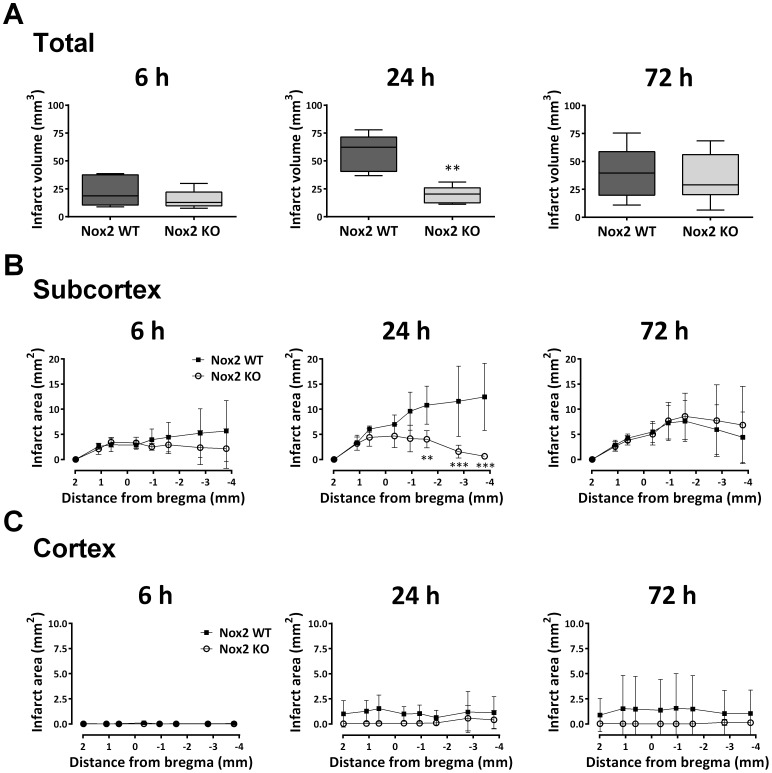
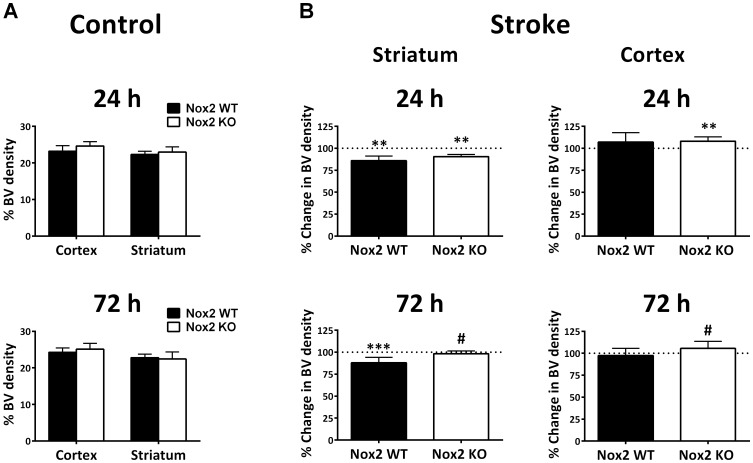
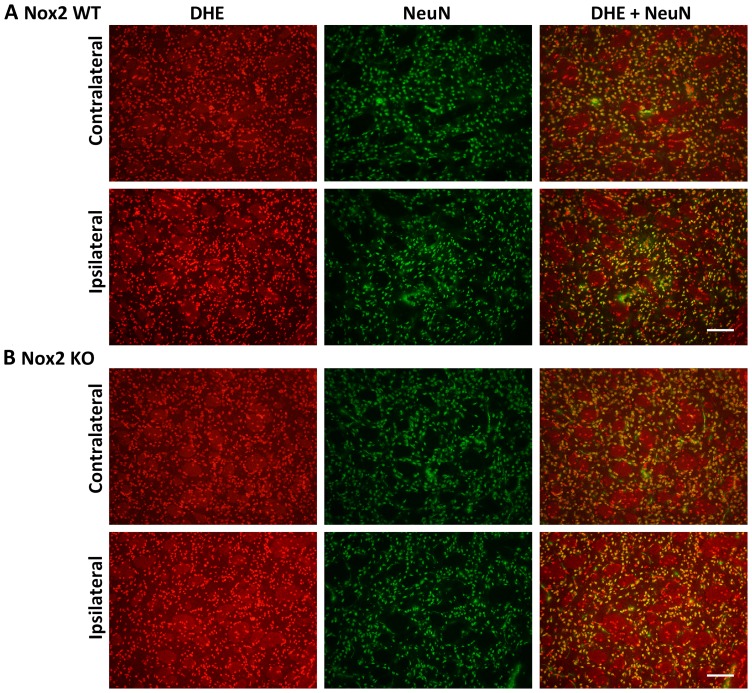
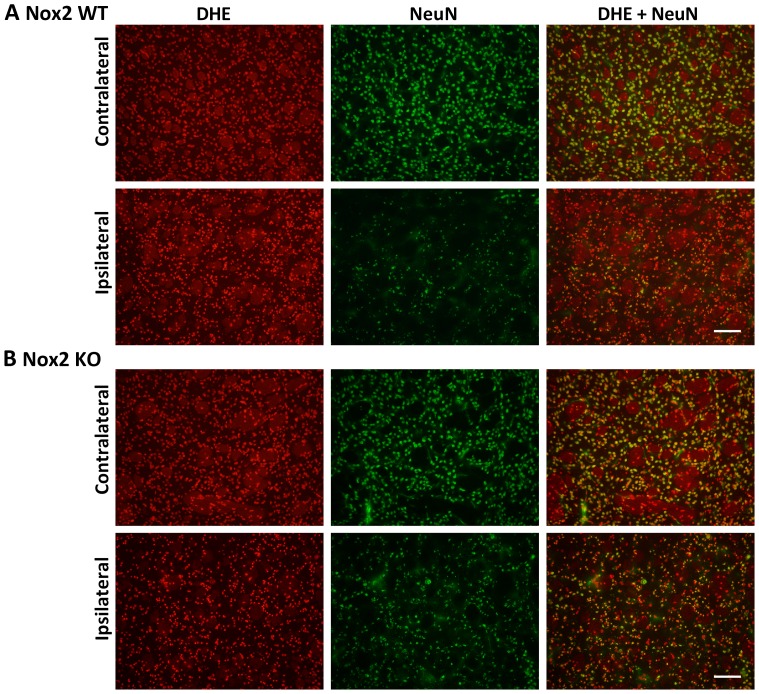
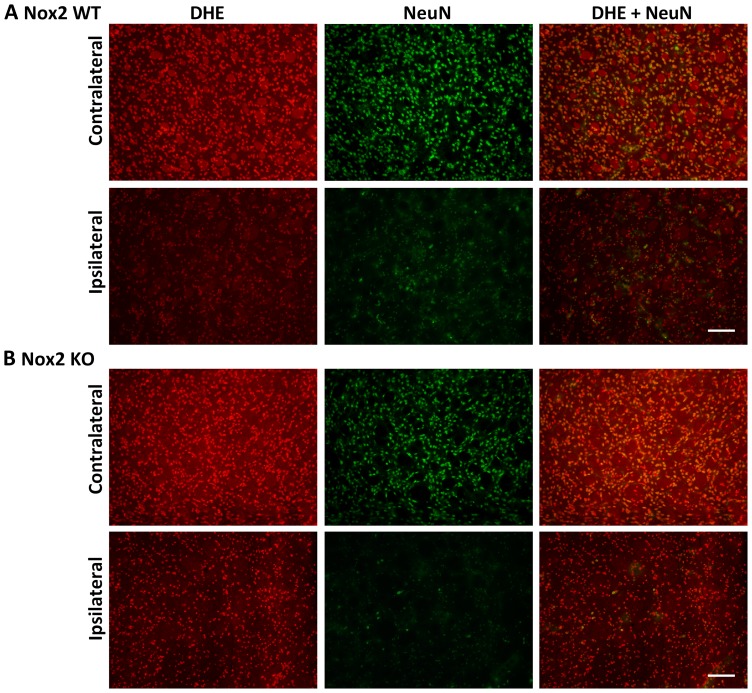
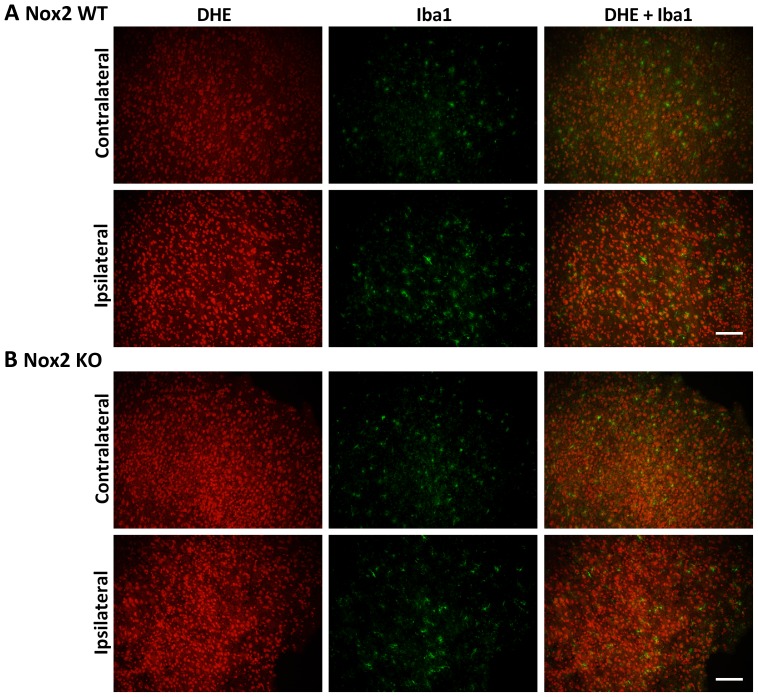
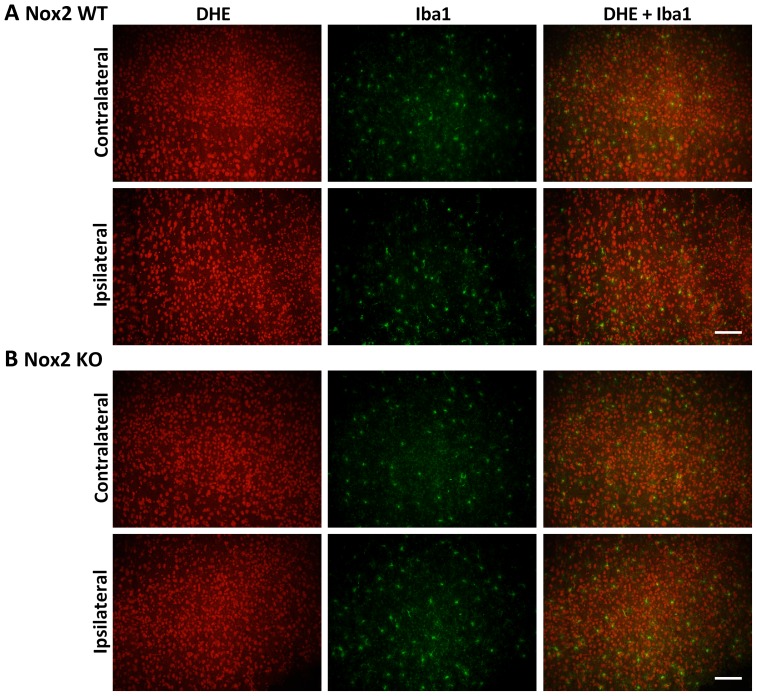
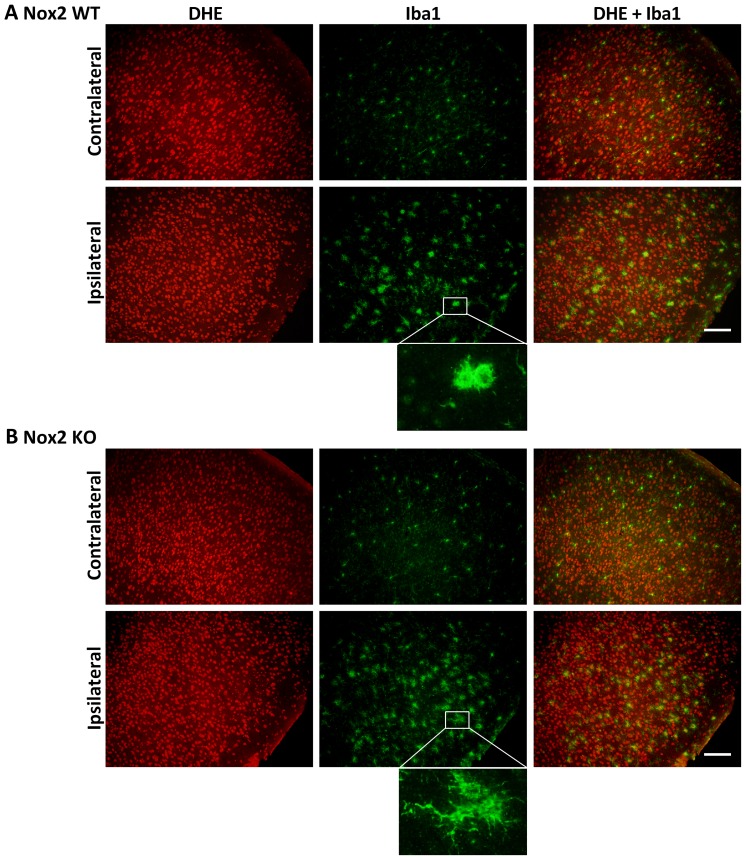
Evidence suggests the NADPH oxidases contribute to ischaemic stroke injury and Nox2 is the most widely studied subtype in the context of stroke. There is still conjecture however regarding the benefits of inhibiting Nox2 to improve stroke outcome. The current study aimed to examine the temporal effects of genetic Nox2 deletion on neuronal loss after ischaemic stroke using knockout (KO) mice with 6, 24 and 72 hour recovery. Transient cerebral ischaemia was induced via intraluminal filament occlusion and resulted in reduced infarct volumes in Nox2 KO mice at 24 h post-stroke compared to wild-type controls. No protection was evident at either 6 h or 72 h post-stroke, with both genotypes exhibiting similar volumes of damage. Reactive oxygen species were detected using dihydroethidium and were co-localised with neurons and microglia in both genotypes using immunofluorescent double-labelling. The effect of Nox2 deletion on vascular damage and recovery was also examined 24 h and 72 h post-stroke using an antibody against laminin. Blood vessel density was decreased in the ischaemic core of both genotypes 24 h post-stroke and returned to pre-stroke levels only in Nox2 KO mice by 72 h. Overall, these results are the first to show that genetic Nox2 deletion merely delays the progression of neuronal loss after stroke but does not prevent it. Additionally, we show for the first time that Nox2 deletion increases re-vascularisation of the damaged brain by 72 h, which may be important in promoting endogenous brain repair mechanisms that rely on re-vascularisation.
有证据表明,NADPH氧化酶会导致缺血性中风损伤,而Nox2是在中风背景下研究最广泛的亚型。然而,关于抑制Nox2对改善中风预后的益处仍存在推测。本研究旨在使用恢复6小时、24小时和72小时的基因敲除(KO)小鼠,研究基因敲除Nox2对缺血性中风后神经元损失的时间效应。通过腔内细丝闭塞诱导短暂性脑缺血,与野生型对照相比,中风后24小时Nox2基因敲除小鼠的梗死体积减小。在中风后6小时或72小时均未观察到明显的保护作用,两种基因型的损伤体积相似。使用二氢乙锭检测活性氧,并通过免疫荧光双标记在两种基因型中与神经元和小胶质细胞共定位。中风后24小时和72小时,还使用抗层粘连蛋白抗体检测了Nox2缺失对血管损伤和恢复的影响。中风后24小时,两种基因型的缺血核心血管密度均降低,到72小时时仅Nox2基因敲除小鼠的血管密度恢复到中风前水平。总体而言,这些结果首次表明,基因敲除Nox2仅能延迟中风后神经元损失的进展,但不能阻止其发生。此外,我们首次表明,敲除Nox2可使受损大脑在72小时时的血管再通增加,这可能对促进依赖血管再通的内源性脑修复机制具有重要意义。