Department of Pediatrics, University "Federico II" of Naples, Naples 8823100, Italy.
Department of Pediatrics, University "Magna Graecia" of Catanzaro, Catanzaro 88100, Italy.
Metabolites. 2014 Nov 4;4(4):1007-17. doi: 10.3390/metabo4041007.
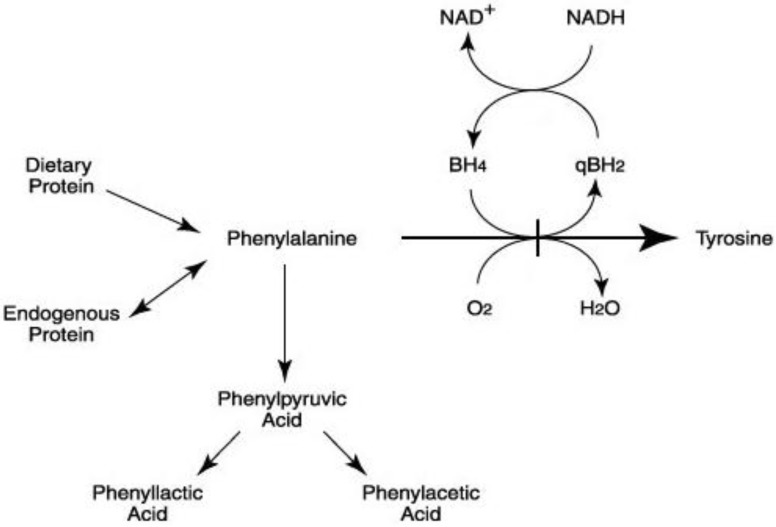
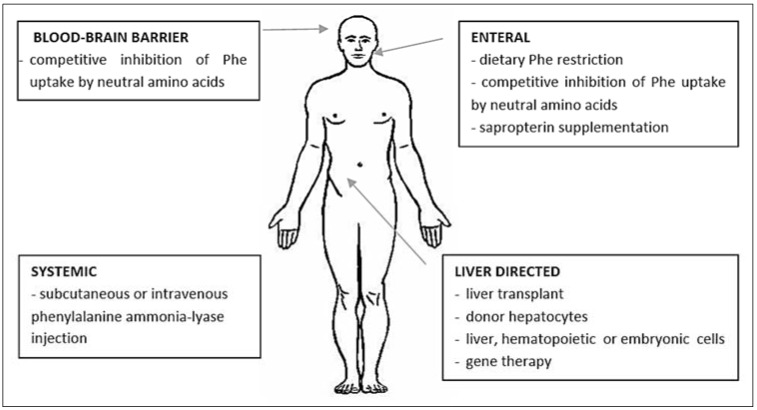
Phenylketonuria (PKU) was the first inherited metabolic disease in which dietary treatment was found to prevent the disease's clinical features. Treatment of phenylketonuria remains difficult due to progressive decrease in adherence to diet and the presence of neurocognitive defects despite therapy. This review aims to summarize the current literature on new treatment strategies. Additions to treatment include new, more palatable foods based on glycomacropeptide that contains very limited amount of aromatic amino acids, the administration of large neutral amino acids to prevent phenylalanine entry into the brain or tetrahydropterina cofactor capable of increasing residual activity of phenylalanine hydroxylase. Moreover, human trials have recently been performed with subcutaneous administration of phenylalanine ammonia-lyase, and further efforts are underway to develop an oral therapy containing phenylanine ammonia-lyase. Gene therapy also seems to be a promising approach in the near future.
苯丙酮尿症(PKU)是第一种被发现饮食治疗可预防其临床特征的遗传性代谢疾病。尽管进行了治疗,但由于饮食依从性逐渐下降和存在神经认知缺陷,苯丙酮尿症的治疗仍然很困难。本综述旨在总结目前关于新治疗策略的文献。治疗方法的补充包括基于含有极少量芳香族氨基酸的糖巨肽的新型、更可口的食物,给予大中性氨基酸以防止苯丙氨酸进入大脑,或四氢生物蝶呤辅因子,其能够增加苯丙氨酸羟化酶的残留活性。此外,最近已经在人体中进行了苯丙氨酸氨裂解酶的皮下给药试验,并且正在进行进一步的努力来开发含有苯丙氨酸氨裂解酶的口服治疗方法。基因治疗在不久的将来似乎也是一种很有前途的方法。