Yin Qing-Fei, Hu Shi-Bin, Xu Ye-Fen, Yang Li, Carmichael Gordon G, Chen Ling-Ling
State Key Laboratory of Molecular Biology, Institute of Biochemistry and Cell Biology, Shanghai Institutes for Biological Sciences, Chinese Academy of Sciences, 320 Yueyang Road, Shanghai 200031, China.
Key Laboratory of Computational Biology, CAS-MPG Partner Institute for Computational Biology, Shanghai Institutes for Biological Sciences, Chinese Academy of Sciences, 320 Yueyang Road, Shanghai 200031, China.
Nucleic Acids Res. 2015 Jan;43(1):e5. doi: 10.1093/nar/gku1050. Epub 2014 Nov 5.
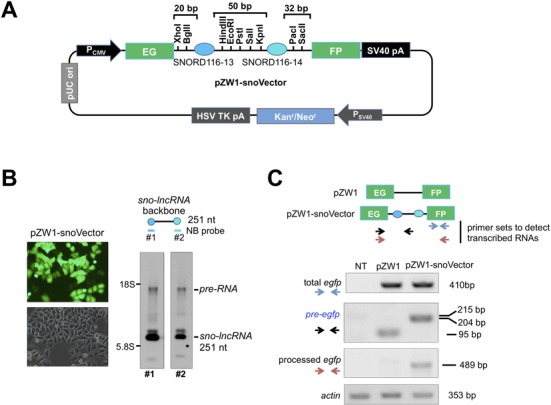
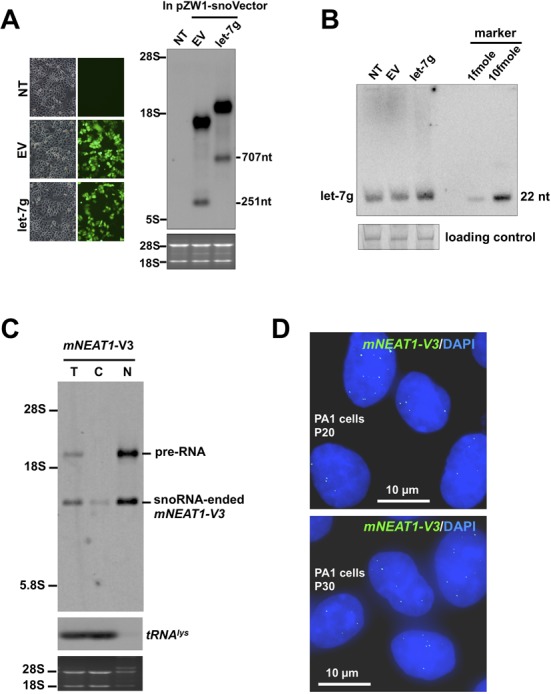
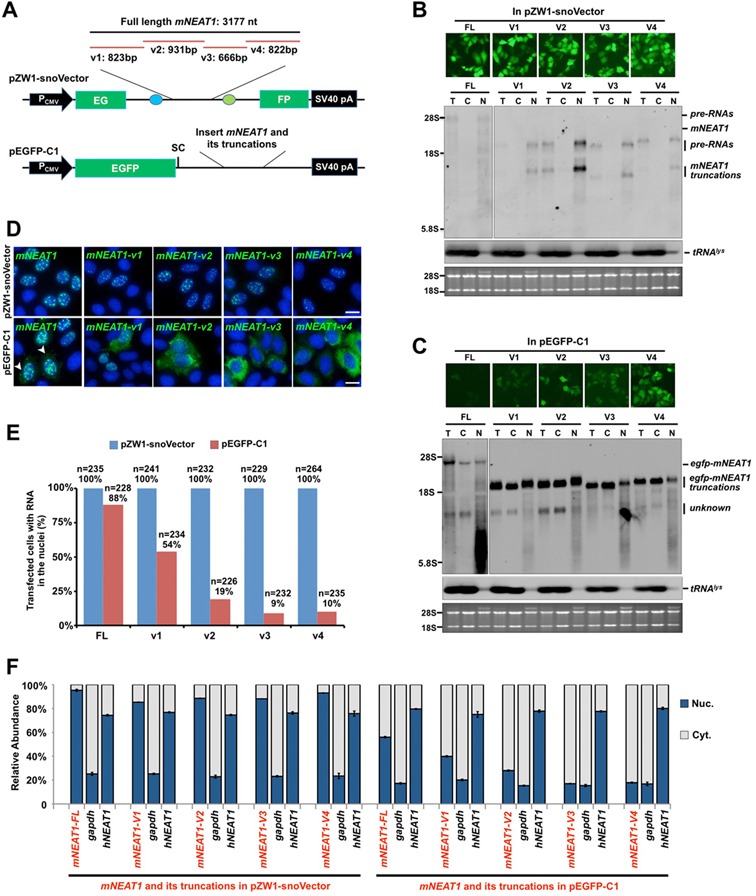
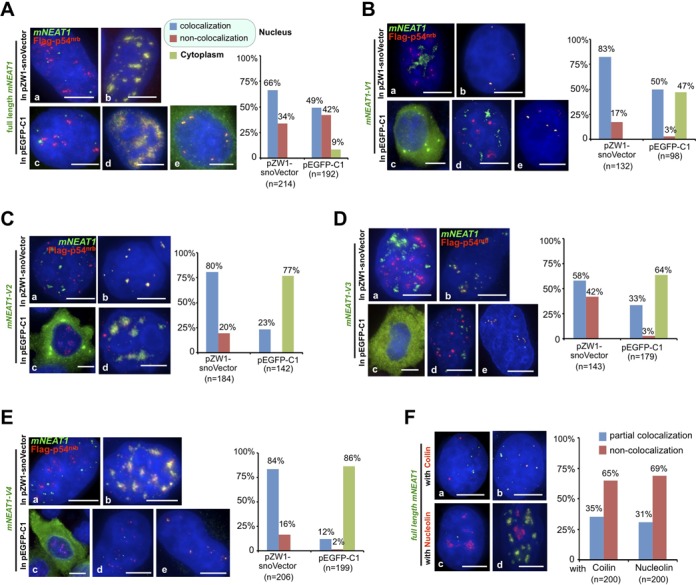
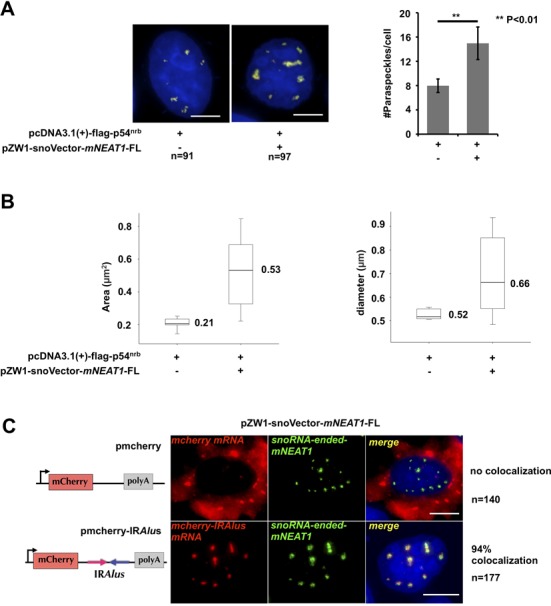
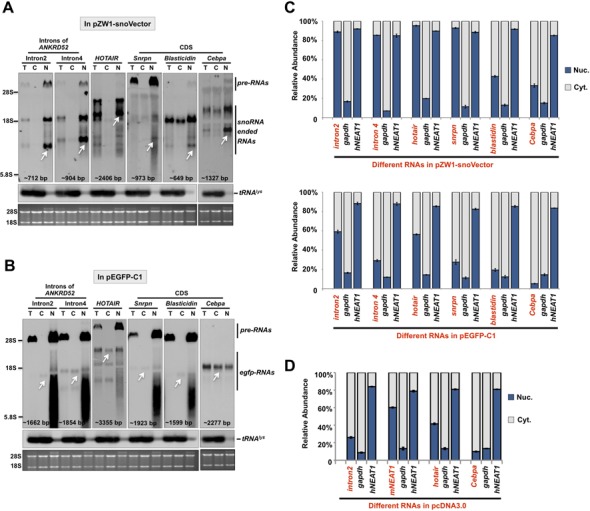
Many long noncoding RNAs (lncRNAs) are constrained to the nucleus to exert their functions. However, commonly used vectors that were designed to express mRNAs have not been optimized for the study of nuclear RNAs. We reported recently that sno-lncRNAs are not capped or polyadenylated but rather are terminated on each end by snoRNAs and their associated proteins. These RNAs are processed from introns and are strictly confined to the nucleus. Here we have used these features to design expression vectors that can stably express virtually any sequence of interest and constrain its accumulation to the nucleus. Further, these RNAs appear to retain normal nuclear associations and function. SnoVectors should be useful in conditions where nuclear RNA function is studied or where export to the cytoplasm needs to be avoided.
许多长链非编码RNA(lncRNA)被限制在细胞核内发挥其功能。然而,常用的用于表达mRNA的载体尚未针对核RNA的研究进行优化。我们最近报道,sno-lncRNA没有帽结构或多聚腺苷酸化,而是在两端由snoRNA及其相关蛋白终止。这些RNA是从内含子加工而来的,并且严格局限于细胞核。在这里,我们利用这些特性设计了表达载体,该载体可以稳定表达几乎任何感兴趣的序列,并将其积累限制在细胞核内。此外,这些RNA似乎保留了正常的核内关联和功能。Sno载体在研究核RNA功能或需要避免输出到细胞质的情况下应该是有用的。