Department of Psychology, Yale University, 2 Hillhouse Avenue, New Haven, CT 06511, USA.
Behav Sci (Basel). 2014 Apr 10;4(2):87-101. doi: 10.3390/bs4020087. eCollection 2014 Jun.
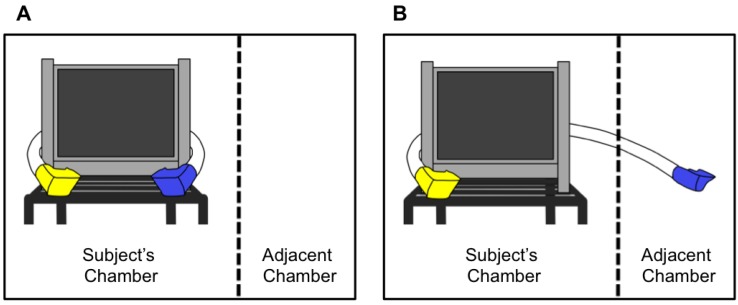
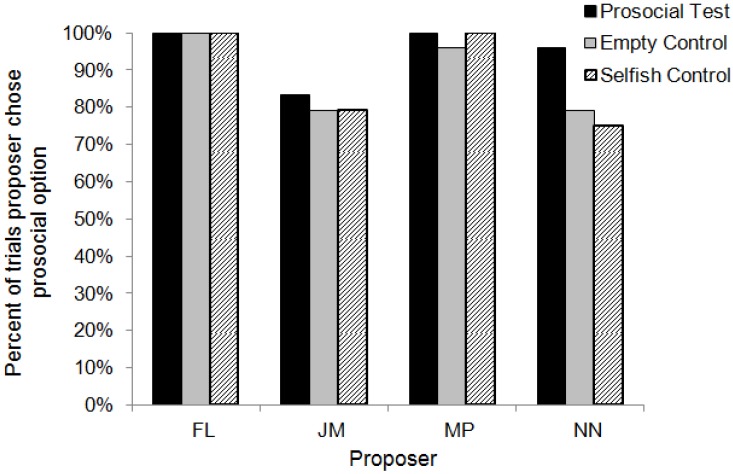
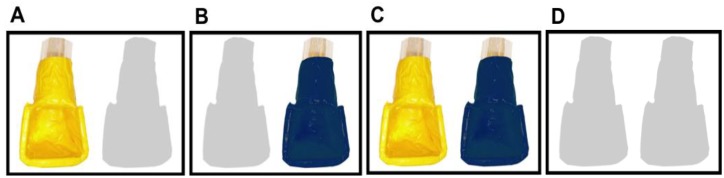
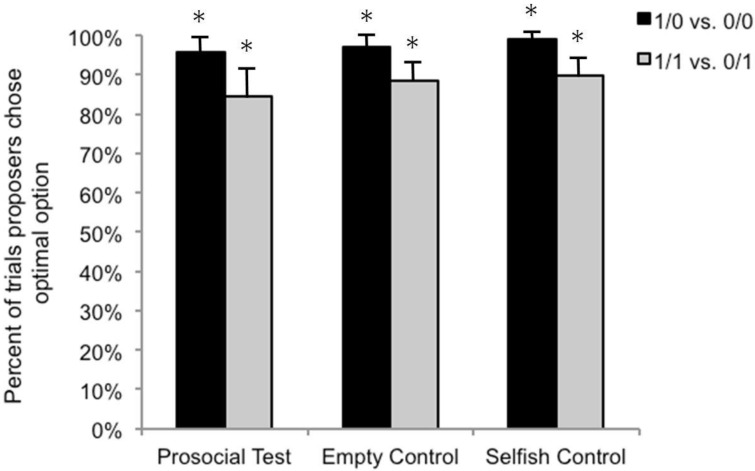
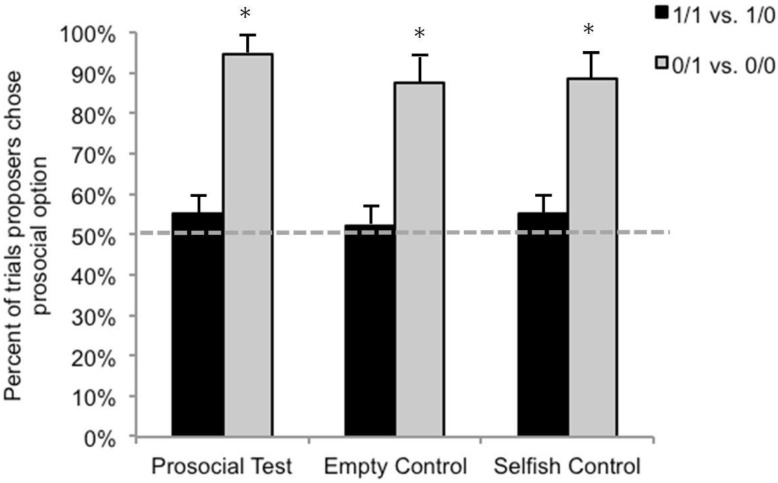
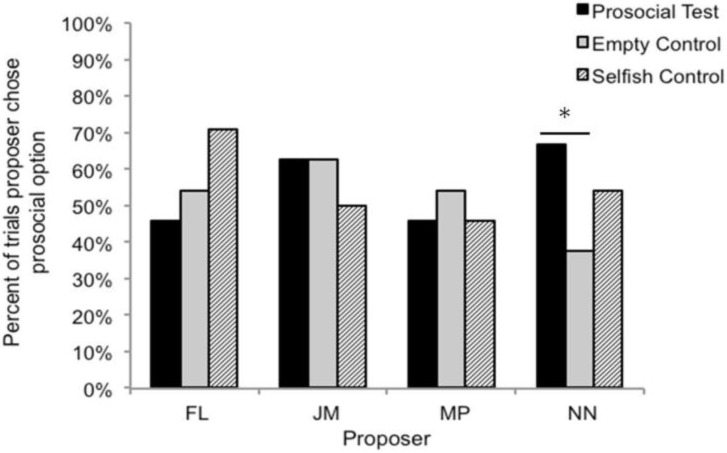
Over the past decade, many researchers have used food donation tasks to test whether nonhuman primates show human-like patterns of prosocial behavior in experimental settings. Although these tasks are elegant in their simplicity, performance within and across species is difficult to explain under a unified theoretical framework. Here, we attempt to better understand variation in prosociality by examining the circumstances that promote and hinder the expression of prosocial preferences. To this end, we tested whether capuchin monkeys (Cebus apella)-a species that has previously demonstrated prosocial preferences-would behave prosocially using a novel touchscreen task. In contrast to previous studies, we found that capuchins as a group did not prosocially deliver food to a partner. Importantly however, data from control conditions revealed that subjects demonstrated limited understanding of the reward contingencies of the task. We also compared individuals' performance in the current study with their performance in a previously published prosociality study. We conclude by discussing how continuing to explore intraspecies variation in performance on prosocial tasks may help inform debates regarding the existence of other-regarding preferences in nonhuman species.
在过去的十年中,许多研究人员使用食物捐赠任务来测试非人类灵长类动物在实验环境中是否表现出类似人类的亲社会行为模式。尽管这些任务在简单性方面很出色,但在物种内和物种间的表现很难用统一的理论框架来解释。在这里,我们试图通过研究促进和阻碍亲社会偏好表达的环境来更好地理解亲社会性的变化。为此,我们使用一种新的触摸屏任务来测试卷尾猴(Cebus apella)——一种先前表现出亲社会偏好的物种——是否会表现出亲社会行为。与之前的研究不同,我们发现,作为一个群体,卷尾猴并没有将食物亲社会地传递给同伴。然而重要的是,控制条件下的数据表明,实验对象对任务的奖励关联的理解有限。我们还将个体在当前研究中的表现与他们在之前发表的亲社会性研究中的表现进行了比较。最后,我们讨论了继续探索亲社会任务中表现的种内变异性如何帮助澄清关于非人类物种中存在其他关注偏好的争论。