Marrelli Massimo, Gentile Stefano, Palmieri Francesca, Paduano Francesco, Tatullo Marco
Unit of Maxillofacial Surgery, Calabrodental, Crotone, Italy; Tecnologica Research Institute, Biomedical Section, Crotone, Italy.
Tecnologica Research Institute, Biomedical Section, Crotone, Italy.
PLoS One. 2014 Nov 7;9(11):e112444. doi: 10.1371/journal.pone.0112444. eCollection 2014.
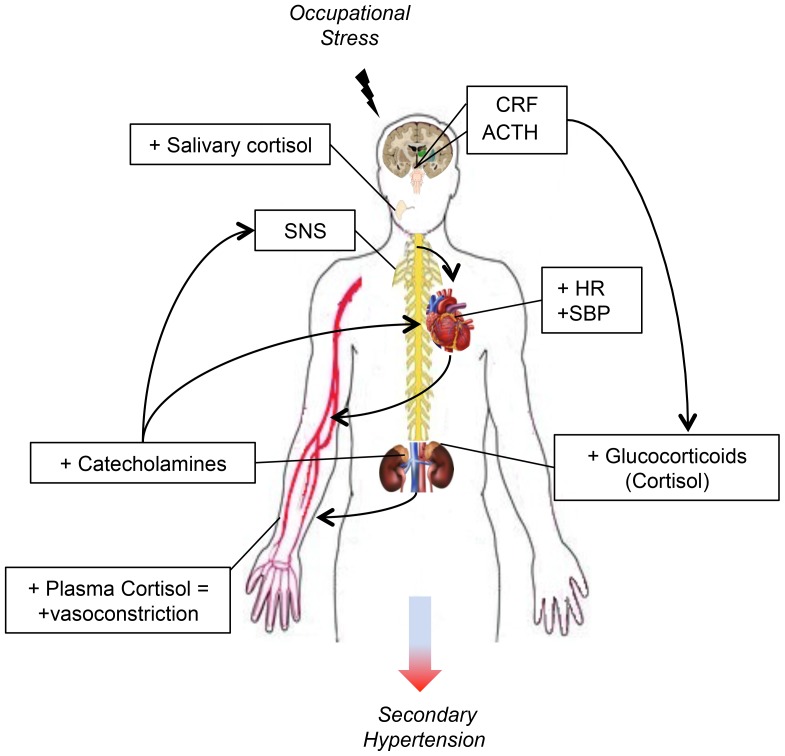
In the present work we analyzed the hormonal (salivary Cortisol; sC), immune (salivary Immunoglobulin A; sIgA) and cardiovascular (Heart rate, HR, and systolic blood pressure, SBP) responses induced by stress conditions in oral surgeons, randomly recruited according to their expertise level.
Each surgeon performed three different surgical procedures with increasing degrees of technical difficulty and under time-limited conditions, to assess whether these variants may influence the risks of stress-induced secondary hypertension among the involved health professionals. sC and sIgA samples and cardiovascular function measurements were taken up before, during, and two hours after every surgery. Salivary samples and cardiovascular measurements were taken also during non-surgical days, as baseline controls.
We observed that more experienced surgeons showed a higher stress management ability compared to those with less experience or, generally, younger, which are more exposed to the risks of developing secondary hypertension. Nevertheless, indipendently of sex and experience, oral surgeons are constantly exposed to high risks of developing stress-related diseases.
On the basis of the issues addressed and the results obtained, we have highlighted the importance of the investigated stress biomarkers to monitor and to prevent stress-related pathologies among oral surgeons. This approach is aimed to emphasize the significance of these specific stress-biomarkers, which represent a powerful instrument to evaluate stress levels in oral surgeons, and that may help to reduce the most severe life-threatening risks to which they are daily exposed. In conclusion, final goal of this study is to suggest an useful guideline to monitor the stress levels of oral and maxillofacial surgeons in order to improve their quality of life, which is inevitably reflected on the quality of the performances provided and, finally, to prevent possible mistakes in their daily activities.
在本研究中,我们分析了根据专业水平随机招募的口腔外科医生在应激条件下的激素(唾液皮质醇;sC)、免疫(唾液免疫球蛋白A;sIgA)和心血管(心率,HR,和收缩压,SBP)反应。
每位外科医生进行三种技术难度逐渐增加且有时间限制的不同外科手术,以评估这些变量是否可能影响相关医护人员因应激诱发继发性高血压的风险。在每次手术前、手术期间和手术后两小时采集sC和sIgA样本以及心血管功能测量数据。在非手术日也采集唾液样本和心血管测量数据作为基线对照。
我们观察到,与经验较少或通常较年轻的外科医生相比,经验更丰富的外科医生表现出更高的应激管理能力,而经验较少或较年轻的外科医生更容易面临患继发性高血压的风险。然而,无论性别和经验如何,口腔外科医生始终面临患与应激相关疾病的高风险。
基于所探讨的问题和获得的结果,我们强调了所研究的应激生物标志物对于监测和预防口腔外科医生中与应激相关疾病的重要性。这种方法旨在强调这些特定应激生物标志物的重要性,它们是评估口腔外科医生应激水平的有力工具,并且可能有助于降低他们日常面临的最严重的危及生命的风险。总之,本研究的最终目标是提出一个有用的指南,以监测口腔颌面外科医生的应激水平,从而改善他们的生活质量,这必然会反映在所提供的工作质量上,并最终防止他们日常活动中可能出现的错误。