School of Physical Education and Sport, University of Sao Paulo, Sao Paulo, Brazil.
School of Arts, Sciences and Humanities, University of Sao Paulo, Sao Paulo, Brazil.
Biol Sport. 2013 Dec;30(4):243-7. doi: 10.5604/20831862.1077548. Epub 2013 Nov 25.
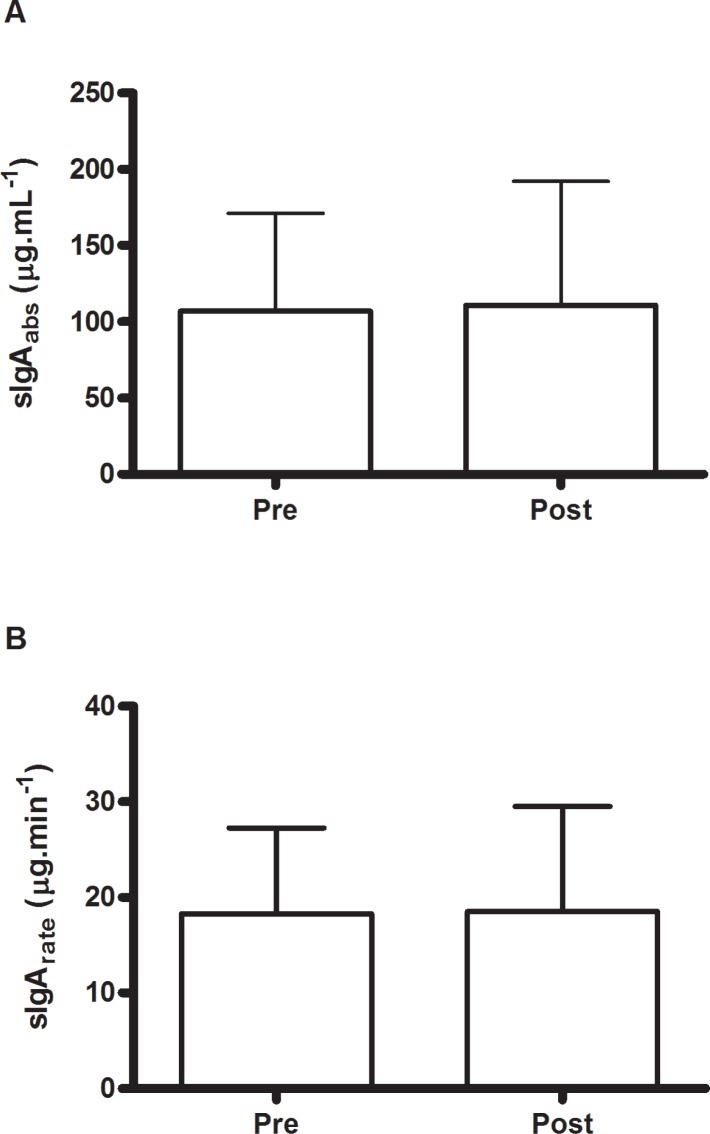
Athletes engaged in strenuous training might experience transient immune suppression that could lead to greater incidence of upper respiratory tract infections (URTI). Since interleukin 21 (IL-21) stimulates immunoglobulin A (IgA) secreting cells and a low level of this immunoglobulin is associated with increased incidence of URTI, the aim of the present study was to investigate the effect of a basketball match on salivary cortisol (sC), salivary IL-21 (sIL-21) and salivary IgA (sIgA) levels. Twenty male basketball players participated in an official game in two teams (10 players in each team). The saliva samples were collected before the warm-up and approximately 10-15 min after the end of the match and were analysed by ELISA methods. sC concentration increased significantly after the match while sIL-21 level was reduced (p < 0.05). In opposition to the study's hypothesis, sIgA level did not change in response to the match. The present findings suggest that a basketball match is sufficiently stressful to elevate sC concentration and attenuates the sIL-21 output without compromising the sIgA level. It is reasonable to speculate that the stability of sIgA acute responses to the match, despite the decrement in sIL-21, indicates that other mechanisms rather than IL-21 stimulating B cell proliferation/differentiation might modulate IgA concentration and secretion rate.
参与剧烈训练的运动员可能会经历短暂的免疫抑制,这可能导致上呼吸道感染 (URTI) 的发生率增加。由于白细胞介素 21 (IL-21) 刺激免疫球蛋白 A (IgA) 分泌细胞,而这种免疫球蛋白水平低与 URTI 发生率增加有关,因此本研究旨在调查篮球比赛对唾液皮质醇 (sC)、唾液白细胞介素 21 (sIL-21) 和唾液免疫球蛋白 A (sIgA) 水平的影响。20 名男性篮球运动员分为两队(每队 10 名运动员)参加正式比赛。在热身前和比赛结束后约 10-15 分钟采集唾液样本,并通过 ELISA 方法进行分析。比赛后 sC 浓度显著升高,而 sIL-21 水平降低(p < 0.05)。与研究假设相反,sIgA 水平没有因比赛而变化。本研究结果表明,篮球比赛的压力足以升高 sC 浓度,并减弱 sIL-21 的输出,而不会影响 sIgA 水平。可以合理地推测,尽管 sIL-21 减少,但 sIgA 对比赛的急性反应的稳定性表明,除了 IL-21 刺激 B 细胞增殖/分化之外,其他机制可能调节 IgA 浓度和分泌率。