Sepehrmanesh Zahra, Ahmadvand Afshin, Moraveji Alireza
Department of Psychiatry, Kashan University of Medical Sciences, Kashan, IR Iran.
Department of Epidemiology, Kashan University of Medical Sciences, Kashan, IR Iran.
Iran Red Crescent Med J. 2014 Aug;16(8):e19282. doi: 10.5812/ircmj.19282. Epub 2014 Aug 5.
Substance use in patients with psychiatric disorder is an every-day seen. Detection of this comorbidity can significantly affect the treatment of these disorders, as well as substance use.
This study has been conducted to determine the prevalence and pattern of substance use in hospitalized psychiatric patients.
In this cross-sectional study, 210 hospitalized psychiatric patients were selected by simple randomization from all records of hospitalized patients. The instrument of gathering data was a demographic checklist including age, gender, marital status, education, type of disorder and substance abuse and duration of psychiatric disorder. Data were analyzed by SPSS version 16 using Fisher exact and Chi square tests.
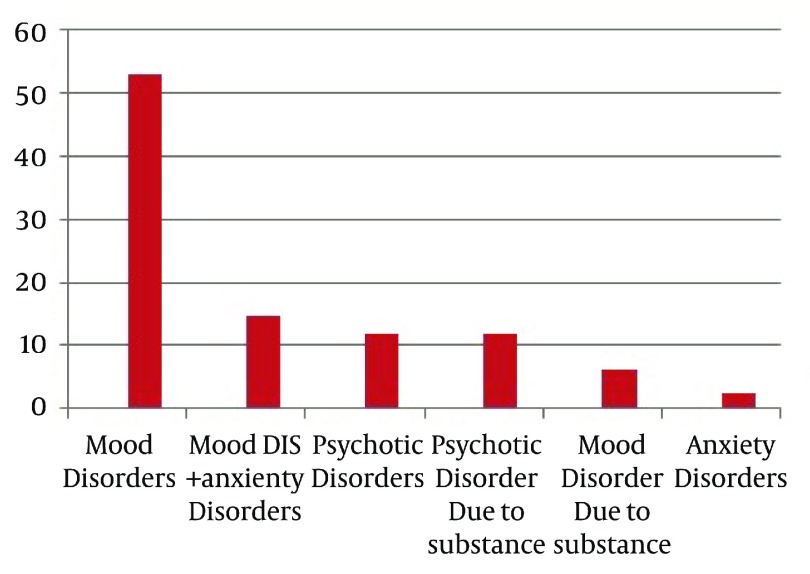
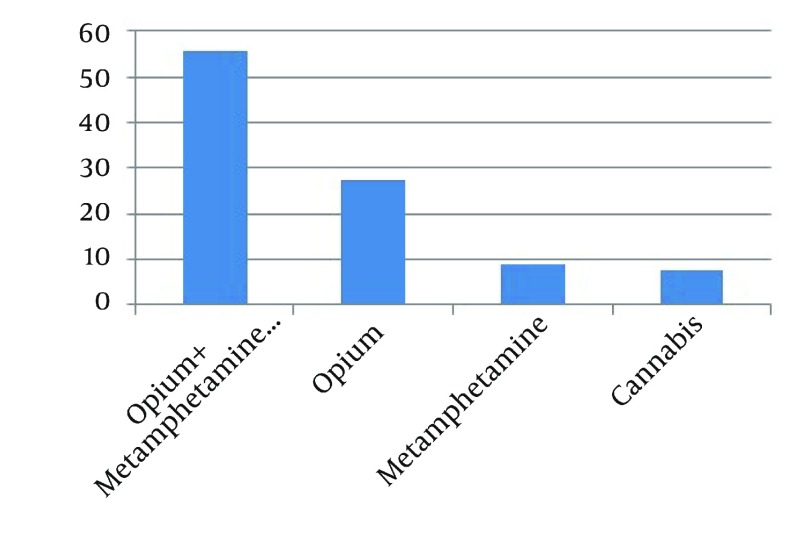
The mean age of patients was 37.9 years. Most of the patients were male, married and unemployed. The Prevalence of substance use was 36.7%. The most prevalent pattern of substance use was opium, opioid, methamphetamines and other substances (poly substance). The prevalence of substance use in patients with mood disorders was more than the other disorders and the most prevalent substance use in these patients was opium and opioid. Poly substance use was the most prevalent pattern of use (80 %) in psychotic and mood disorders due to substance. Significant difference was seen between genders, marital status, occupation, duration of illness and frequency of substance use (P < 0.05 ), however no significant difference was seen between educational levels, age and substance use.
The patients with mood disorders had the highest comorbidity with substance use and concurrent use of poly substance was the most prevalent pattern of use in these patients. Therefore, successful treatment of psychiatric disorders and substance use needs multimodal and more serious interventions. Regarding to the pattern of poly substance use in these patients, careful screening should be performed at admission.
精神疾病患者使用物质的情况很常见。这种共病的检测会显著影响这些疾病以及物质使用的治疗。
本研究旨在确定住院精神科患者物质使用的患病率和模式。
在这项横断面研究中,通过简单随机抽样从所有住院患者记录中选取了210名住院精神科患者。收集数据的工具是一份人口统计学清单,包括年龄、性别、婚姻状况、教育程度、疾病类型和物质滥用情况以及精神疾病持续时间。使用SPSS 16版软件,通过Fisher精确检验和卡方检验对数据进行分析。
患者的平均年龄为37.9岁。大多数患者为男性、已婚且失业。物质使用的患病率为36.7%。最常见的物质使用模式是鸦片、阿片类药物、甲基苯丙胺和其他物质(多种物质混用)。情绪障碍患者中物质使用的患病率高于其他疾病患者,这些患者中最常见的物质使用是鸦片和阿片类药物。在因物质导致的精神障碍和情绪障碍患者中,多种物质混用是最常见的使用模式(80%)。在性别、婚姻状况、职业、病程和物质使用频率之间存在显著差异(P<0.05),然而在教育水平、年龄和物质使用之间未发现显著差异。
情绪障碍患者与物质使用的共病率最高,多种物质同时使用是这些患者中最常见的使用模式。因此,成功治疗精神疾病和物质使用需要多模式且更严格的干预措施。鉴于这些患者的多种物质使用模式,入院时应进行仔细筛查。