McQuillan H James, Nakagawa Shinichi, Mercer Alison R
Department of Zoology, University of Otago, Dunedin, New Zealand.
PLoS One. 2014 Nov 12;9(11):e112740. doi: 10.1371/journal.pone.0112740. eCollection 2014.
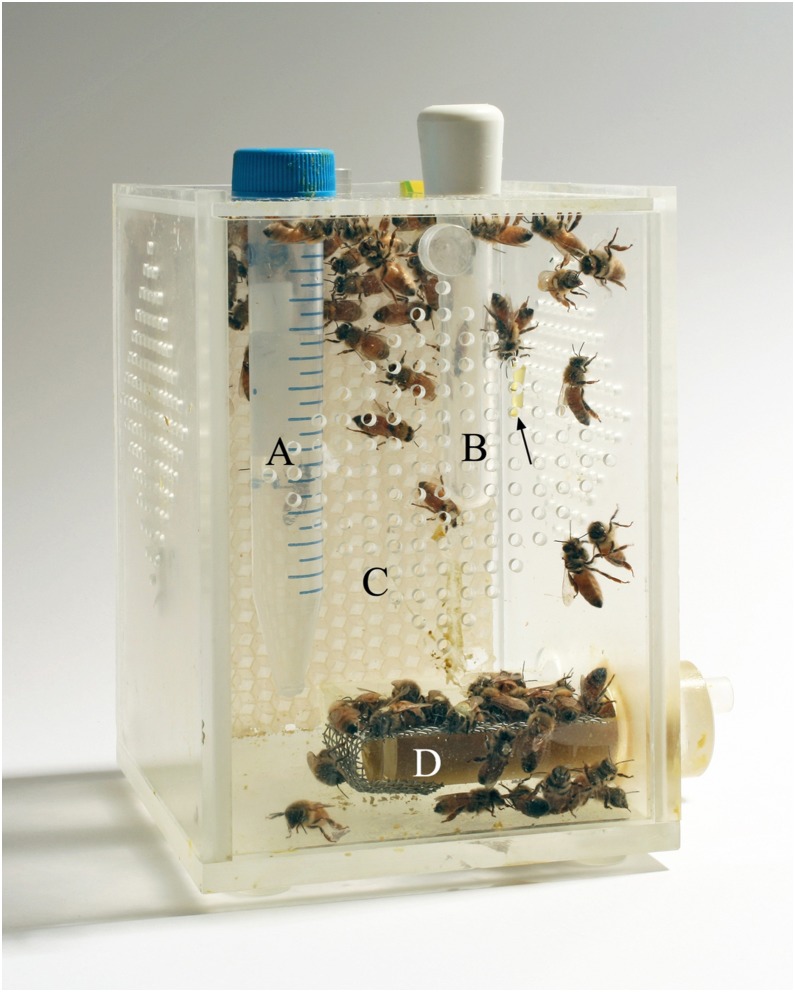
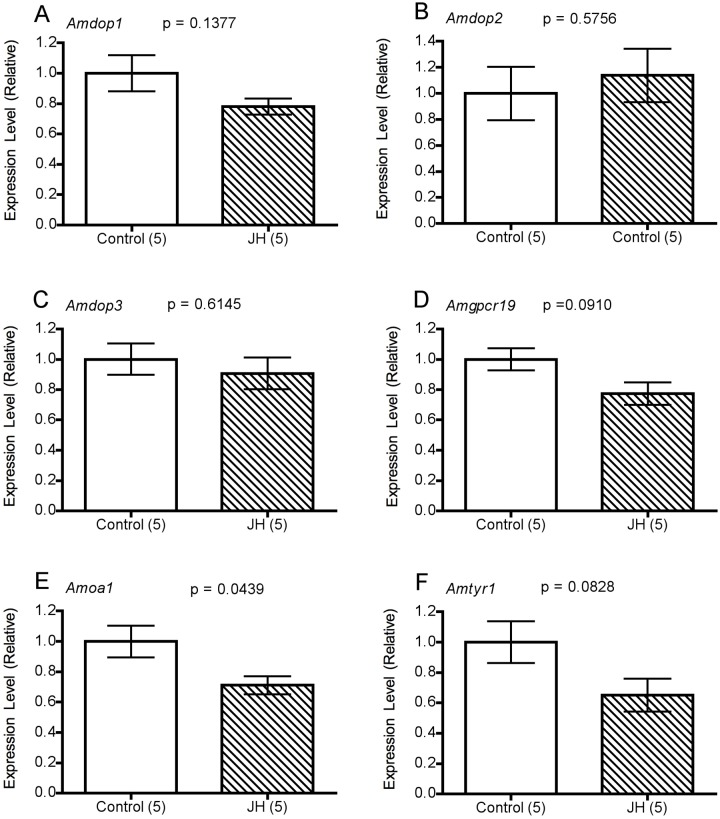
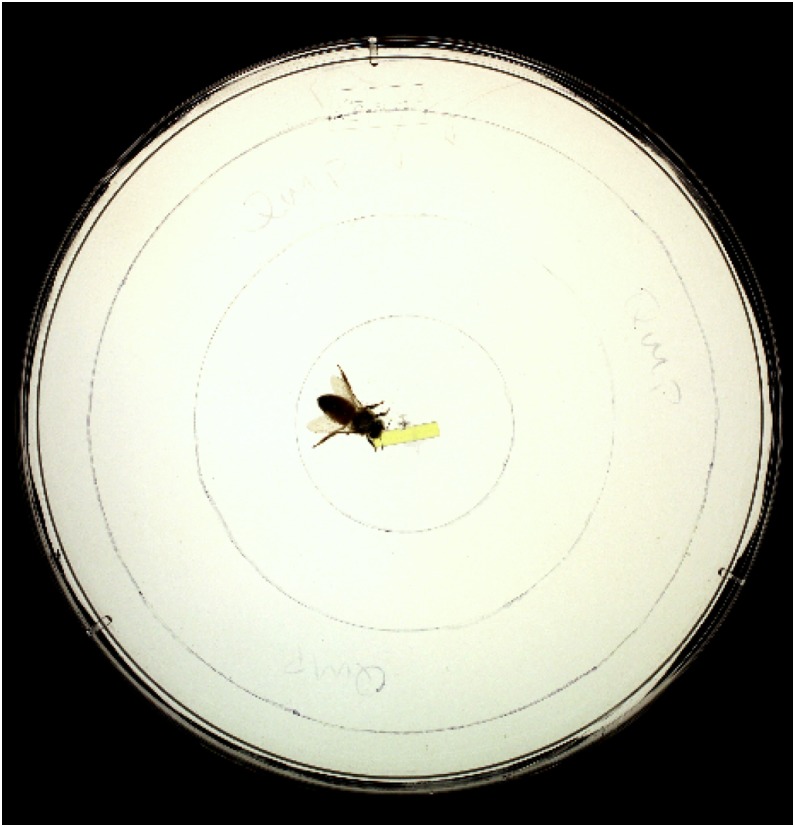
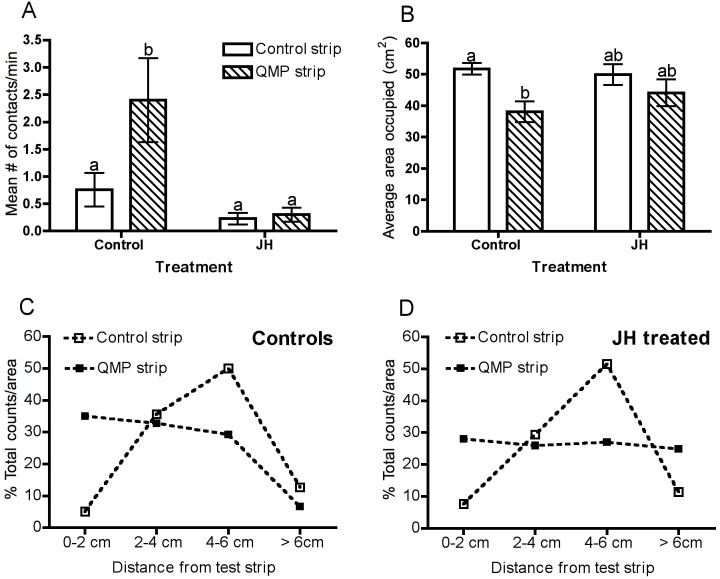
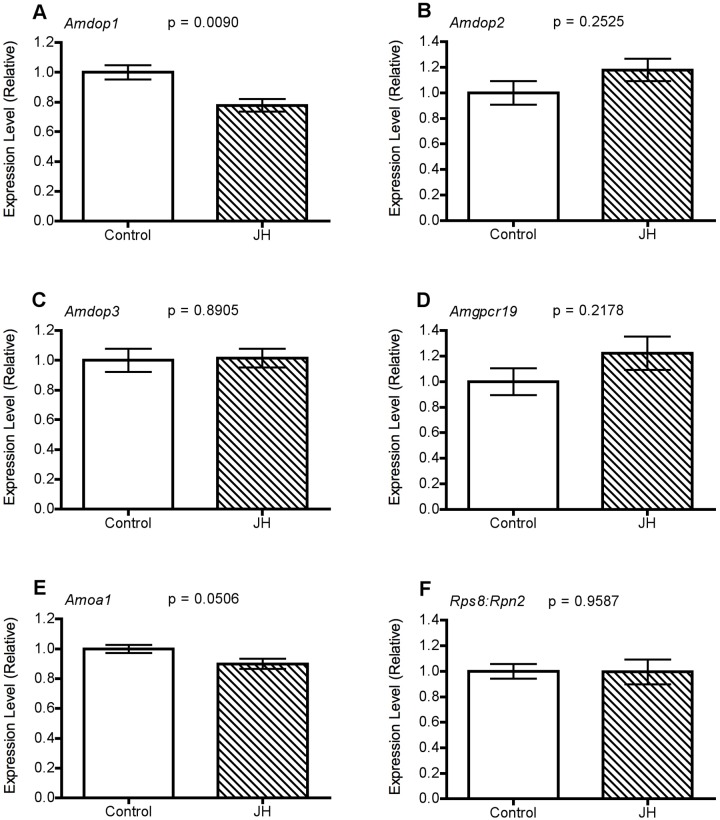
Previous studies have shown that exposing young worker bees (Apis mellifera) to queen mandibular pheromone (QMP) reduces their aversive learning performance, while enhancing their attraction to QMP. As QMP has been found to reduce the rate of juvenile hormone (JH) synthesis in worker bees, we examined whether aversive learning in 2-day old workers exposed to QMP from the time of adult emergence could be improved by injecting JH (10 µg in a 2 µl volume) into the haemolymph. We examined in addition, the effects of JH treatment on worker attraction to QMP, and on the levels of expression of amine receptor genes in the antennae, as well as in the mushroom bodies of the brain. We found that memory acquisition and 1-hour memory recall were enhanced by JH. In contrast, JH treatment reduced the bees' attraction towards a synthetic strip impregnated with QMP (Bee Boost). Levels of expression of the dopamine receptor gene Amdop1 were significantly lower in the mushroom bodies of JH-treated bees than in bees treated with vehicle alone (acetone diluted with bee ringer). Expression of the octopamine receptor gene, Amoa1, in this brain region was also affected by JH treatment, and in the antennae, Amoa1 transcript levels were significantly lower in JH-treated bees compared to controls. The results of this study suggest that QMP's effects on JH synthesis may contribute to reducing aversive learning performance and enhancing attraction to QMP in young worker bees.
先前的研究表明,将年轻的工蜂(西方蜜蜂)暴露于蜂王下颚腺信息素(QMP)会降低它们的厌恶学习能力,同时增强它们对QMP的吸引力。由于已发现QMP会降低工蜂体内保幼激素(JH)的合成速率,我们研究了从成年羽化时就接触QMP的2日龄工蜂,通过向其血淋巴中注射JH(2微升体积中含10微克)是否能改善其厌恶学习能力。此外,我们还研究了JH处理对工蜂对QMP的吸引力、触角以及大脑蕈形体中胺受体基因表达水平的影响。我们发现,JH增强了记忆获取和1小时的记忆回忆。相比之下,JH处理降低了蜜蜂对浸渍有QMP的合成纸条(Bee Boost)的吸引力。在经JH处理的蜜蜂的蕈形体中,多巴胺受体基因Amdop1的表达水平显著低于仅用载体(用蜜蜂ringer稀释的丙酮)处理的蜜蜂。JH处理也影响了该脑区章鱼胺受体基因Amoa1的表达,并且在触角中,经JH处理的蜜蜂的Amoa1转录水平与对照组相比显著降低。这项研究的结果表明,QMP对JH合成的影响可能有助于降低年轻工蜂的厌恶学习能力并增强它们对QMP的吸引力。