Riesbeck K, Andersson J, Gullberg M, Forsgren A
Department of Medical Microbiology, University of Lund, Malmö General Hospital, Sweden.
Proc Natl Acad Sci U S A. 1989 Apr;86(8):2809-13. doi: 10.1073/pnas.86.8.2809.
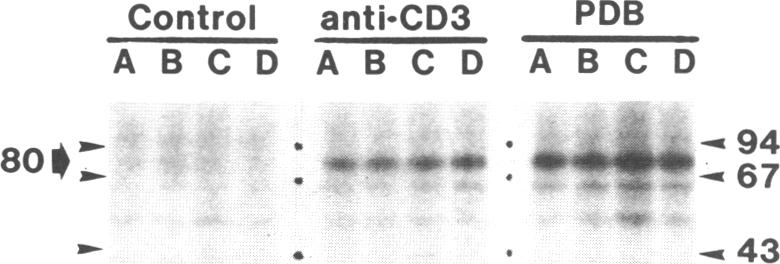
The fluorinated 4-quinolones are a "new" group of antibiotics with a broad antibacterial spectrum. They are already widely used in clinical practice. Previous studies have shown that these drugs increase the uptake of [3H]thymidine into DNA of mitogen-stimulated lymphocytes but inhibit cell growth and immunoglobulin secretion. This study shows that the 4-quinolones strongly (up to 100 times) increase the recovery of interleukin 2 (IL-2) in culture supernatants of phytohemagglutinin (PHA)-stimulated normal human lymphocytes and also prolong the kinetics of IL-2 production. The effect was significant at clinically achievable concentrations (5 micrograms/ml). In addition to hyperproduction of IL-2, the level of RNA hybridizing with a human IL-2 cDNA probe was also intensely elevated (16-32 times) in PHA-stimulated lymphocytes cultured with ciprofloxacin (80 micrograms/ml). The mechanism responsible for 4-quinolone-mediated effects on T cells is at present unclear, but evidence is presented that suggests the effect is not exerted at the level of protein kinase C activation. Ciprofloxacin at 80 micrograms/ml also decreased the expression of IL-2 receptors measured by immunofluorescence with CD 25 antibodies and a radiolabeled IL-2 binding assay. At the same concentration of ciprofloxacin, there was a very low expression of the transferrin receptor and the cell size increased very little in human lymphocytes after PHA stimulation. The enhanced IL-2 production by 4-quinolones may contribute to side effects reported when these drugs are used for treatment of patients.
氟代4-喹诺酮类是一类具有广谱抗菌活性的“新型”抗生素。它们已在临床实践中广泛应用。先前的研究表明,这些药物可增加[3H]胸苷掺入有丝分裂原刺激的淋巴细胞DNA中的量,但会抑制细胞生长和免疫球蛋白分泌。本研究表明,4-喹诺酮类可使植物血凝素(PHA)刺激的正常人淋巴细胞培养上清液中白细胞介素2(IL-2)的回收率显著增加(高达100倍),并延长IL-2产生的动力学过程。在临床可达到的浓度(5微克/毫升)下,该作用具有显著性。除了IL-2的过量产生外,在用环丙沙星(80微克/毫升)培养的PHA刺激的淋巴细胞中,与人IL-2 cDNA探针杂交的RNA水平也显著升高(16 - 32倍)。目前尚不清楚4-喹诺酮类对T细胞作用的机制,但有证据表明该作用并非通过蛋白激酶C的激活发挥。80微克/毫升的环丙沙星还可降低用CD 25抗体免疫荧光法和放射性标记IL-2结合试验测定的IL-2受体的表达。在相同浓度的环丙沙星作用下,PHA刺激后人淋巴细胞中转铁蛋白受体的表达极低,细胞大小增加极少。4-喹诺酮类增强IL-2的产生可能是这些药物用于治疗患者时所报道的副作用的原因之一。