Bowes S M, Laube B L, Links J M, Frank R
Department of Environmental Health Sciences, Johns Hopkins School of Hygiene and Public Health, Baltimore, MD.
Environ Health Perspect. 1989 Feb;79:151-7. doi: 10.1289/ehp.8979151.
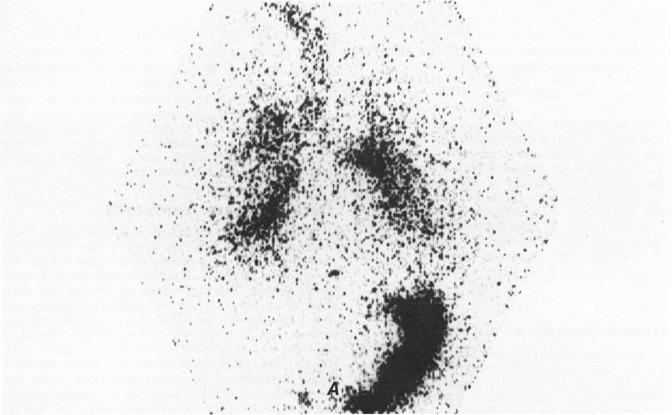
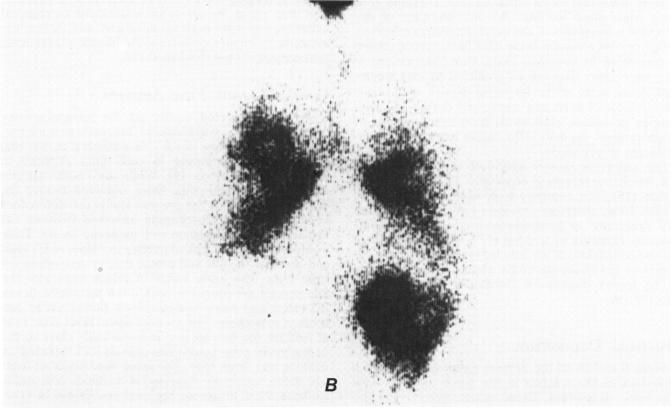
The regional deposition of a monodisperse 10-micron mass median aerodynamic diameter fog was studied in four healthy adult male nonsmokers. The fog was radiolabeled with technetium-99m sulfur colloid to enable detection by an Anger camera of deposited activity in the following regions of the respiratory tract: oropharynx, larynx, trachea, and intrapulmonary airways. Intrapulmonary deposition was further analyzed by computer with inner, intermediate, and outer zones, and within apical, intermediate and basal zones of the right lung. The radiolabeled aerosol was inhaled by mouth through a face-mask with the nasal airway occluded. Respiratory frequency, tidal volume, and jaw position were controlled and were commensurate with the oral component of oronasal breathing during moderate exercise. Deposition in the larynx, trachea, and intrapulmonary airways was a function of the scrubbing efficiency of the oropharynx, which differed substantially among subjects, and ranged from 72 to 99%. The density of the aerosol deposit in the larynx probably exceeded that of any of the subdivisions of the tracheobronchial tree and lung. Within the lung, deposition favored the inner zone (assumed to contain the larger airways) over the outer zone (assumed to be dominated by smaller airways and alveoli). Intrapulmonary aerosol distribution in an elderly subject with borderline evidence of airway obstruction differed from that observed in younger subjects. The possible consequences of altered lung elastic recoil, as may occur with aging, for regional dosimetry is discussed.
在4名健康成年男性非吸烟者中研究了单分散的10微米质量中值空气动力学直径雾的区域沉积情况。该雾用锝-99m硫胶体进行放射性标记,以便用安格尔相机检测呼吸道以下区域的沉积活性:口咽、喉、气管和肺内气道。肺内沉积通过计算机进一步分析,分为内区、中区和外区,以及右肺的尖区、中区和基区。放射性标记的气溶胶通过面罩经口吸入,同时闭塞鼻气道。呼吸频率、潮气量和颌部位置受到控制,与中等运动时口鼻呼吸的口腔部分相当。喉、气管和肺内气道的沉积是口咽洗涤效率的函数,不同受试者之间差异很大,范围从72%到99%。喉中气溶胶沉积物的密度可能超过气管支气管树和肺任何细分区域的密度。在肺内,沉积更倾向于内区(假定包含较大气道)而非外区(假定以较小气道和肺泡为主)。一名有气道阻塞临界证据的老年受试者的肺内气溶胶分布与年轻受试者不同。讨论了随着年龄增长可能发生的肺弹性回缩改变对区域剂量测定的可能影响。