Sadler Erin, Hales Brigette, Henry Blair, Xiong Wei, Myers Jeff, Wynnychuk Lesia, Taggar Ru, Heyland Daren, Fowler Robert
Department of General Surgery, University of Toronto, Toronto, Ontario, Canada.
Quality and Patient Safety, Sunnybrook Health Sciences Centre, Toronto, Ontario, Canada.
PLoS One. 2014 Nov 17;9(11):e110860. doi: 10.1371/journal.pone.0110860. eCollection 2014.
Little data exists addressing satisfaction with end-of-life care among hospitalized patients, as they and their family members are systematically excluded from routine satisfaction surveys. It is imperative that we closely examine patient and institution factors associated with quality end-of-life care and determine high-priority target areas for quality improvement.
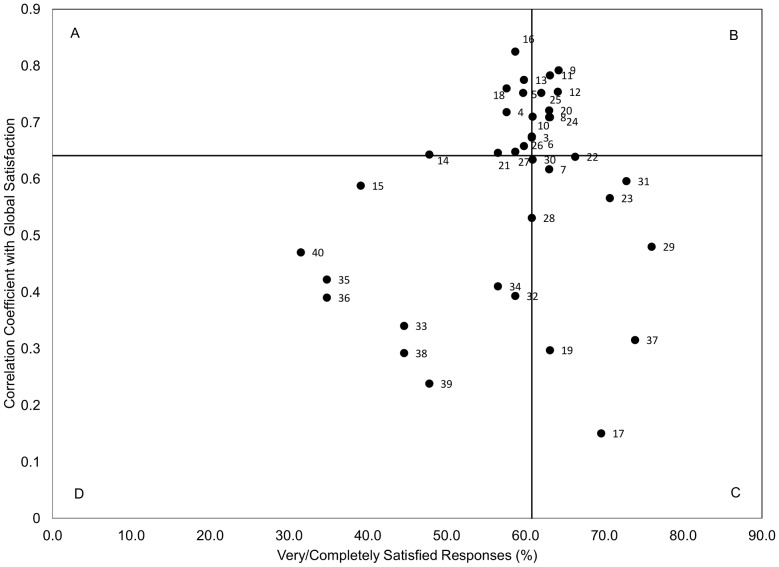
Between September 1, 2010 and January 1, 2012 the Canadian Health care Evaluation Project (CANHELP) Bereavement Questionnaire was mailed to the next-of-kin of recently deceased inpatients to seek factors associated with satisfaction with end-of-life care. The primary outcome was the global rating of satisfaction. Secondary outcomes included rates of actual versus preferred location of death, associations between demographic factors and global satisfaction, and identification of targets for quality improvement.
Response rate was 33% among 275 valid addresses. Overall, 67.4% of respondents were very or completely satisfied with the overall quality of care their relative received. However, 71.4% of respondents who thought their relative did not die in their preferred location favoured an out-of-hospital location of death. A common location of death was the intensive care unit (45.7%); however, this was not the preferred location of death for 47.6% of such patients. Multivariate Poisson regression analysis showed respondents who believed their relative died in their preferred location were 1.7 times more likely to be satisfied with the end-of-life care that was provided (p = 0.001). Items identified as high-priority targets for improvement included: relationships with, and characteristics of health care professionals; illness management; communication; and end-of-life decision-making.
Nearly three-quarters of recently deceased inpatients would have preferred an out-of-hospital death. Intensive care units were a common, but not preferred, location of in-hospital deaths. Family satisfaction with end-of-life care was strongly associated with their relative dying in their preferred location. Improved communication regarding end-of-life care preferences should be a high-priority quality improvement target.
关于住院患者临终关怀满意度的数据很少,因为他们及其家属被系统性地排除在常规满意度调查之外。我们必须仔细研究与高质量临终关怀相关的患者和机构因素,并确定质量改进的高优先级目标领域。
在2010年9月1日至2012年1月1日期间,加拿大医疗保健评估项目(CANHELP)的丧亲问卷被邮寄给最近去世的住院患者的近亲,以寻找与临终关怀满意度相关的因素。主要结果是总体满意度评分。次要结果包括实际死亡地点与首选死亡地点的比率、人口统计学因素与总体满意度之间的关联,以及确定质量改进目标。
在275个有效地址中,回复率为33%。总体而言,67.4%的受访者对其亲属接受的护理总体质量非常满意或完全满意。然而,71.4%认为其亲属未在首选地点死亡的受访者倾向于院外死亡地点。常见的死亡地点是重症监护病房(45.7%);然而,47.6%的此类患者并不首选该地点。多变量泊松回归分析显示,认为其亲属在首选地点死亡的受访者对所提供的临终关怀感到满意的可能性高出1.7倍(p = 0.001)。被确定为高优先级改进目标的项目包括:与医护人员的关系及其特征;疾病管理;沟通;以及临终决策。
近四分之三最近去世的住院患者更倾向于院外死亡。重症监护病房是医院内死亡的常见但非首选地点。家属对临终关怀的满意度与其亲属在首选地点死亡密切相关。改善关于临终关怀偏好的沟通应是高优先级的质量改进目标。