Palsuledesai Charuta C, Distefano Mark D
Department of Chemistry, University of Minnesota , Minneapolis, Minnesota 55455, United States.
ACS Chem Biol. 2015 Jan 16;10(1):51-62. doi: 10.1021/cb500791f. Epub 2014 Dec 8.
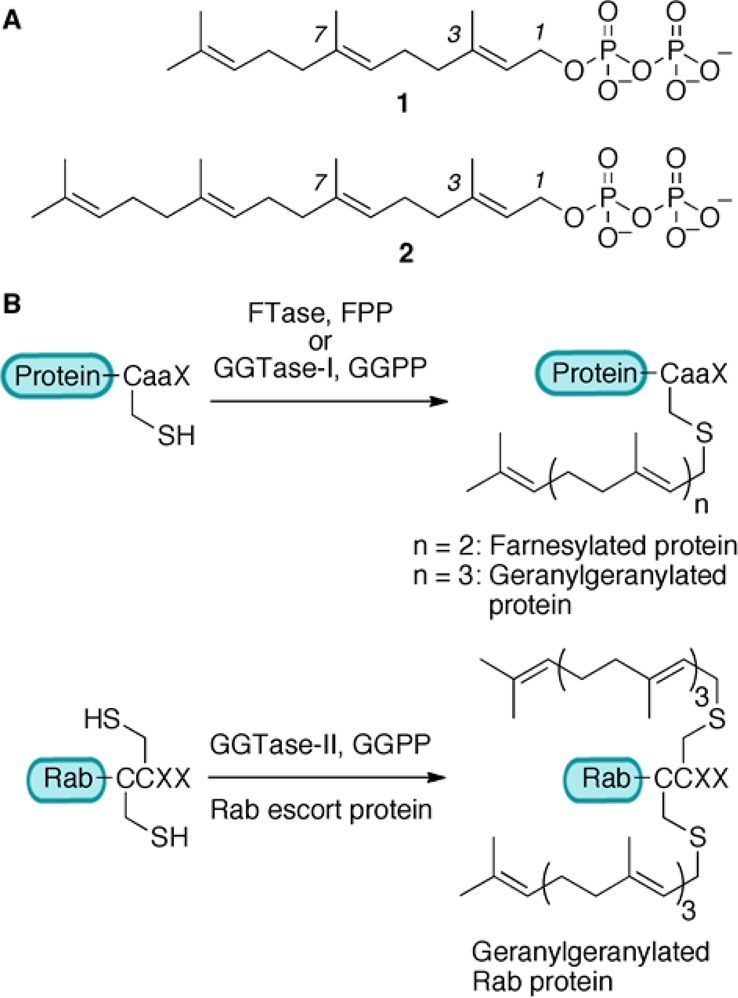
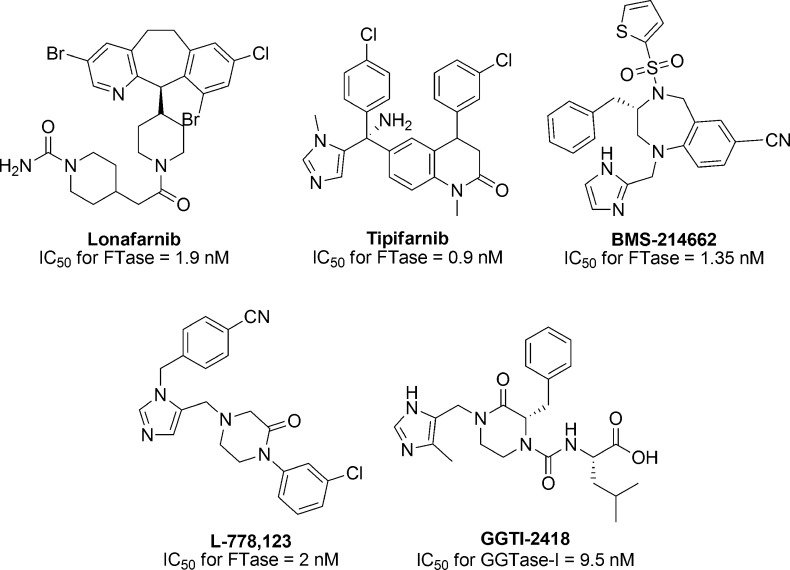
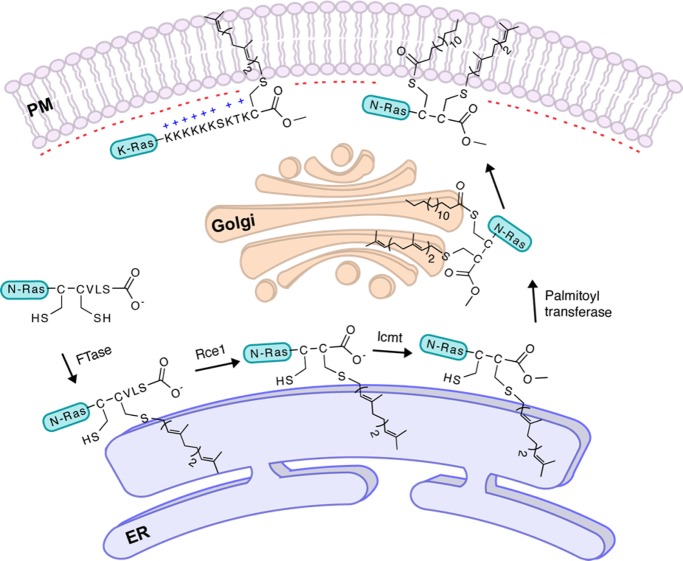
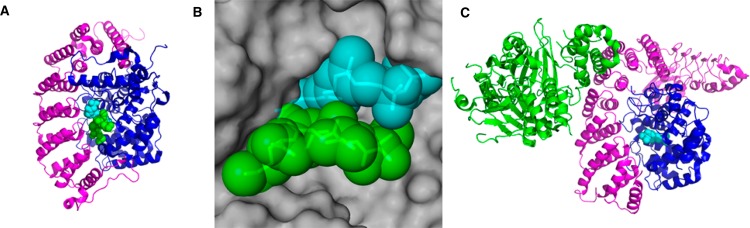
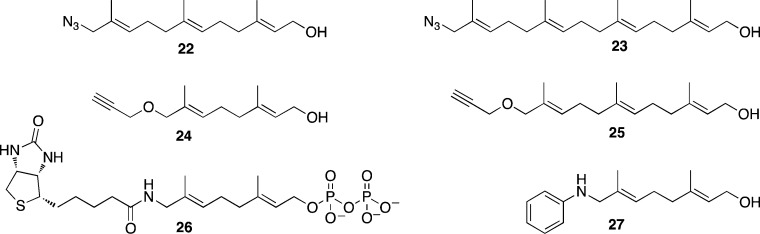
Protein prenylation is a ubiquitous covalent post-translational modification found in all eukaryotic cells, comprising attachment of either a farnesyl or a geranylgeranyl isoprenoid. It is essential for the proper cellular activity of numerous proteins, including Ras family GTPases and heterotrimeric G-proteins. Inhibition of prenylation has been extensively investigated to suppress the activity of oncogenic Ras proteins to achieve antitumor activity. Here, we review the biochemistry of the prenyltransferase enzymes and numerous isoprenoid analogs synthesized to investigate various aspects of prenylation and prenyltransferases. We also give an account of the current status of prenyltransferase inhibitors as potential therapeutics against several diseases including cancers, progeria, aging, parasitic diseases, and bacterial and viral infections. Finally, we discuss recent progress in utilizing protein prenylation for site-specific protein labeling for various biotechnology applications.
蛋白质异戊二烯化是一种在所有真核细胞中普遍存在的共价翻译后修饰,包括法尼基或香叶基香叶基类异戊二烯的附着。它对于许多蛋白质的正常细胞活性至关重要,包括Ras家族GTP酶和异源三聚体G蛋白。为了抑制致癌Ras蛋白的活性以实现抗肿瘤活性,人们对异戊二烯化的抑制进行了广泛研究。在这里,我们综述了异戊二烯基转移酶的生物化学以及为研究异戊二烯化和异戊二烯基转移酶的各个方面而合成的众多类异戊二烯类似物。我们还介绍了异戊二烯基转移酶抑制剂作为针对包括癌症、早衰症、衰老、寄生虫病以及细菌和病毒感染在内的多种疾病的潜在治疗药物的现状。最后,我们讨论了利用蛋白质异戊二烯化进行位点特异性蛋白质标记以用于各种生物技术应用的最新进展。