Biochemistry Center of Heidelberg University, INF328, D-69120 Heidelberg, Germany.
Centre for Synthetic and Systems Biology (SynthSys) and Wellcome Trust Centre for Cell Biology, University of Edinburgh, Edinburgh EH9 3BF, Scotland, UK.
J Cell Biol. 2014 Nov 24;207(4):481-98. doi: 10.1083/jcb.201408111. Epub 2014 Nov 17.
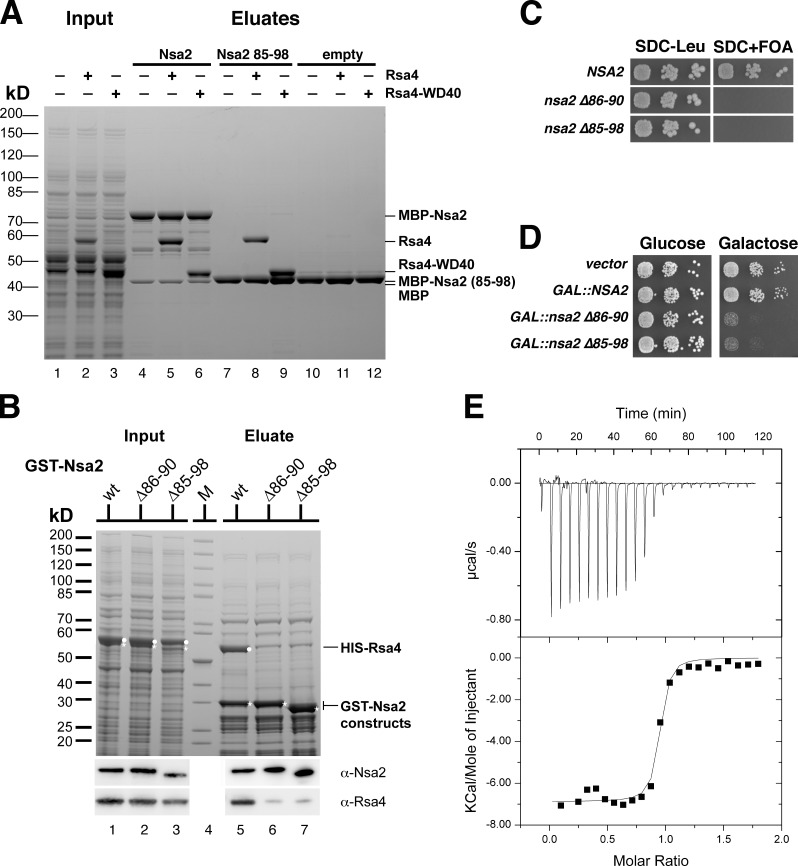
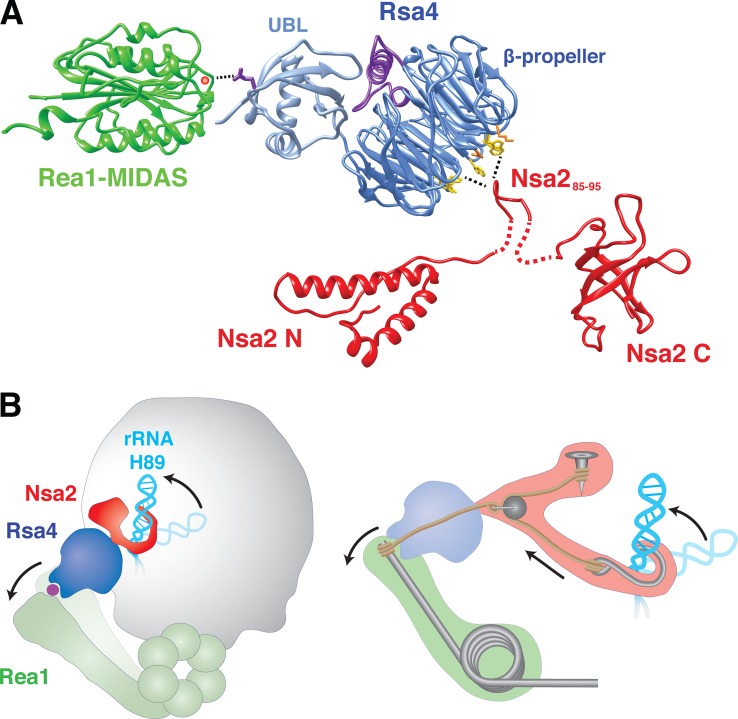
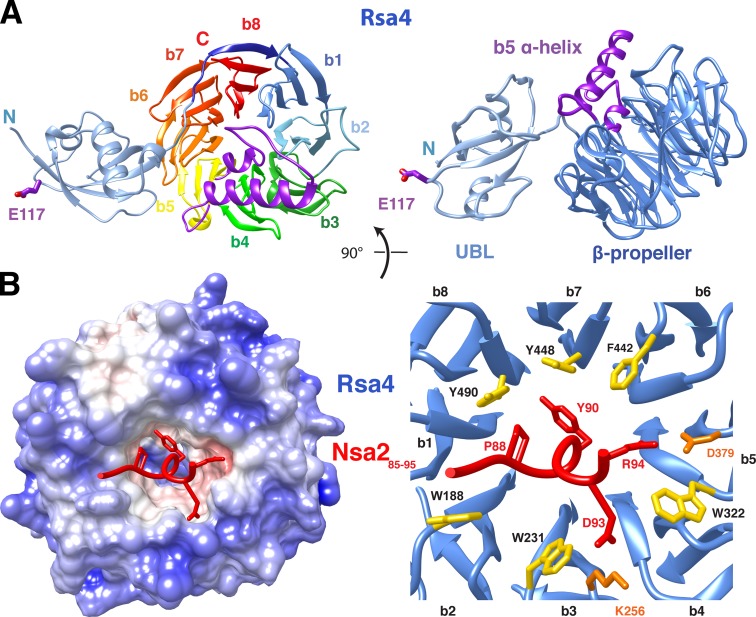
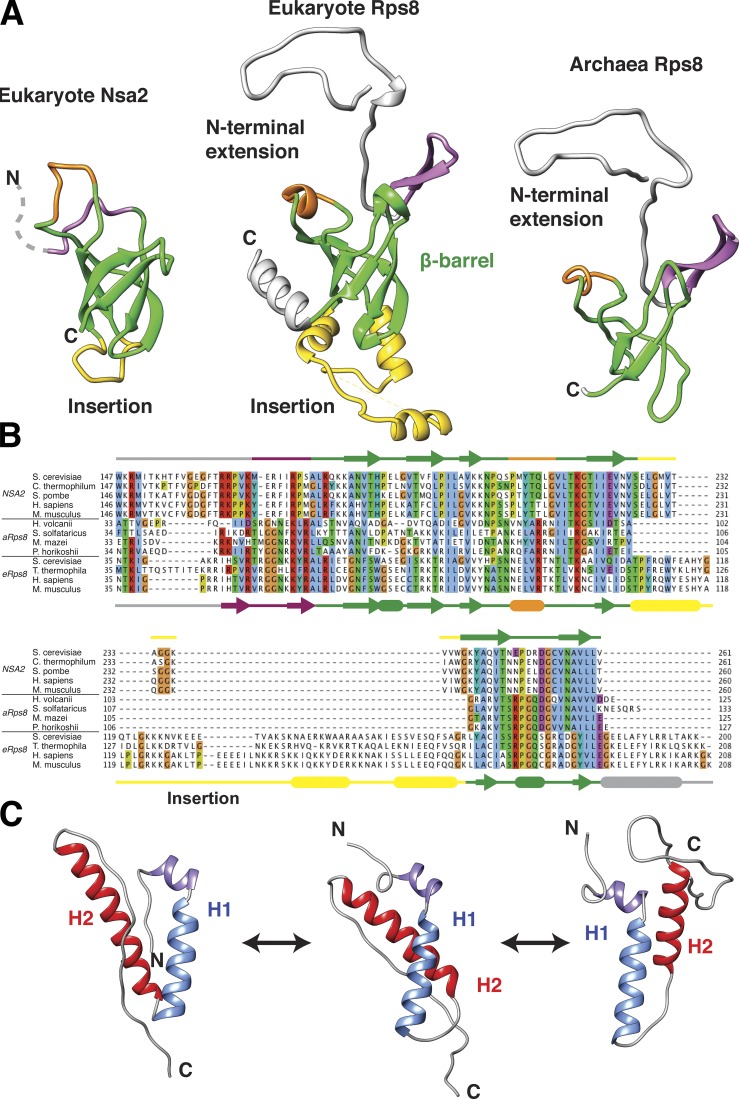
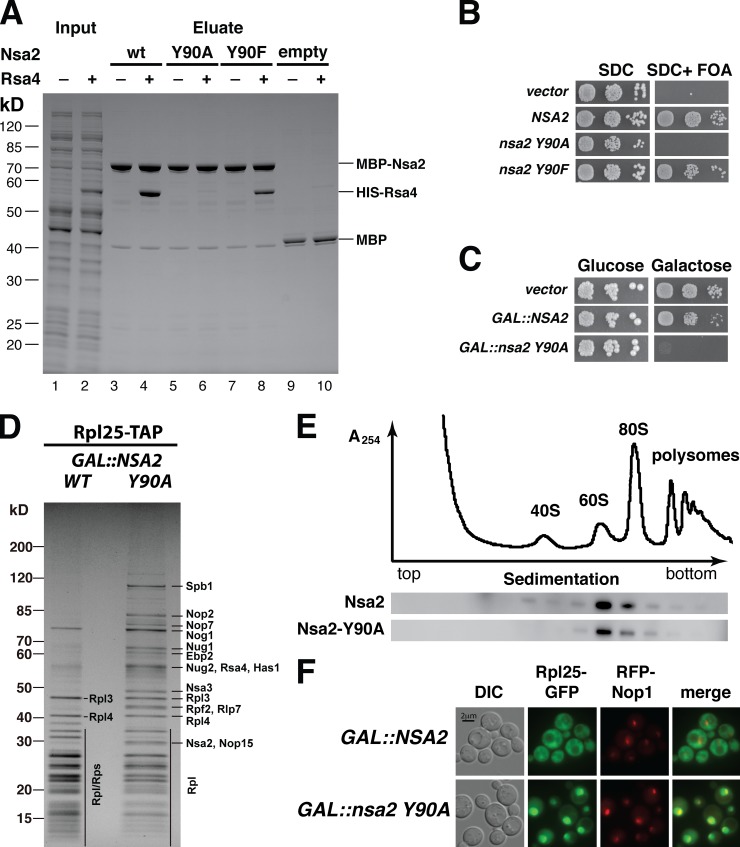
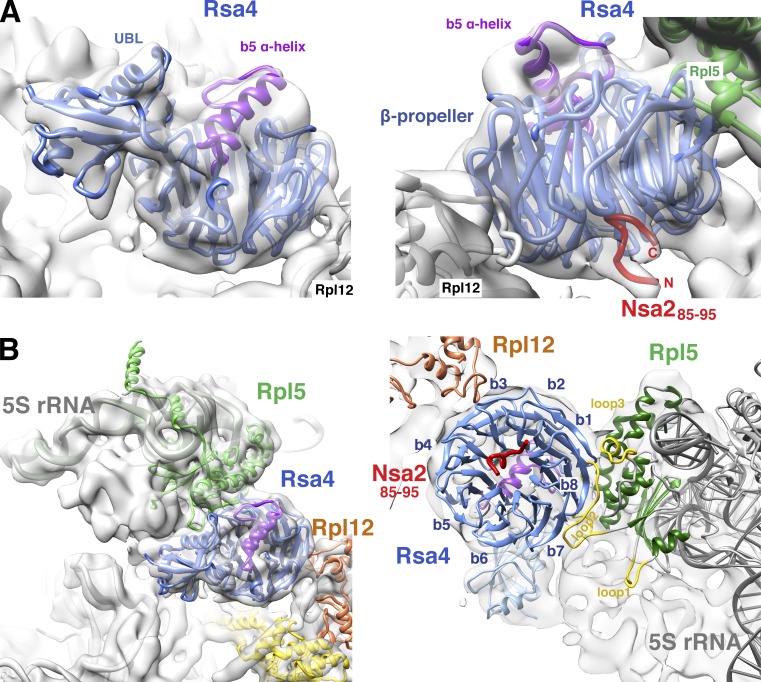
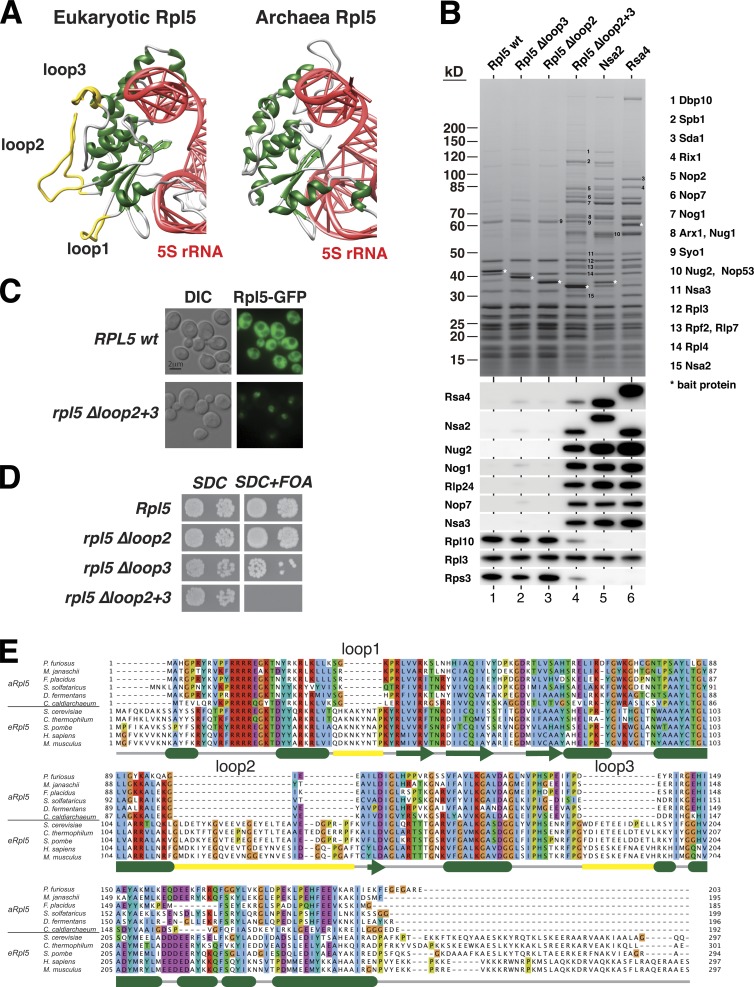
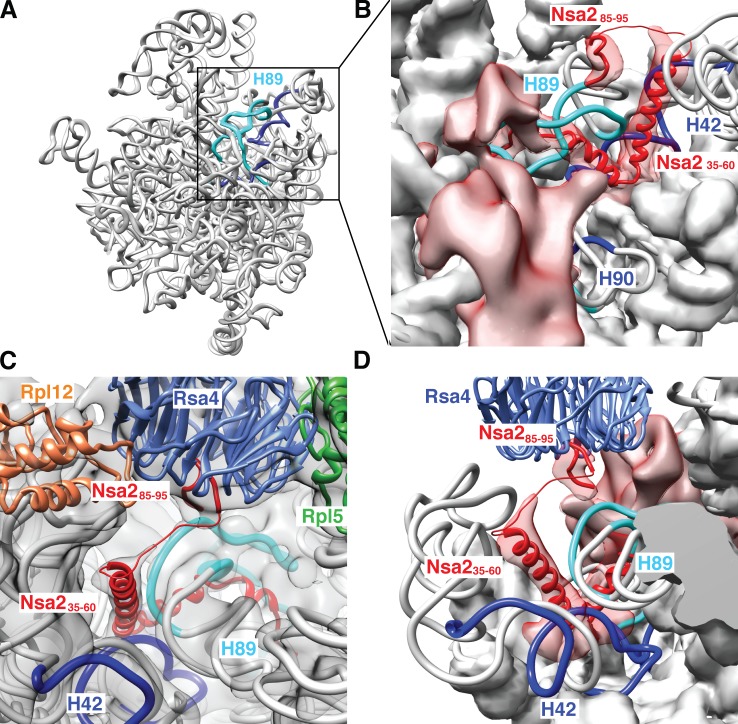
Eukaryotic ribosome biogenesis involves ∼200 assembly factors, but how these contribute to ribosome maturation is poorly understood. Here, we identify a network of factors on the nascent 60S subunit that actively remodels preribosome structure. At its hub is Rsa4, a direct substrate of the force-generating ATPase Rea1. We show that Rsa4 is connected to the central protuberance by binding to Rpl5 and to ribosomal RNA (rRNA) helix 89 of the nascent peptidyl transferase center (PTC) through Nsa2. Importantly, Nsa2 binds to helix 89 before relocation of helix 89 to the PTC. Structure-based mutations of these factors reveal the functional importance of their interactions for ribosome assembly. Thus, Rsa4 is held tightly in the preribosome and can serve as a "distribution box," transmitting remodeling energy from Rea1 into the developing ribosome. We suggest that a relay-like factor network coupled to a mechano-enzyme is strategically positioned to relocate rRNA elements during ribosome maturation.
真核生物核糖体生物发生涉及约 200 个组装因子,但这些因子如何促进核糖体成熟尚不清楚。在这里,我们鉴定了新生 60S 亚基上的一组因子,这些因子可主动重塑前核糖体结构。其核心是 Rsa4,它是产生力的 ATP 酶 Rea1 的直接底物。我们表明,Rsa4 通过与 Rpl5 结合,并通过 Nsa2 与新生肽转移酶中心 (PTC) 的 rRNA 螺旋 89 结合,连接到中央隆起。重要的是,Nsa2 在螺旋 89 重新定位到 PTC 之前与螺旋 89 结合。这些因子的基于结构的突变揭示了它们相互作用对于核糖体组装的功能重要性。因此,Rsa4 在核糖体前体中被紧紧地固定,并可以作为“分配箱”,将重塑能量从 Rea1 传递到正在发育的核糖体中。我们认为,一种与机械酶偶联的类似接力的因子网络,在核糖体成熟过程中被战略性地定位,以重新定位 rRNA 元件。