Hsu Hsiu-Ching, Chen Ching-Yi, Chen Ming-Fong
Department of Animal Science and Technology, National Taiwan University, No, 50, Lane 155, Sec 3, Keelung Rd, Taipei 10672, Taiwan.
J Biomed Sci. 2014 Nov 18;21(1):101. doi: 10.1186/s12929-014-0101-3.
Use of the chemotherapeutic drug doxorubicin (DOX) is associated with serious cardiotoxicity, as it increases levels of reactive oxygen species (ROS). N-3 polyunsaturated fatty acid dietary supplements can be of benefit to patients undergoing cancer therapy. The aims of this study were to determine whether DOX-induced cardiotoxicity is related to mitochondrial uncoupling proteins and whether eicosapentaenoic acid (EPA, C20:5 n-3) or docosahexaenoic acid (DHA, C22:6 n-3) affects DOX-induced cardiomyocyte toxicity.
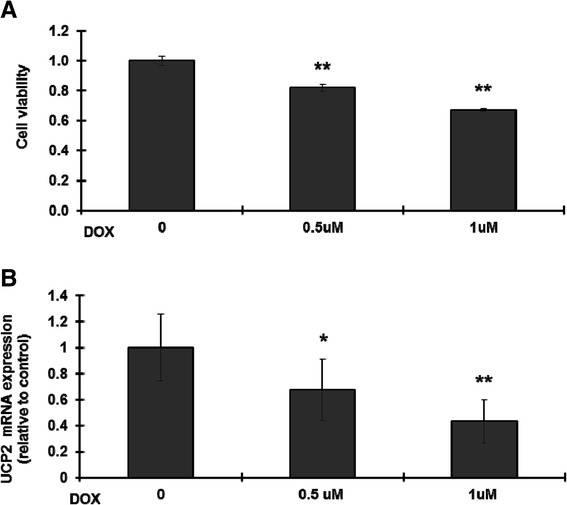
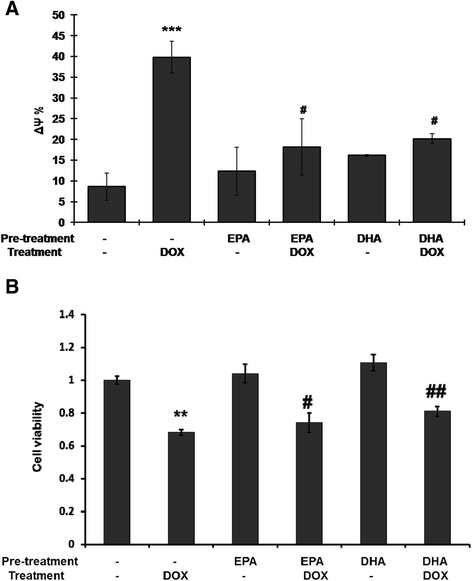
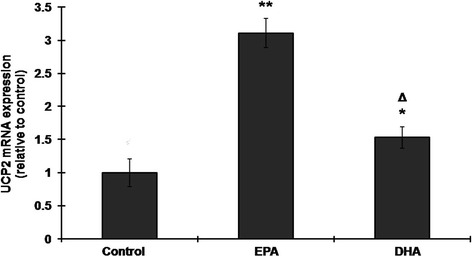
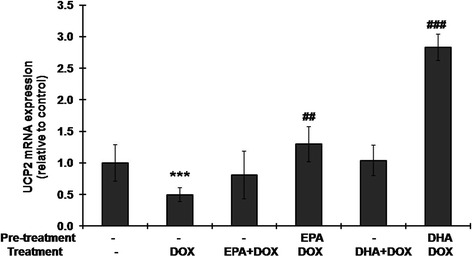
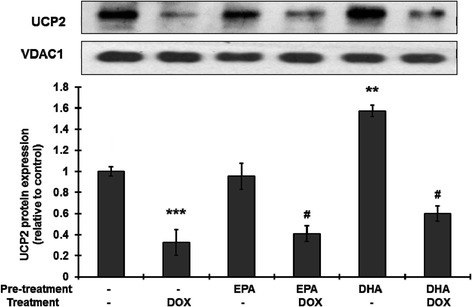
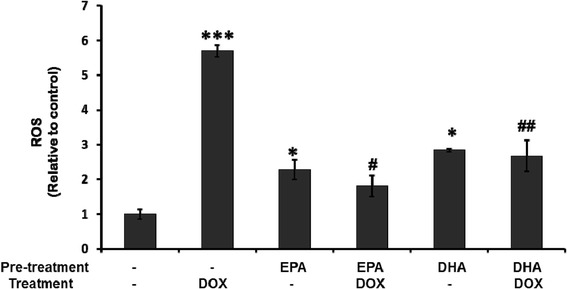
Treatment of H9C2 cells with DOX resulted in decreased cell viability and UCP2 expression. Treatment with 100 μM EPA or 50 μM DHA for 24 h resulted in a maximal mitochondria concentration of these fatty acids and increased UCP2 expression. Pretreatment with 100 μM EPA or 50 μM DHA prevented the DOX-induced decrease in UCP2 mRNA and protein levels, but these effects were not seen with EPA or DHA and DOX cotreatment. In addition, the DOX-induced increase in ROS production and subsequent mitochondrial membrane potential change (∆ψ) were significantly attenuated by pretreatment with EPA or DHA.
EPA or DHA pre-treatment inhibits the DOX-induced decrease in UCP2 expression, increase in ROS production, and subsequent mitochondrial membrane potential change that contribute to the cardiotoxicity of DOX.
化疗药物阿霉素(DOX)的使用与严重的心脏毒性相关,因为它会增加活性氧(ROS)水平。N-3多不饱和脂肪酸膳食补充剂可能对接受癌症治疗的患者有益。本研究的目的是确定DOX诱导的心脏毒性是否与线粒体解偶联蛋白有关,以及二十碳五烯酸(EPA,C20:5 n-3)或二十二碳六烯酸(DHA,C22:6 n-3)是否会影响DOX诱导的心肌细胞毒性。
用DOX处理H9C2细胞导致细胞活力和UCP2表达降低。用100μM EPA或50μM DHA处理24小时导致这些脂肪酸的线粒体浓度达到最大值,并增加UCP2表达。用100μM EPA或50μM DHA预处理可防止DOX诱导的UCP2 mRNA和蛋白水平降低,但EPA或DHA与DOX共同处理时未观察到这些效果。此外,EPA或DHA预处理可显著减弱DOX诱导的ROS产生增加和随后的线粒体膜电位变化(∆ψ)。
EPA或DHA预处理可抑制DOX诱导的UCP2表达降低、ROS产生增加以及随后导致DOX心脏毒性的线粒体膜电位变化。