Gómez-Manzo Saúl, Terrón-Hernández Jessica, De la Mora-De la Mora Ignacio, González-Valdez Abigail, Marcial-Quino Jaime, García-Torres Itzhel, Vanoye-Carlo America, López-Velázquez Gabriel, Hernández-Alcántara Gloria, Oria-Hernández Jesús, Reyes-Vivas Horacio, Enríquez-Flores Sergio
Laboratorio de Bioquímica Genética, Instituto Nacional de Pediatría, México D.F. 04530, Mexico.
Departamento de Biología Molecular y Biotecnología, Instituto de Investigaciones Biomédicas, Universidad Nacional Autónoma de México, México D.F. 04510, Mexico.
Int J Mol Sci. 2014 Nov 17;15(11):21179-201. doi: 10.3390/ijms151121179.
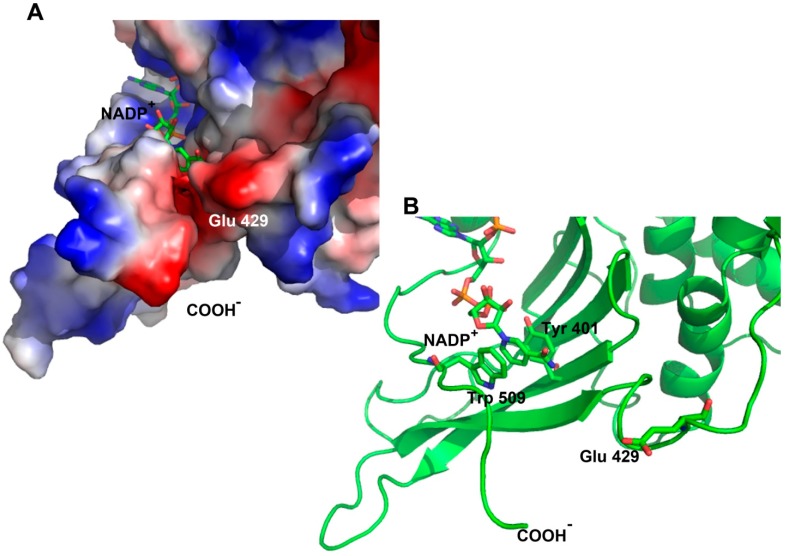
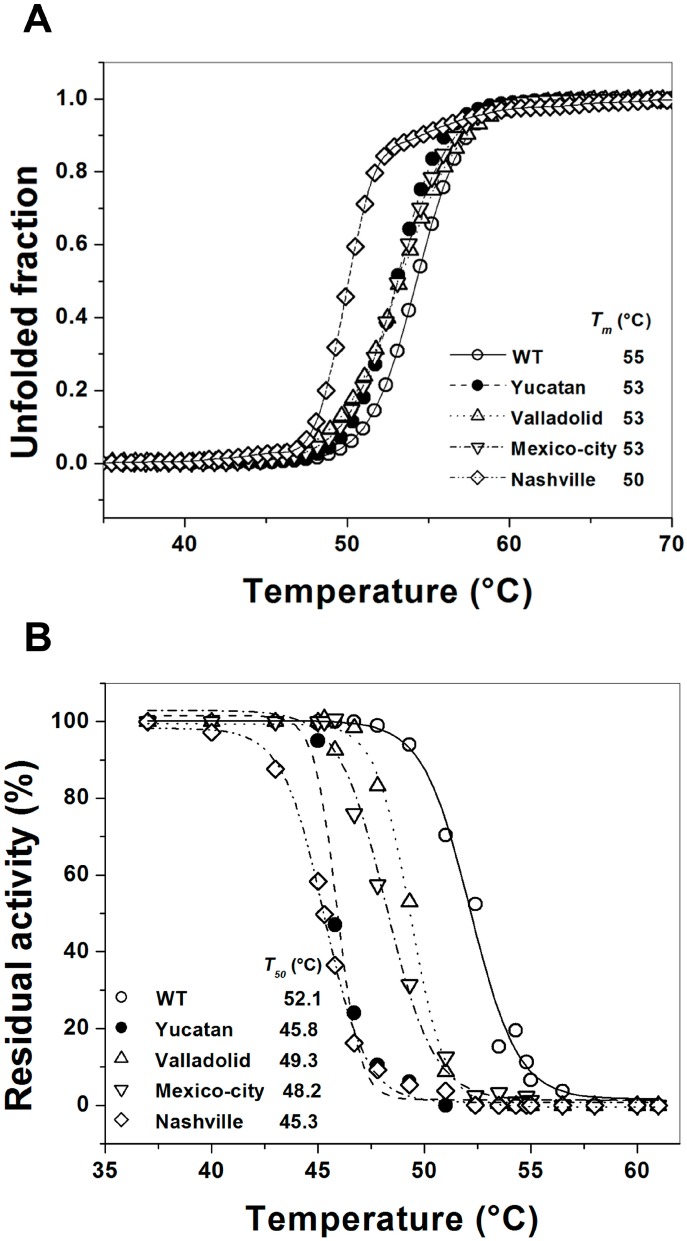
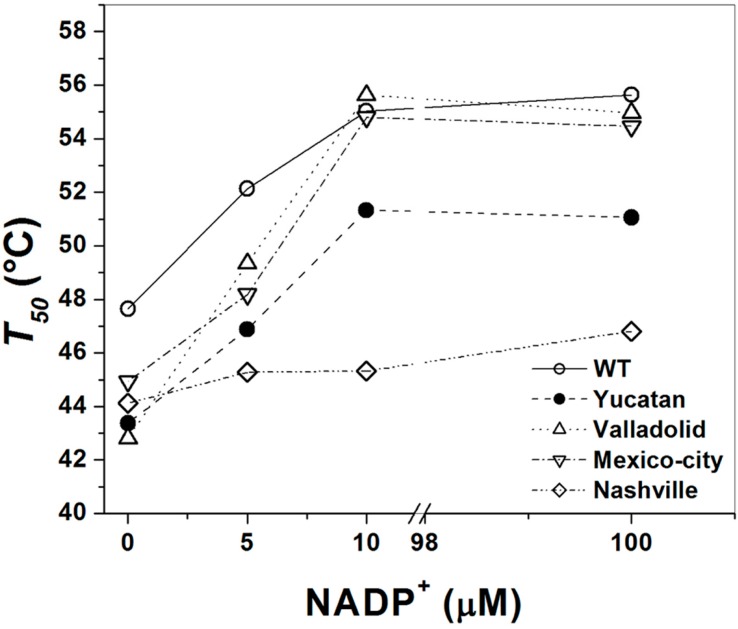
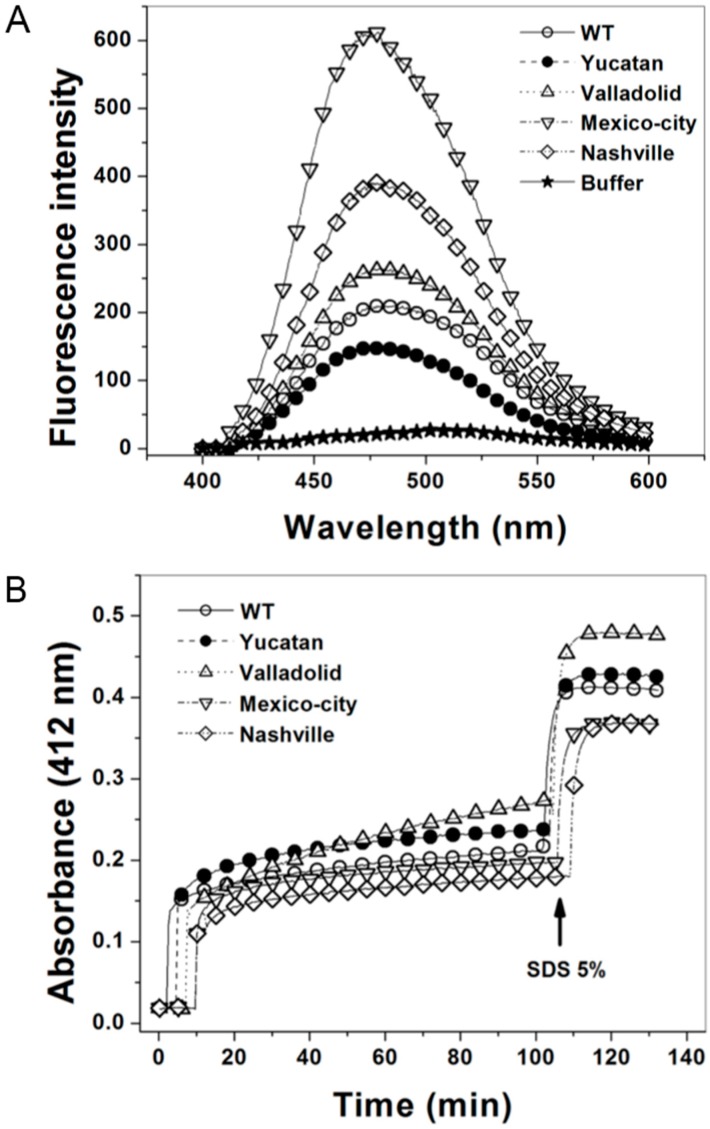
Glucose-6-phosphate dehydrogenase (G6PD) deficiency is the most common enzyme deficiency worldwide, causing a wide spectrum of conditions with severity classified from the mildest (Class IV) to the most severe (Class I). To correlate mutation sites in the G6PD with the resulting phenotypes, we studied four naturally occurring G6PD variants: Yucatan, Nashville, Valladolid and Mexico City. For this purpose, we developed a successful over-expression method that constitutes an easier and more precise method for obtaining and characterizing these enzymes. The k(cat) (catalytic constant) of all the studied variants was lower than in the wild-type. The structural rigidity might be the cause and the most evident consequence of the mutations is their impact on protein stability and folding, as can be observed from the protein yield, the T50 (temperature where 50% of its original activity is retained) values, and differences on hydrophobic regions. The mutations corresponding to more severe phenotypes are related to the structural NADP+ region. This was clearly observed for the Classes III and II variants, which became more thermostable with increasing NADP+, whereas the Class I variants remained thermolabile. The mutations produce repulsive electric charges that, in the case of the Yucatan variant, promote increased disorder of the C-terminus and consequently affect the binding of NADP+, leading to enzyme instability.
葡萄糖-6-磷酸脱氢酶(G6PD)缺乏症是全球最常见的酶缺乏症,可导致多种病症,其严重程度从最轻的(IV类)到最严重的(I类)不等。为了将G6PD中的突变位点与产生的表型相关联,我们研究了四种天然存在的G6PD变体:尤卡坦、纳什维尔、巴利亚多利德和墨西哥城。为此,我们开发了一种成功的过表达方法,该方法是获取和表征这些酶的一种更简便、更精确的方法。所有研究变体的k(cat)(催化常数)均低于野生型。结构刚性可能是突变的原因,而最明显的结果是它们对蛋白质稳定性和折叠的影响,这可以从蛋白质产量、T50(保留其原始活性50%时的温度)值以及疏水区域的差异中观察到。与更严重表型相对应的突变与结构NADP+区域有关。对于III类和II类变体,随着NADP+增加,它们变得更耐热,而I类变体仍然热不稳定,这一点很明显。这些突变产生排斥电荷,就尤卡坦变体而言,会促进C末端无序度增加,从而影响NADP+的结合,导致酶不稳定。