Ford Brian E, Sun Bruce, Carpino James, Chapler Elizabeth S, Ching Jane, Choi Yoon, Jhun Kevin, Kim Jung D, Lallos Gregory G, Morgenstern Rachelle, Singh Shalini, Theja Sai, Dennehy John J
Biology Department, Queens College of the City University of New York, New York, New York, United States of America; The Graduate Center of the City University of New York, New York, New York, United States of America.
Biology Department, Queens College of the City University of New York, New York, New York, United States of America.
PLoS One. 2014 Nov 19;9(11):e113078. doi: 10.1371/journal.pone.0113078. eCollection 2014.
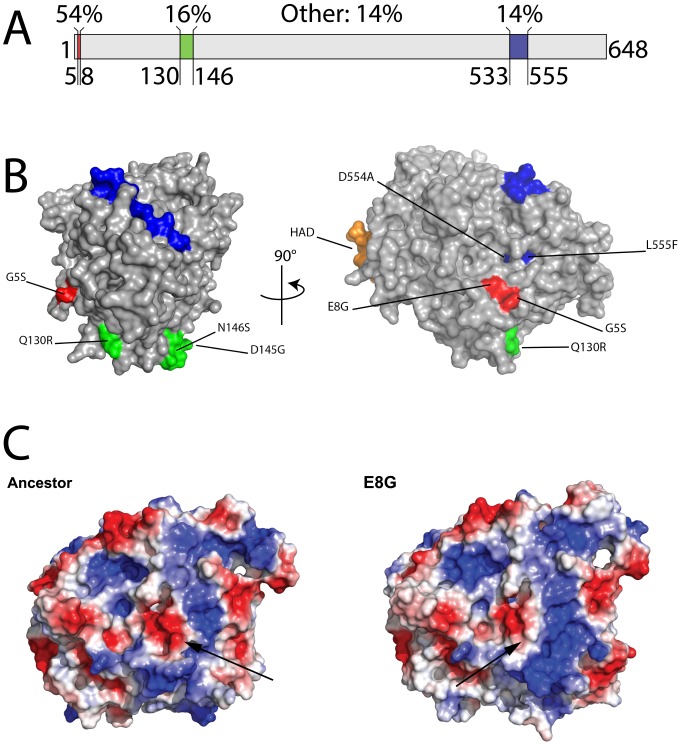
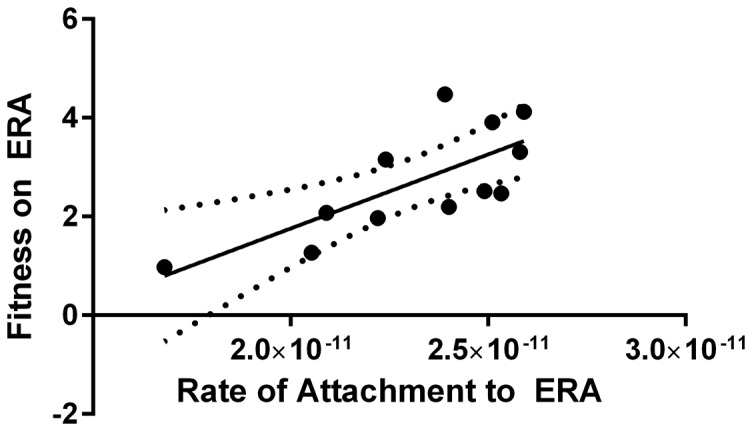
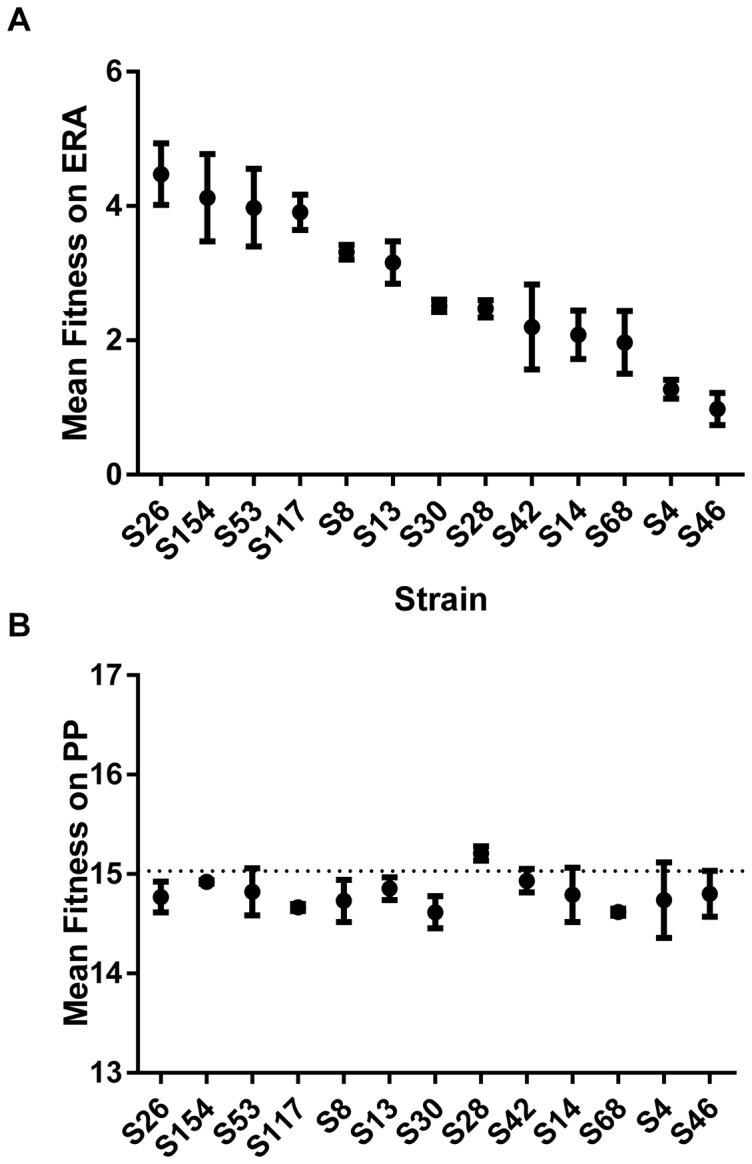
Viruses readily mutate and gain the ability to infect novel hosts, but few data are available regarding the number of possible host range-expanding mutations allowing infection of any given novel host, and the fitness consequences of these mutations on original and novel hosts. To gain insight into the process of host range expansion, we isolated and sequenced 69 independent mutants of the dsRNA bacteriophage Φ6 able to infect the novel host, Pseudomonas pseudoalcaligenes. In total, we found at least 17 unique suites of mutations among these 69 mutants. We assayed fitness for 13 of 17 mutant genotypes on P. pseudoalcaligenes and the standard laboratory host, P. phaseolicola. Mutants exhibited significantly lower fitnesses on P. pseudoalcaligenes compared to P. phaseolicola. Furthermore, 12 of the 13 assayed mutants showed reduced fitness on P. phaseolicola compared to wildtype Φ6, confirming the prevalence of antagonistic pleiotropy during host range expansion. Further experiments revealed that the mechanistic basis of these fitness differences was likely variation in host attachment ability. In addition, using computational protein modeling, we show that host-range expanding mutations occurred in hotspots on the surface of the phage's host attachment protein opposite a putative hydrophobic anchoring domain.
病毒很容易发生突变并获得感染新宿主的能力,但关于能够感染任何给定新宿主的宿主范围扩大突变的数量,以及这些突变对原始宿主和新宿主的适应性影响的数据却很少。为了深入了解宿主范围扩大的过程,我们分离并测序了69个能够感染新宿主——假产碱假单胞菌的双链RNA噬菌体Φ6的独立突变体。在这69个突变体中,我们总共发现了至少17套独特的突变组合。我们测定了17种突变基因型中的13种在假产碱假单胞菌和标准实验室宿主菜豆假单胞菌上的适应性。与菜豆假单胞菌相比,突变体在假产碱假单胞菌上的适应性显著降低。此外,在测定的13个突变体中,有12个与野生型Φ6相比在菜豆假单胞菌上的适应性降低,这证实了宿主范围扩大过程中拮抗多效性的普遍性。进一步的实验表明,这些适应性差异的机制基础可能是宿主附着能力的变化。此外,通过计算蛋白质建模,我们表明宿主范围扩大突变发生在噬菌体宿主附着蛋白表面与假定的疏水锚定结构域相对的热点区域。