Leite Natália A, Alves-Pereira Alessandro, Corrêa Alberto S, Zucchi Maria I, Omoto Celso
Departamento de Entomologia e Acarologia, Escola Superior de Agricultura "Luiz de Queiroz", Universidade de São Paulo, Piracicaba, São Paulo, Brazil.
Departamento de Genética, Escola Superior de Agricultura "Luiz de Queiroz", Universidade de São Paulo, Piracicaba, São Paulo, Brazil.
PLoS One. 2014 Nov 19;9(11):e113286. doi: 10.1371/journal.pone.0113286. eCollection 2014.
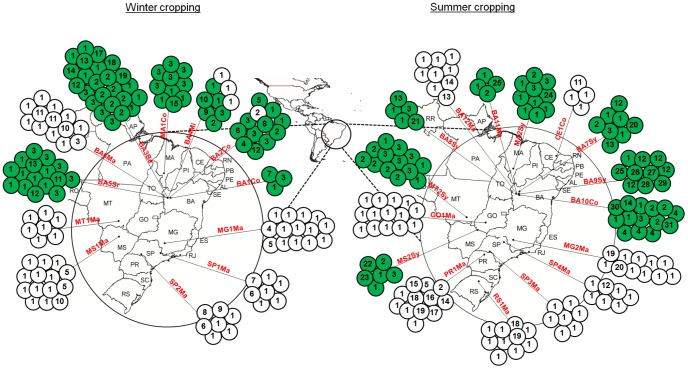
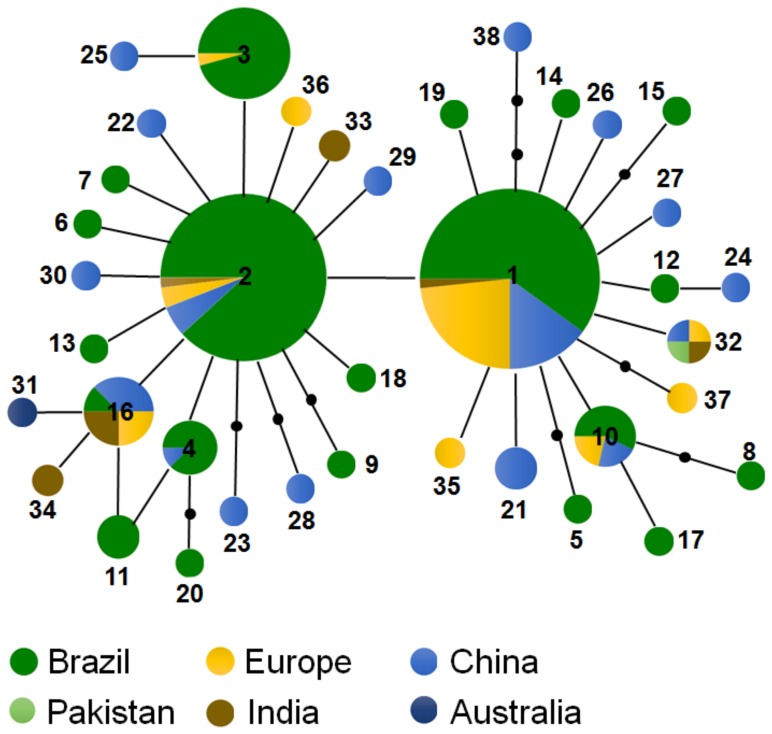
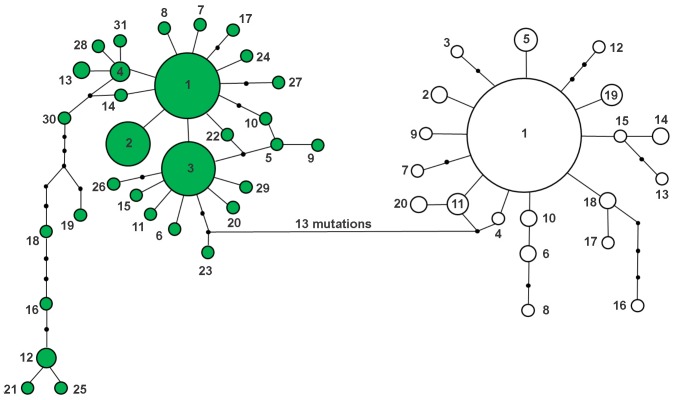
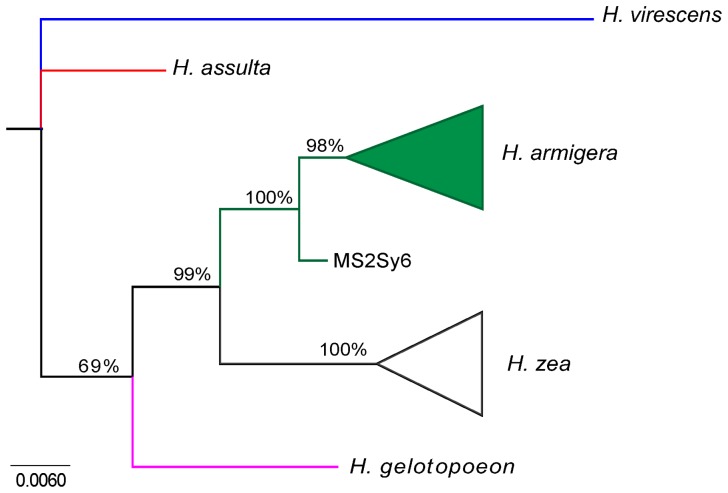
Helicoverpa armigera is one of the primary agricultural pests in the Old World, whereas H. zea is predominant in the New World. However, H. armigera was first documented in Brazil in 2013. Therefore, the geographical distribution, range of hosts, invasion source, and dispersal routes for H. armigera are poorly understood or unknown in Brazil. In this study, we used a phylogeographic analysis of natural H. armigera and H. zea populations to (1) assess the occurrence of both species on different hosts; (2) infer the demographic parameters and genetic structure; (3) determine the potential invasion and dispersal routes for H. armigera within the Brazilian territory; and (4) infer the geographical origin of H. armigera. We analyzed partial sequence data from the cytochrome c oxidase subunit I (COI) gene. We determined that H. armigera individuals were most prevalent on dicotyledonous hosts and that H. zea were most prevalent on maize crops, based on the samples collected between May 2012 and April 2013. The populations of both species showed signs of demographic expansion, and no genetic structure. The high genetic diversity and wide distribution of H. armigera in mid-2012 are consistent with an invasion period prior to the first reports of this species in the literature and/or multiple invasion events within the Brazilian territory. It was not possible to infer the invasion and dispersal routes of H. armigera with this dataset. However, joint analyses using sequences from the Old World indicated the presence of Chinese, Indian, and European lineages within the Brazilian populations of H. armigera. These results suggest that sustainable management plans for the control of H. armigera will be challenging considering the high genetic diversity, polyphagous feeding habits, and great potential mobility of this pest on numerous hosts, which favor the adaptation of this insect to diverse environments and control strategies.
棉铃虫是东半球主要的农业害虫之一,而玉米螟在西半球占主导地位。然而,2013年棉铃虫首次在巴西被记录。因此,棉铃虫在巴西的地理分布、寄主范围、入侵来源和扩散途径知之甚少或尚不明确。在本研究中,我们对棉铃虫和玉米螟的自然种群进行了系统发育地理学分析,以(1)评估这两个物种在不同寄主上的发生情况;(2)推断种群统计学参数和遗传结构;(3)确定棉铃虫在巴西境内的潜在入侵和扩散途径;(4)推断棉铃虫的地理起源。我们分析了细胞色素c氧化酶亚基I(COI)基因的部分序列数据。基于2012年5月至2013年4月期间采集的样本,我们确定棉铃虫个体在双子叶植物寄主上最为普遍,而玉米螟在玉米作物上最为普遍。两个物种的种群均显示出种群扩张的迹象,且无遗传结构。2012年年中棉铃虫的高遗传多样性和广泛分布与该物种在文献中首次报道之前的入侵期和/或巴西境内的多次入侵事件相一致。利用该数据集无法推断棉铃虫的入侵和扩散途径。然而,使用来自东半球的序列进行的联合分析表明,巴西棉铃虫种群中存在中国、印度和欧洲的谱系。这些结果表明,考虑到这种害虫的高遗传多样性、多食性取食习性以及在众多寄主上的巨大潜在移动性,制定可持续的棉铃虫防治管理计划将具有挑战性,因为这些特性有利于这种昆虫适应不同的环境和控制策略。