
结直肠癌生物标志物磷酸化的免疫组织化学需要可控的组织固定。
Immunohistochemistry of colorectal cancer biomarker phosphorylation requires controlled tissue fixation.
作者信息
Theiss Abbey P, Chafin David, Bauer Daniel R, Grogan Thomas M, Baird Geoffrey S
机构信息
Ventana Medical Systems Inc., Tucson, Arizona, United States of America.
Department of Laboratory Medicine, University of Washington, Seattle, Washington, United States of America; Department of Pathology, University of Washington, Seattle, Washington, United States of America.
出版信息
PLoS One. 2014 Nov 19;9(11):e113608. doi: 10.1371/journal.pone.0113608. eCollection 2014.
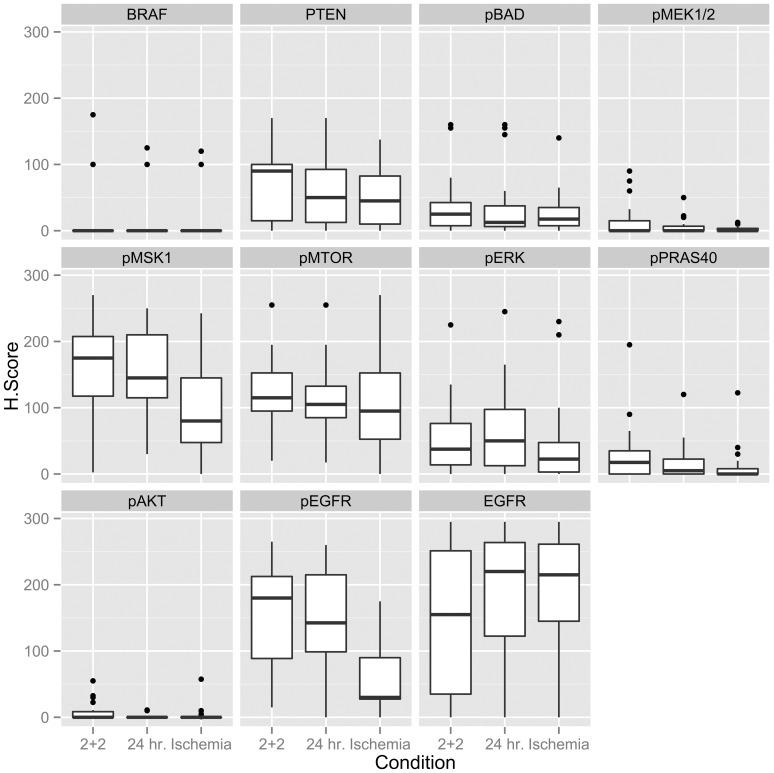
Phosphorylated signaling molecules are biomarkers of cancer pathophysiology and resistance to therapy, but because phosphoprotein analytes are often labile, poorly controlled clinical laboratory practices could prevent translation of research findings in this area from the bench to the bedside. We therefore compared multiple biomarker and phosphoprotein immunohistochemistry (IHC) results in 23 clinical colorectal carcinoma samples after either a novel, rapid tissue fixation protocol or a standard tissue fixation protocol employed by clinical laboratories, and we also investigated the effect of a defined post-operative "cold" ischemia period on these IHC results. We found that a one-hour cold ischemia interval, allowed by ASCO/CAP guidelines for certain cancer biomarker assays, is highly deleterious to certain phosphoprotein analytes, specifically the phosphorylated epidermal growth factor receptor (pEGFR), but shorter ischemic intervals (less than 17 minutes) facilitate preservation of phosphoproteins. Second, we found that a rapid 4-hour, two temperature, formalin fixation yielded superior staining in several cases with select markers (pEGFR, pBAD, pAKT) compared to a standard overnight room temperature fixation protocol, despite taking less time. These findings indicate that the future research and clinical utilities of phosphoprotein IHC for assessing colorectal carcinoma pathophysiology absolutely depend upon attention to preanalytical factors and rigorously controlled tissue fixation protocols.
磷酸化信号分子是癌症病理生理学和治疗耐药性的生物标志物,但由于磷蛋白分析物往往不稳定,临床实验室操作控制不佳可能会阻碍该领域的研究成果从实验室转化到临床应用。因此,我们比较了采用新型快速组织固定方案或临床实验室使用的标准组织固定方案处理的23份临床结直肠癌样本中的多种生物标志物和磷蛋白免疫组织化学(IHC)结果,并且我们还研究了特定术后“冷”缺血期对这些IHC结果的影响。我们发现,美国临床肿瘤学会/美国病理学家协会(ASCO/CAP)指南允许的某些癌症生物标志物检测的一小时冷缺血间隔,对某些磷蛋白分析物具有高度损害,特别是磷酸化表皮生长因子受体(pEGFR),但较短的缺血间隔(少于17分钟)有助于磷蛋白的保存。其次,我们发现,与标准的过夜室温固定方案相比,快速4小时、双温度的福尔马林固定在某些具有特定标志物(pEGFR、pBAD、pAKT)的病例中产生了更好的染色效果,尽管所需时间更短。这些发现表明,用于评估结直肠癌病理生理学的磷蛋白免疫组化的未来研究和临床应用绝对依赖于对分析前因素的关注以及严格控制的组织固定方案。



 Zotero 插件