Okazaki Yasumasa, Wang Yue, Tanaka Hiromasa, Mizuno Masaaki, Nakamura Kae, Kajiyama Hiroaki, Kano Hiroyuki, Uchida Koji, Kikkawa Fumitaka, Hori Masaru, Toyokuni Shinya
Department of Pathology and Biological Responses, Nagoya University Graduate School of Medicine, 65 Turumai-cho, Showa-ku, Nagoya 466-8550, Japan.
Plasma Nanotechnology Research Center, Nagoya University, Furo-cho, Chikusa-ku, Nagoya 464-8601, Japan ; Center for Advanced Medicine and Clinical Research, Nagoya University Hospital, 65 Tsurumai-cho, Showa-ku, Nagoya 466-8550, Japan.
J Clin Biochem Nutr. 2014 Nov;55(3):207-15. doi: 10.3164/jcbn.14-40. Epub 2014 Sep 9.
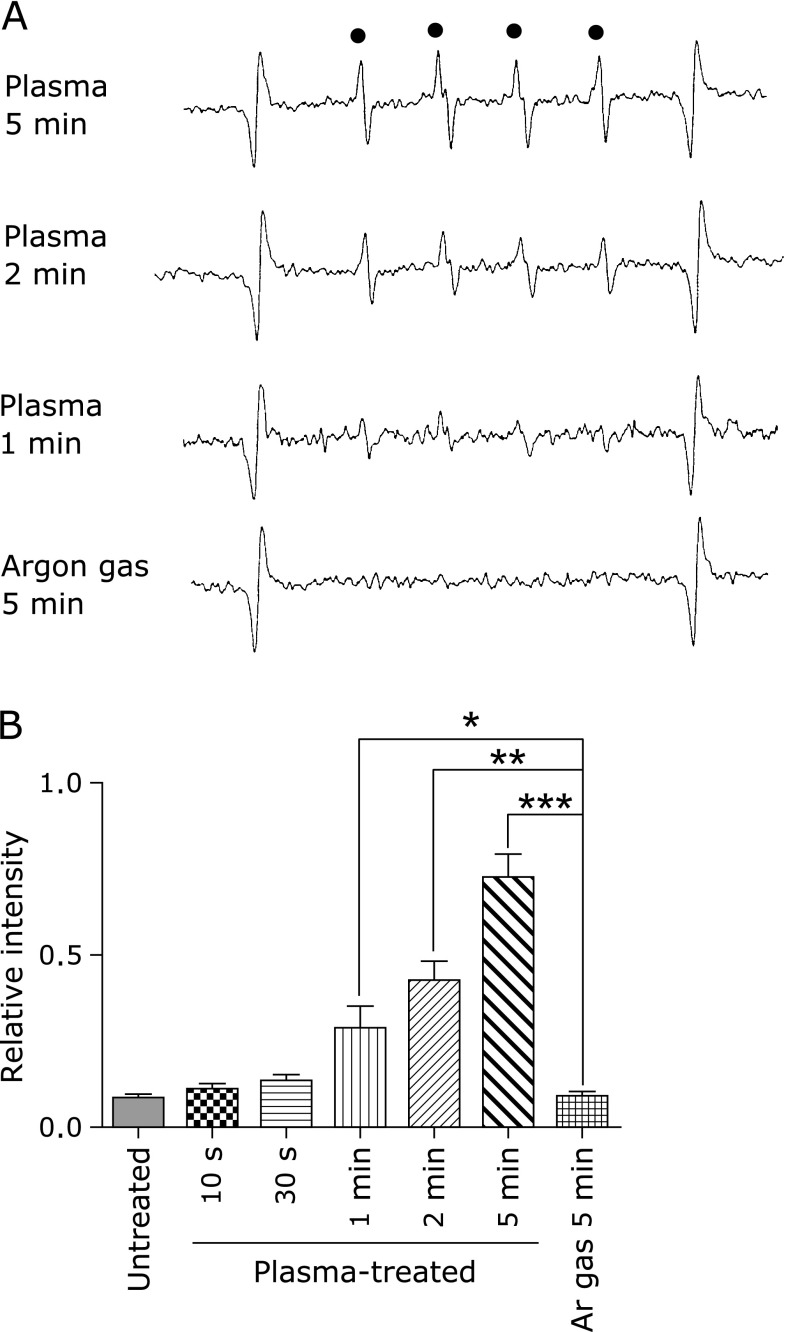
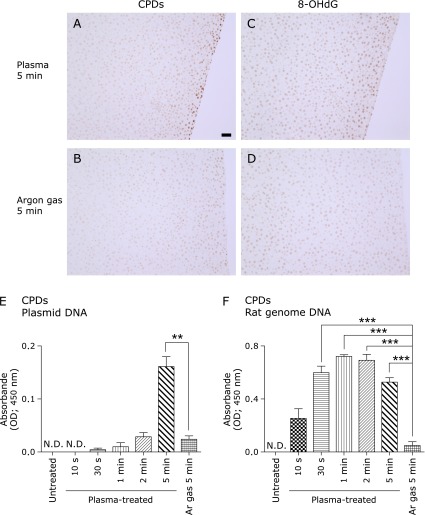
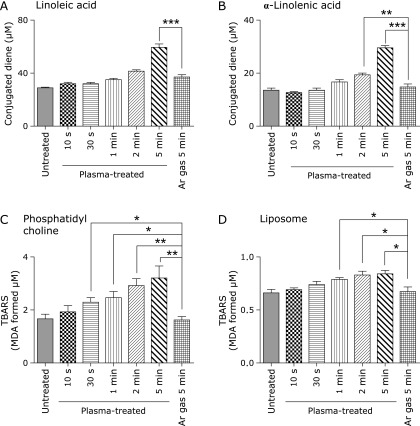
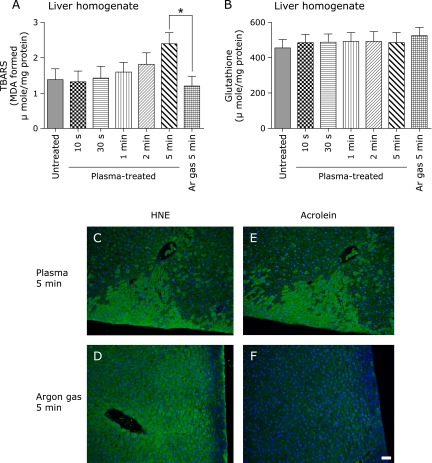
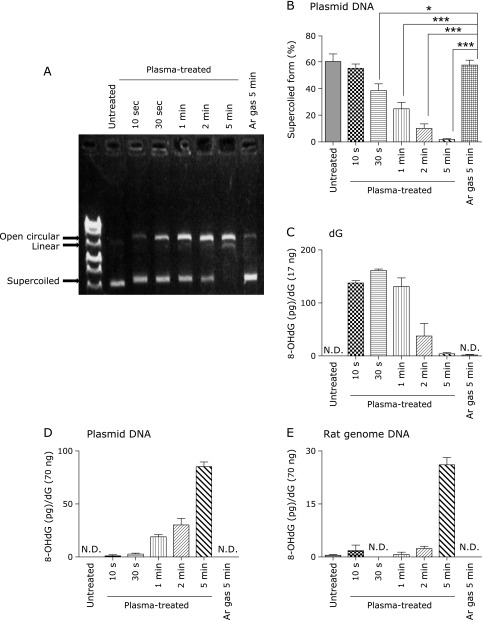
Thermal plasmas and lasers are used in medicine to cut and ablate tissues and for coagulation. Non-equilibrium atmospheric pressure plasma (NEAPP) is a recently developed, non-thermal technique with possible biomedical applications. Although NEAPP reportedly generates reactive oxygen/nitrogen species, electrons, positive ions, and ultraviolet radiation, little research has been done into the use of this technique for conventional free radical biology. Recently, we developed a NEAPP device with high electron density. Electron spin resonance spin-trapping revealed (•)OH as a major product. To obtain evidence of NEAPP-induced oxidative modifications in biomolecules and standardize them, we evaluated lipid peroxidation and DNA modifications in various in vitro and ex vivo experiments. Conjugated dienes increased after exposure to linoleic and α-linolenic acids. An increase in 2-thiobarbituric acid-reactive substances was also observed after exposure to phosphatidylcholine, liposomes or liver homogenate. Direct exposure to rat liver in saline produced immunohistochemical evidence of 4-hydroxy-2-nonenal- and acrolein-modified proteins. Exposure to plasmid DNA induced dose-dependent single/double strand breaks and increased the amounts of 8-hydroxy-2'-deoxyguanosine and cyclobutane pyrimidine dimers. These results indicate that oxidative biomolecular damage by NEAPP is dose-dependent and thus can be controlled in a site-specific manner. Simultaneous oxidative and UV-specific DNA damage may be useful in cancer treatment.
热等离子体和激光在医学中用于切割和消融组织以及进行凝血。非平衡大气压等离子体(NEAPP)是一种最近开发的非热技术,具有潜在的生物医学应用。尽管据报道NEAPP会产生活性氧/氮物种、电子、正离子和紫外线辐射,但对于将该技术用于传统自由基生物学的研究却很少。最近,我们开发了一种具有高电子密度的NEAPP装置。电子自旋共振自旋捕获显示(•)OH是主要产物。为了获得NEAPP诱导生物分子氧化修饰的证据并使其标准化,我们在各种体外和离体实验中评估了脂质过氧化和DNA修饰。暴露于亚油酸和α-亚麻酸后,共轭二烯增加。暴露于磷脂酰胆碱、脂质体或肝脏匀浆后,还观察到硫代巴比妥酸反应性物质增加。在盐水中直接暴露于大鼠肝脏产生了4-羟基-2-壬烯醛和丙烯醛修饰蛋白的免疫组化证据。暴露于质粒DNA会诱导剂量依赖性的单/双链断裂,并增加8-羟基-2'-脱氧鸟苷和环丁烷嘧啶二聚体的含量。这些结果表明,NEAPP对生物分子的氧化损伤是剂量依赖性的,因此可以以位点特异性方式进行控制。同时发生的氧化和紫外线特异性DNA损伤在癌症治疗中可能有用。