Sato Kotaro, Shi Lei, Ito Fumiya, Ohara Yuuki, Motooka Yashiro, Tanaka Hiromasa, Mizuno Masaaki, Hori Masaru, Hirayama Tasuku, Hibi Hideharu, Toyokuni Shinya
Department of Pathology and Biological Responses, Nagoya University Graduate School of Medicine, 65 Turumai-cho, Showa-ku, Nagoya 466-8550, Japan.
Department of Oral and Maxillofacial Surgery, Nagoya University Graduate School of Medicine, 65 Tsurumai-cho, Showa-ku, Nagoya 466-8550, Japan.
J Clin Biochem Nutr. 2019 Jul;65(1):8-15. doi: 10.3164/jcbn.18-91. Epub 2019 Jun 1.
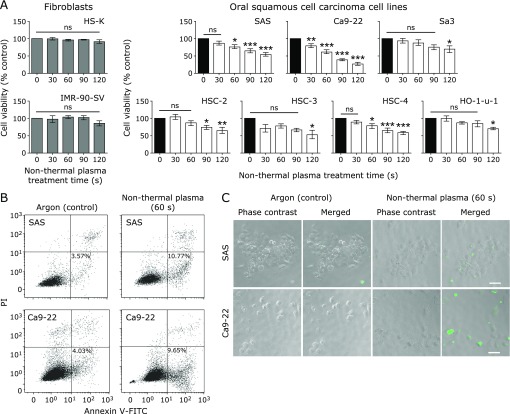
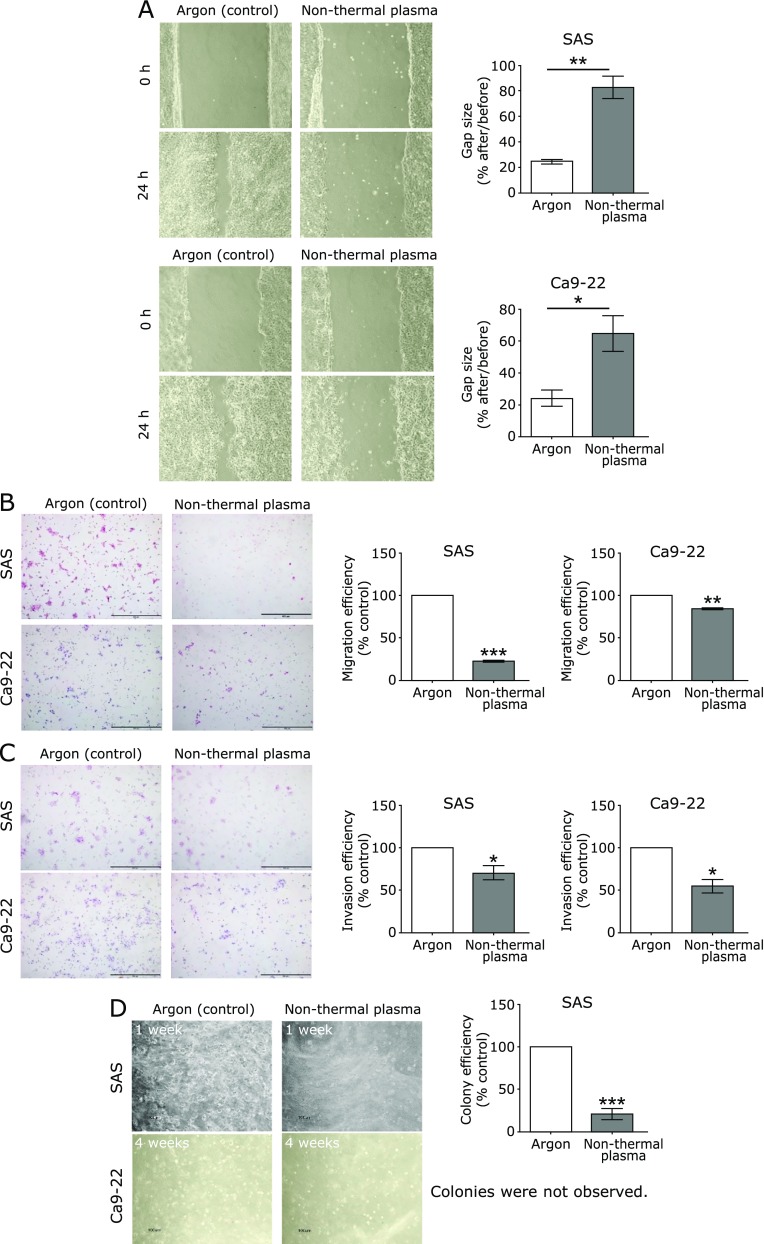
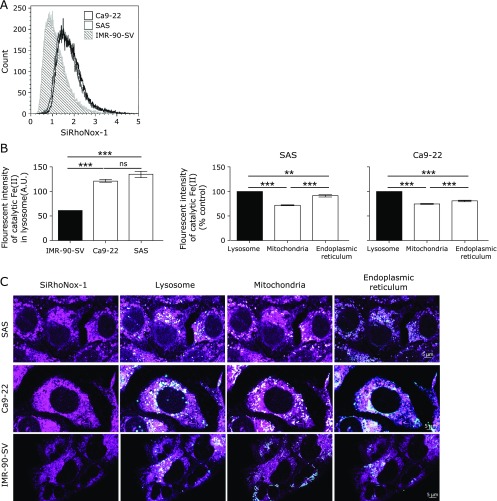
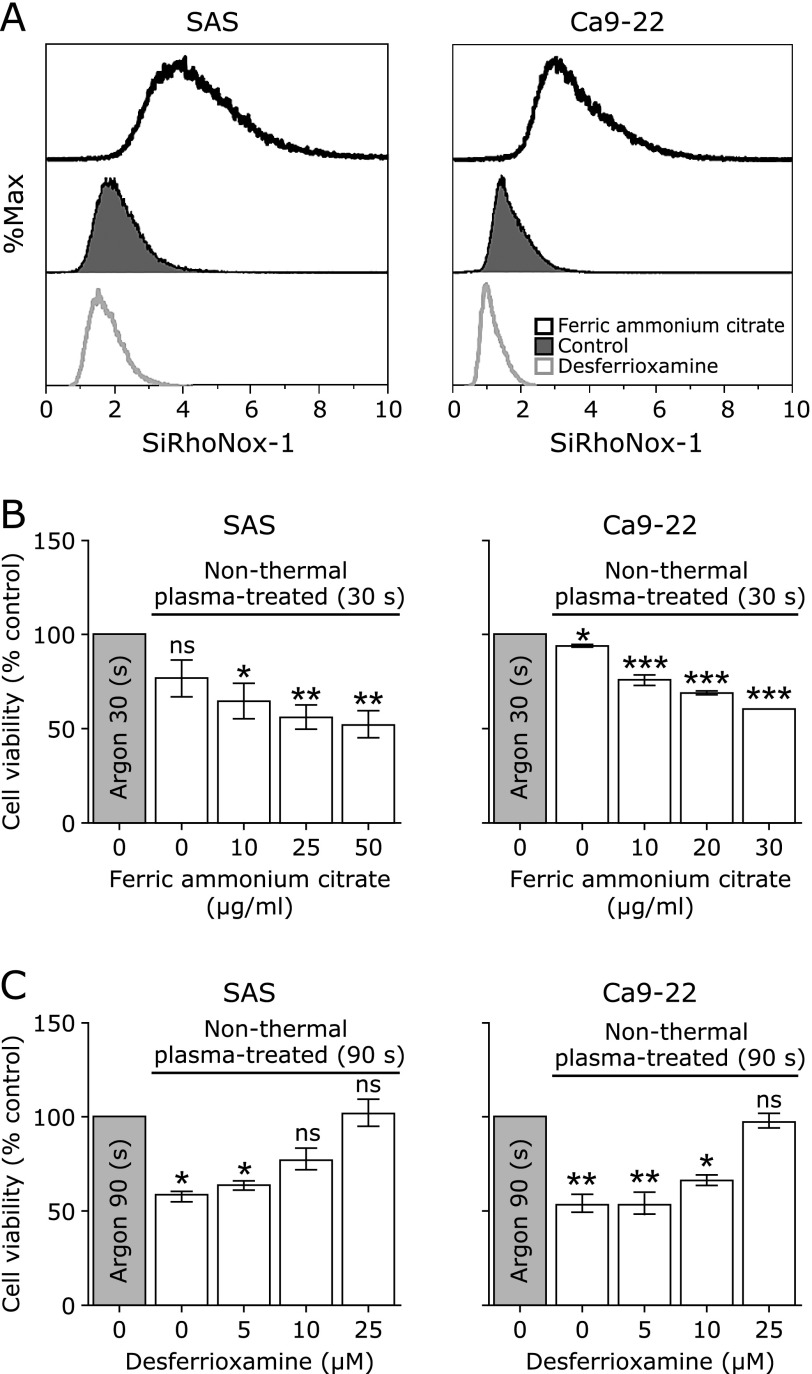
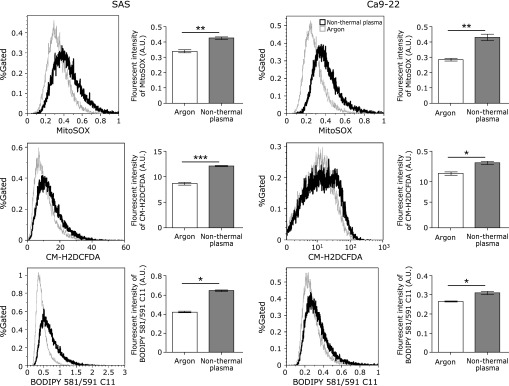
Oral cancer accounts for ~2% of all cancers worldwide, and therapeutic intervention is closely associated with quality of life. Here, we evaluated the effects of non-thermal plasma on oral squamous cell carcinoma cells with special reference to catalytic Fe(II). Non-thermal plasma exerted a specific killing effect on oral squamous cell carcinoma cells in comparison to fibroblasts. Furthermore, the effect was dependent on the amounts of catalytic Fe(II), present especially in lysosomes. After non-thermal plasma application, lipid peroxidation occurred and peroxides and mitochondrial superoxide were generated. Cancer cell death by non-thermal plasma was promoted dose-dependently by prior application of ferric ammonium citrate and prevented by desferrioxamine, suggesting the association of ferroptosis. Potential involvement of apoptosis was also observed with positive terminal deoxynucleaotidyl transferase-mediated dUTP nick end labeling and annexin V results. Non-thermal plasma exposure significantly suppressed the migratory, invasive and colony-forming abilities of squamous cell carcinoma cells. The oral cavity is easily observable; therefore, non-thermal plasma can be directly applied to the oral cavity to kill oral squamous cell carcinoma without damaging fibroblasts. In conclusion, non-thermal plasma treatment is a potential therapeutic option for oral cancer.
口腔癌占全球所有癌症的约2%,治疗干预与生活质量密切相关。在此,我们特别参照催化性Fe(II)评估了非热等离子体对口腔鳞状细胞癌细胞的影响。与成纤维细胞相比,非热等离子体对口腔鳞状细胞癌细胞具有特异性杀伤作用。此外,这种作用取决于催化性Fe(II)的含量,其尤其存在于溶酶体中。施加非热等离子体后,发生了脂质过氧化,产生了过氧化物和线粒体超氧化物。柠檬酸铁铵预先处理可剂量依赖性地促进非热等离子体诱导的癌细胞死亡,而去铁胺可阻止这种死亡,提示铁死亡的相关性。通过阳性末端脱氧核苷酸转移酶介导的dUTP缺口末端标记和膜联蛋白V结果也观察到凋亡的潜在参与。非热等离子体暴露显著抑制了鳞状细胞癌细胞的迁移、侵袭和集落形成能力。口腔易于观察;因此,非热等离子体可直接应用于口腔以杀死口腔鳞状细胞癌而不损伤成纤维细胞。总之,非热等离子体治疗是口腔癌的一种潜在治疗选择。