Graham Susan, Ye Siqin, Qian Min, Sanford Alexandra R, Di Tullio Marco R, Sacco Ralph L, Mann Douglas L, Levin Bruce, Pullicino Patrick M, Freudenberger Ronald S, Teerlink John R, Mohr J P, Labovitz Arthur J, Lip Gregory Y H, Estol Conrado J, Lok Dirk J, Ponikowski Piotr, Anker Stefan D, Thompson John L P, Homma Shunichi
Division of Cardiology, Department of Medicine, State University of New York Upstate Medical University, Buffalo, New York, United States of America.
Division of Cardiology, Department of Medicine, Columbia University Medical Center, New York, New York, United States of America.
PLoS One. 2014 Nov 26;9(11):e113447. doi: 10.1371/journal.pone.0113447. eCollection 2014.
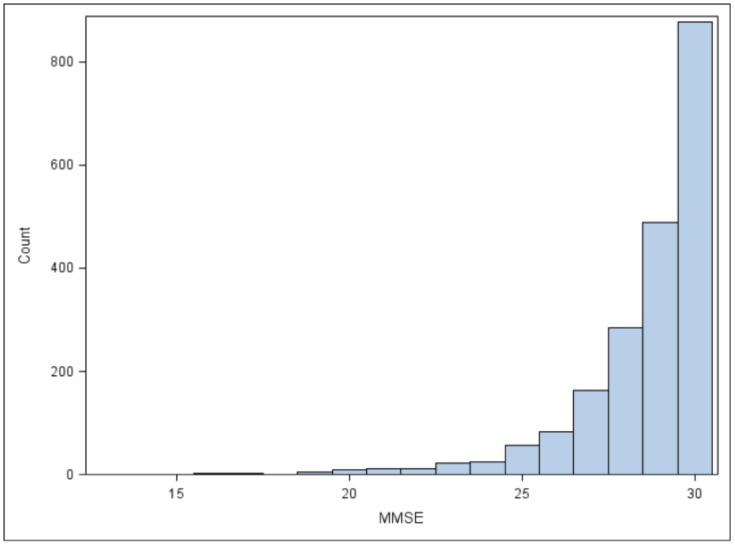
We sought to determine whether cognitive function in stable outpatients with heart failure (HF) is affected by HF severity. A retrospective, cross-sectional analysis was performed using data from 2, 043 outpatients with systolic HF and without prior stroke enrolled in the Warfarin versus Aspirin in Reduced Cardiac Ejection Fraction (WARCEF) Trial. Multivariable regression analysis was used to assess the relationship between cognitive function measured using the Mini-Mental Status Exam (MMSE) and markers of HF severity (left ventricular ejection fraction [LVEF], New York Heart Association [NYHA] functional class, and 6-minute walk distance). The mean (SD) for the MMSE was 28.6 (2.0), with 64 (3.1%) of the 2,043 patients meeting the cut-off of MMSE <24 that indicates need for further evaluation of cognitive impairment. After adjustment for demographic and clinical covariates, 6-minute walk distance (β-coefficient 0.002, p<0.0001), but not LVEF or NYHA functional class, was independently associated with the MMSE as a continuous measure. Age, education, smoking status, body mass index, and hemoglobin level were also independently associated with the MMSE. In conclusion, six-minute walk distance, but not LVEF or NYHA functional class, was an important predictor of cognitive function in ambulatory patients with systolic heart failure.
我们试图确定稳定的心力衰竭(HF)门诊患者的认知功能是否受HF严重程度的影响。我们利用来自射血分数降低的心力衰竭患者华法林与阿司匹林治疗比较试验(WARCEF)中2043例收缩期HF且无既往卒中病史的门诊患者的数据进行了一项回顾性横断面分析。我们使用多变量回归分析来评估用简易精神状态检查表(MMSE)测量的认知功能与HF严重程度指标(左心室射血分数[LVEF]、纽约心脏协会[NYHA]功能分级和6分钟步行距离)之间的关系。MMSE的均值(标准差)为28.6(2.0),在2043例患者中有64例(3.1%)MMSE<24,这表明需要进一步评估认知障碍。在对人口统计学和临床协变量进行校正后,6分钟步行距离(β系数0.002,p<0.0001),而非LVEF或NYHA功能分级,作为一项连续指标与MMSE独立相关。年龄、教育程度、吸烟状况、体重指数和血红蛋白水平也与MMSE独立相关。总之,6分钟步行距离,而非LVEF或NYHA功能分级,是收缩期心力衰竭门诊患者认知功能的重要预测指标。