Singleton Jered, Osborn Jennifer L, Lillis Lorraine, Hawkins Kenneth, Guelig Dylan, Price Will, Johns Rachel, Ebels Kelly, Boyle David, Weigl Bernhard, LaBarre Paul
PATH, Seattle, Washington, United States of America.
Oregon Health and Science University School of Medicine, Portland, Oregon, United States of America.
PLoS One. 2014 Nov 26;9(11):e113693. doi: 10.1371/journal.pone.0113693. eCollection 2014.
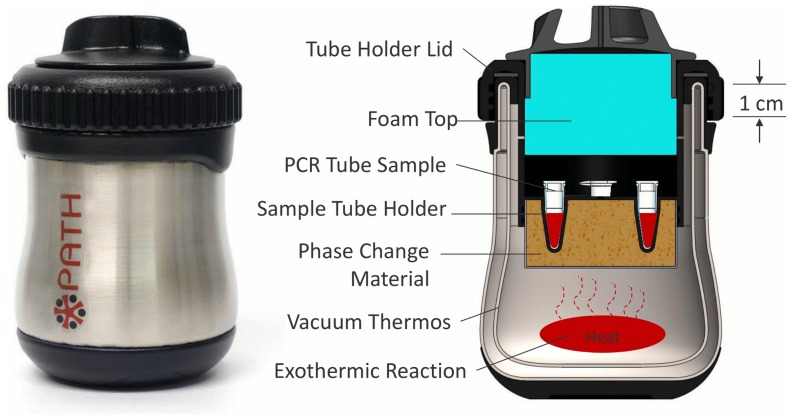
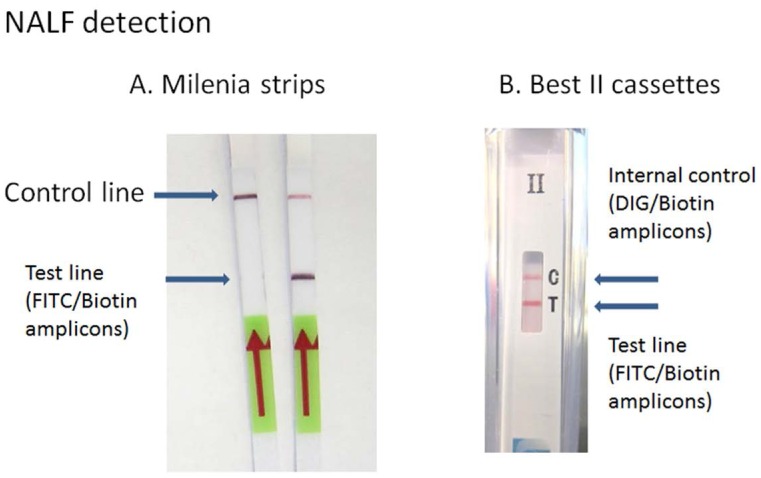
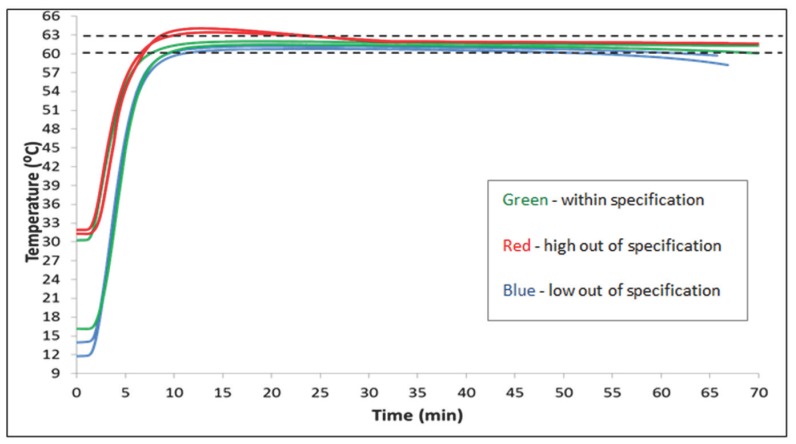
In resource-limited settings, the lack of decentralized molecular diagnostic testing and sparse access to centralized medical facilities can present a critical barrier to timely diagnosis, treatment, and subsequent control and elimination of infectious diseases. Isothermal nucleic acid amplification methods, including reverse transcription loop-mediated isothermal amplification (RT-LAMP), are well-suited for decentralized point-of-care molecular testing in minimal infrastructure laboratories since they significantly reduce the complexity of equipment and power requirements. Despite reduced complexity, however, there is still a need for a constant heat source to enable isothermal nucleic acid amplification. This requirement poses significant challenges for laboratories in developing countries where electricity is often unreliable or unavailable. To address this need, we previously developed a low-cost, electricity-free heater using an exothermic reaction thermally coupled with a phase change material. This heater achieved acceptable performance, but exhibited considerable variability. Furthermore, as an enabling technology, the heater was an incomplete diagnostic solution. Here we describe a more precise, affordable, and robust heater design with thermal standard deviation <0.5°C at operating temperature, a cost of approximately US$.06 per test for heater reaction materials, and an ambient temperature operating range from 16°C to 30°C. We also pair the heater with nucleic acid lateral flow (NALF)-detection for a visual readout. To further illustrate the utility of the electricity-free heater and NALF-detection platform, we demonstrate sensitive and repeatable detection of HIV-1 with a ß-actin positive internal amplification control from processed sample to result in less than 80 minutes. Together, these elements are building blocks for an electricity-free platform capable of isothermal amplification and detection of a variety of pathogens.
在资源有限的环境中,缺乏分散式分子诊断检测以及难以获得集中式医疗设施,可能成为及时诊断、治疗以及后续控制和消除传染病的关键障碍。等温核酸扩增方法,包括逆转录环介导等温扩增(RT-LAMP),非常适合在基础设施简陋的实验室中进行分散式即时分子检测,因为它们显著降低了设备复杂性和电力需求。然而,尽管复杂性降低了,但仍需要恒定热源来实现等温核酸扩增。这一要求给电力供应经常不可靠或无法供应的发展中国家的实验室带来了重大挑战。为满足这一需求,我们之前开发了一种利用放热反应与相变材料热耦合的低成本无电加热器。该加热器性能尚可,但存在相当大的变异性。此外,作为一种使能技术,该加热器是一种不完整的诊断解决方案。在此,我们描述了一种更精确、经济且耐用的加热器设计,其在工作温度下的热标准偏差<0.5°C,加热器反应材料的每次检测成本约为0.06美元,环境温度工作范围为16°C至30°C。我们还将该加热器与核酸侧向流动(NALF)检测相结合,以实现可视化读数。为进一步说明无电加热器和NALF检测平台的实用性,我们展示了从处理样品到得出结果在不到80分钟内对HIV-1进行灵敏且可重复的检测,并带有β-肌动蛋白阳性内部扩增对照。这些要素共同构成了一个能够对多种病原体进行等温扩增和检测的无电平台的基础组件。