de Folter Joost, Gokalp Hulya, Fursse Joanna, Sharma Urvashi, Clarke Malcolm
Brunel University, Uxbridge, UB8 3PH, UK.
Chorleywood Health Centre, 15 Lower Rd, Chorleywood, Rickmansworth, WD3 5EA, UK.
BMC Med Inform Decis Mak. 2014 Nov 30;14:102. doi: 10.1186/s12911-014-0102-x.
Changes in daily habits can provide important information regarding the overall health status of an individual. This research aimed to determine how meaningful information may be extracted from limited sensor data and transformed to provide clear visualization for the clinicians who must use and interact with the data and make judgments on the condition of patients. We ascertained that a number of insightful features related to habits and physical condition could be determined from usage and motion sensor data.
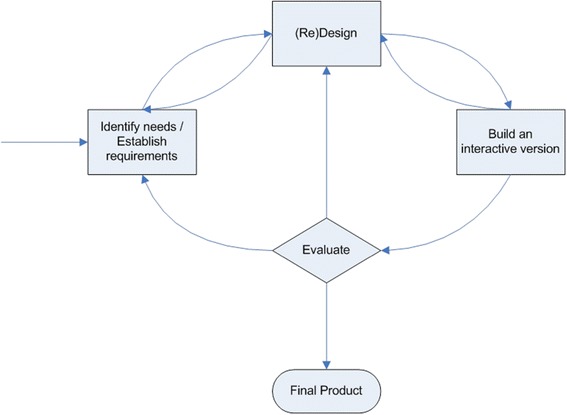
Our approach to the design of the visualization follows User Centered Design, specifically, defining requirements, designing corresponding visualizations and finally evaluating results. This cycle was iterated three times.
The User Centered Design method was successfully employed to converge to a design that met the main objective of this study. The resulting visualizations of relevant features that were extracted from the sensor data were considered highly effective and intuitive to the clinicians and were considered suitable for monitoring the behavior patterns of patients.
We observed important differences in the approach and attitude of the researchers and clinicians. Whereas the researchers would prefer to have as many features and information as possible in each visualization, the clinicians would prefer clarity and simplicity, often each visualization having only a single feature, with several visualizations per page. In addition, concepts considered intuitive to the researchers were not always to the clinicians.
日常习惯的变化能够提供有关个体整体健康状况的重要信息。本研究旨在确定如何从有限的传感器数据中提取有意义的信息,并将其转化为清晰的可视化形式,以供必须使用这些数据并与之交互且对患者病情进行判断的临床医生使用。我们确定可以从使用情况和运动传感器数据中确定一些与习惯和身体状况相关的有洞察力的特征。
我们设计可视化的方法遵循以用户为中心的设计,具体而言,就是定义需求、设计相应的可视化,最后评估结果。这个循环重复了三次。
成功采用以用户为中心的设计方法,得出了符合本研究主要目标的设计。从传感器数据中提取的相关特征的可视化结果被临床医生认为非常有效且直观,适合用于监测患者的行为模式。
我们观察到研究人员和临床医生在方法和态度上存在重要差异。研究人员更倾向于在每个可视化中包含尽可能多的特征和信息,而临床医生则更喜欢清晰和简洁,通常每个可视化只包含一个特征,每页有几个可视化。此外,研究人员认为直观的概念对临床医生来说并不总是如此。