Zeev-Ben-Mordehai Tzviya, Vasishtan Daven, Siebert C Alistair, Whittle Cathy, Grünewald Kay
Division of Structural Biology, Wellcome Trust Centre for Human Genetics, University of Oxford, Oxford OX3 7BN, UK.
Division of Structural Biology, Wellcome Trust Centre for Human Genetics, University of Oxford, Oxford OX3 7BN, UK.
Structure. 2014 Nov 4;22(11):1687-92. doi: 10.1016/j.str.2014.09.005. Epub 2014 Oct 30.
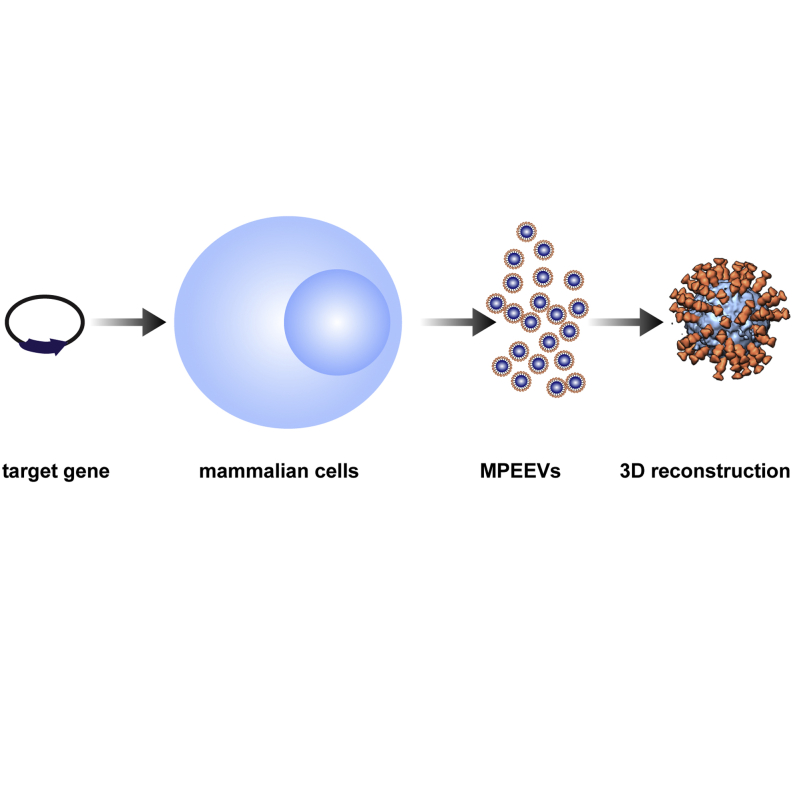
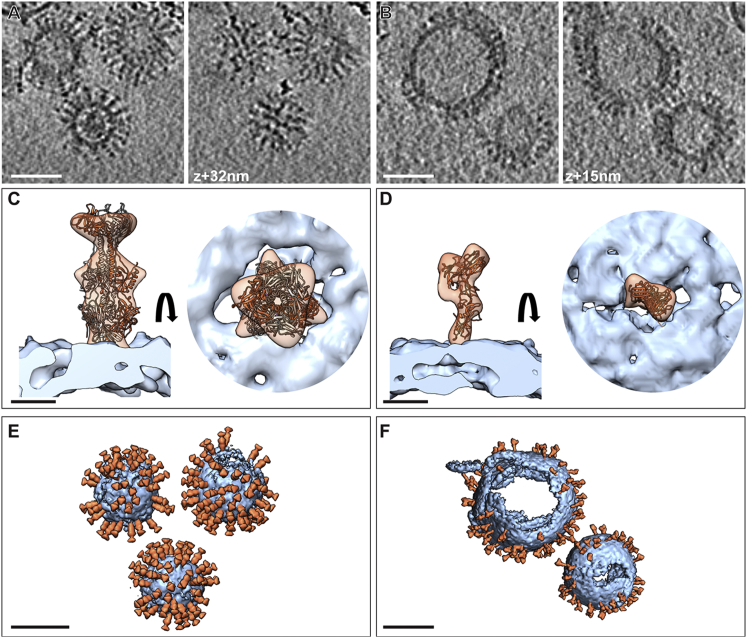
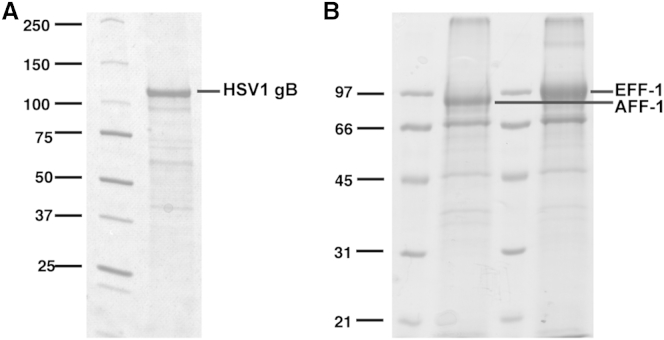
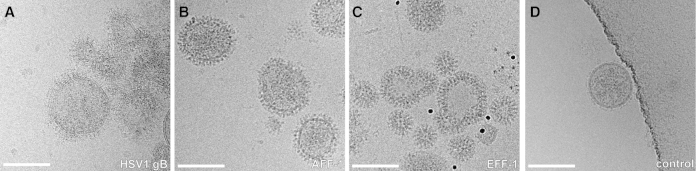
Membrane protein-enriched extracellular vesicles (MPEEVs) provide a platform for studying intact membrane proteins natively anchored with the correct topology in genuine biological membranes. This approach circumvents the need to conduct tedious detergent screens for solubilization, purification, and reconstitution required in classical membrane protein studies. We have applied this method to three integral type I membrane proteins, namely the Caenorhabditis elegans cell-cell fusion proteins AFF-1 and EFF-1 and the glycoprotein B (gB) from Herpes simplex virus type 1 (HSV1). Electron cryotomography followed by subvolume averaging allowed the 3D reconstruction of EFF-1 and HSV1 gB in the membrane as well as an analysis of the spatial distribution and interprotein interactions on the membrane. MPEEVs have many applications beyond structural/functional investigations, such as facilitating the raising of antibodies, for protein-protein interaction assays or for diagnostics use, as biomarkers, and possibly therapeutics.
富含膜蛋白的细胞外囊泡(MPEEVs)为研究天然锚定在真实生物膜中且具有正确拓扑结构的完整膜蛋白提供了一个平台。这种方法避免了在经典膜蛋白研究中进行繁琐的去污剂筛选以实现溶解、纯化和重组的需求。我们已将此方法应用于三种I型整合膜蛋白,即秀丽隐杆线虫细胞间融合蛋白AFF-1和EFF-1以及单纯疱疹病毒1型(HSV1)的糖蛋白B(gB)。通过电子冷冻断层扫描和子体积平均,实现了膜中EFF-1和HSV1 gB的三维重建,并分析了膜上的空间分布和蛋白间相互作用。MPEEVs除了用于结构/功能研究外,还有许多应用,例如有助于产生抗体、用于蛋白质-蛋白质相互作用分析或诊断用途、作为生物标志物,甚至可能用于治疗。