Dong Erbo, Dzitoyeva Svetlana G, Matrisciano Francesco, Tueting Patricia, Grayson Dennis R, Guidotti Alessandro
Psychiatric Institute, Department of Psychiatry, College of Medicine, University of Illinois at Chicago, Chicago, Illinois.
Psychiatric Institute, Department of Psychiatry, College of Medicine, University of Illinois at Chicago, Chicago, Illinois.
Biol Psychiatry. 2015 Mar 15;77(6):589-96. doi: 10.1016/j.biopsych.2014.08.012. Epub 2014 Aug 27.
Prenatal stress (PRS) is considered a risk factor for several neurodevelopmental disorders including schizophrenia (SZ). An animal model involving restraint stress of pregnant mice suggests that PRS induces epigenetic changes in specific GABAergic and glutamatergic genes likely to be implicated in SZ, including the gene for brain-derived neurotrophic factor (BDNF).
Studying adult offspring of pregnant mice subjected to PRS, we explored the long-term effects of PRS on behavior and on the expression of key chromatin remodeling factors including DNA methyltransferase 1, ten-eleven-translocation hydroxylases, methyl CpG binding protein 2, histone deacetylases, and histone methyltransferases and demethylase in the frontal cortex and hippocampus. We also measured the expression of BDNF.
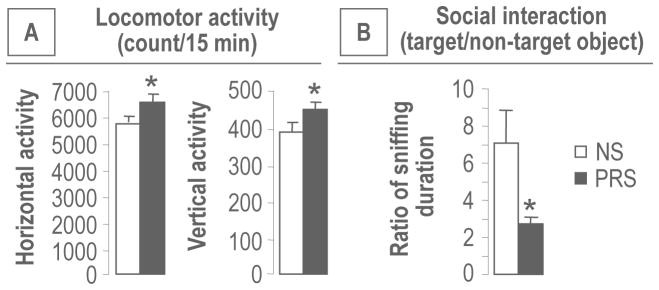
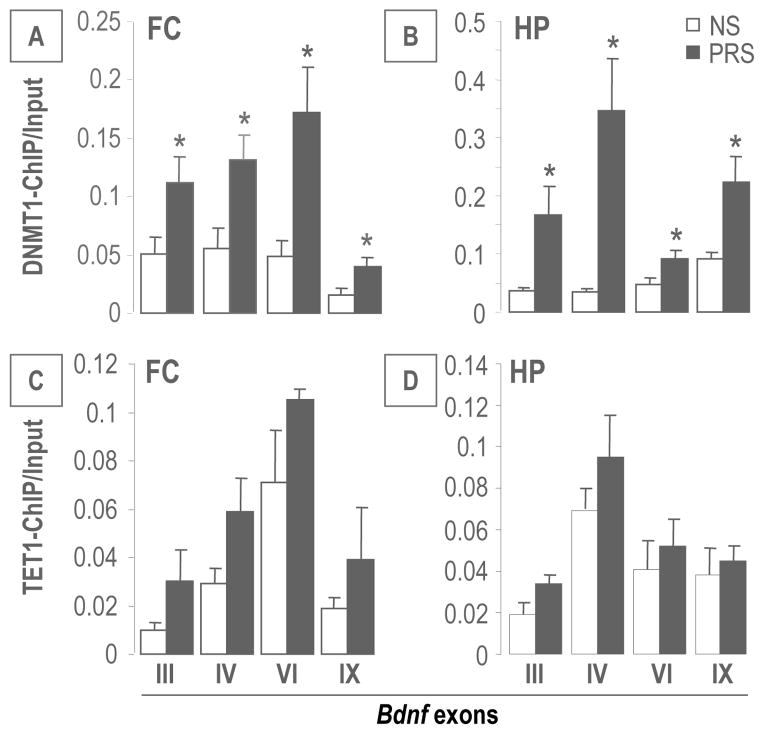
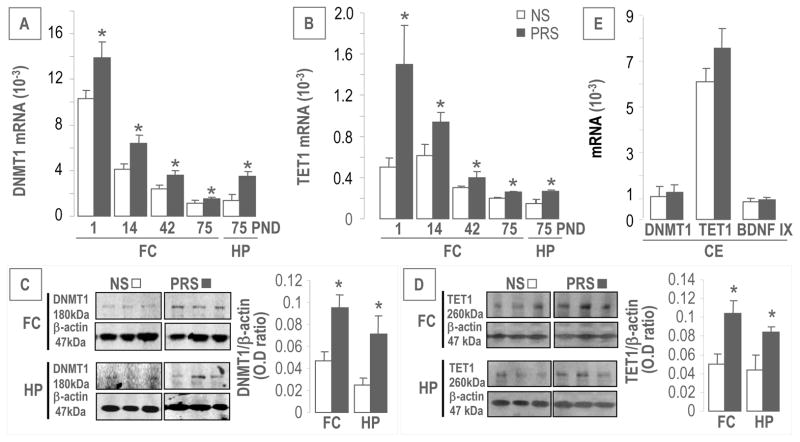
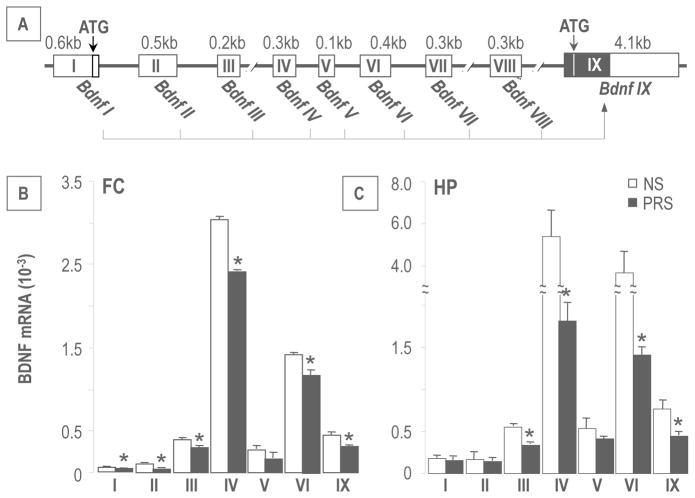
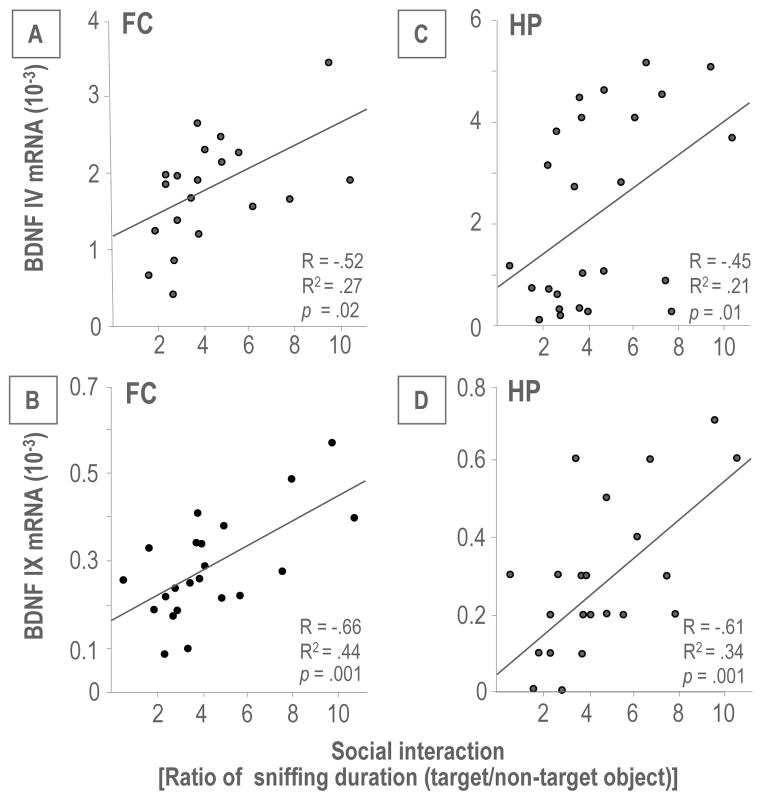
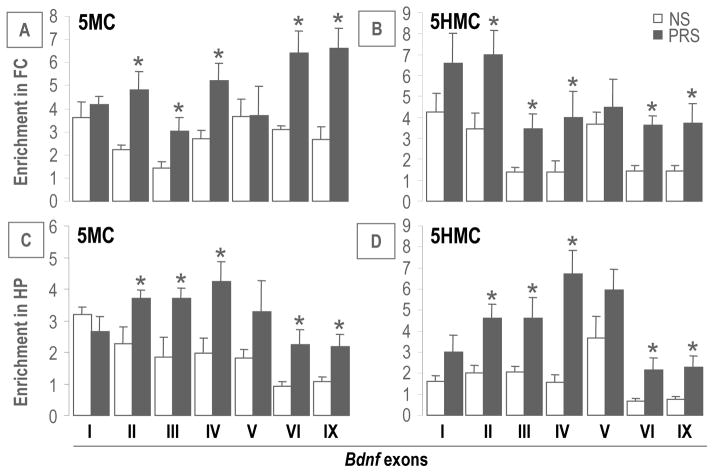
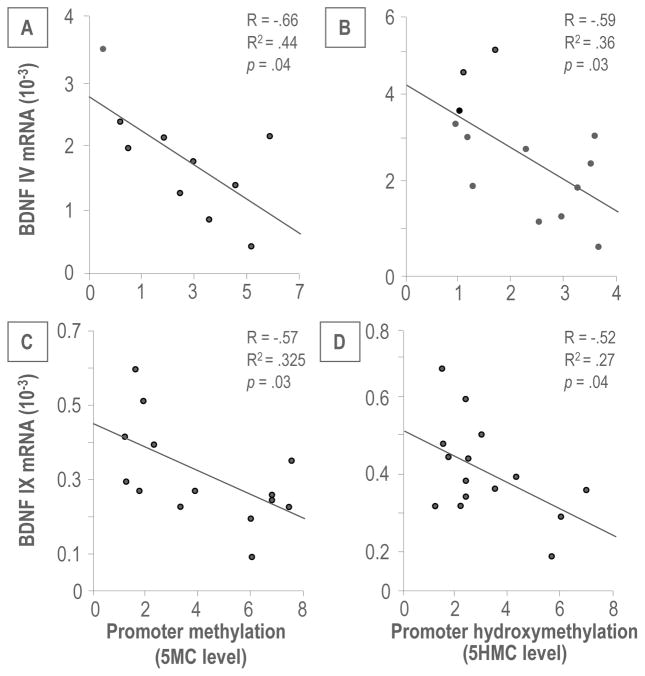
Adult PRS offspring demonstrate behavioral abnormalities suggestive of SZ and molecular changes similar to changes seen in postmortem brains of patients with SZ. This includes a significant increase in DNA methyltransferase 1 and ten-eleven-translocation hydroxylase 1 in the frontal cortex and hippocampus but not in cerebellum; no changes in histone deacetylases, histone methyltransferases and demethylases, or methyl CpG binding protein 2, and a significant decrease in Bdnf messenger RNA variants. The decrease of the corresponding Bdnf transcript level was accompanied by an enrichment of 5-methylcytosine and 5-hydroxymethylcytosine at Bdnf gene regulatory regions. In addition, the expression of Bdnf transcripts (IV and IX) correlated positively with social approach in both PRS mice and nonstressed mice.
Because patients with psychosis and PRS mice show similar epigenetic signature, PRS mice may be a suitable model for understanding the behavioral and molecular epigenetic changes observed in patients with SZ.
产前应激(PRS)被认为是包括精神分裂症(SZ)在内的几种神经发育障碍的风险因素。一种涉及对怀孕小鼠进行束缚应激的动物模型表明,PRS会诱导特定的γ-氨基丁酸能和谷氨酸能基因发生表观遗传变化,这些基因可能与SZ有关,包括脑源性神经营养因子(BDNF)基因。
通过研究遭受PRS的怀孕小鼠的成年后代,我们探讨了PRS对行为以及额叶皮质和海马体中关键染色质重塑因子表达的长期影响,这些因子包括DNA甲基转移酶1、十一-易位羟化酶、甲基化CpG结合蛋白2、组蛋白脱乙酰酶以及组蛋白甲基转移酶和去甲基酶。我们还测量了BDNF的表达。
成年PRS后代表现出提示SZ的行为异常以及与SZ患者死后大脑中所见变化相似的分子变化。这包括额叶皮质和海马体中DNA甲基转移酶1和十一-易位羟化酶1显著增加,但小脑无变化;组蛋白脱乙酰酶、组蛋白甲基转移酶和去甲基酶或甲基化CpG结合蛋白2无变化,且Bdnf信使RNA变体显著减少。相应Bdnf转录水平的降低伴随着Bdnf基因调控区域5-甲基胞嘧啶和5-羟甲基胞嘧啶的富集。此外,Bdnf转录本(IV和IX)的表达在PRS小鼠和非应激小鼠中均与社交接近呈正相关。
由于精神病患者和PRS小鼠表现出相似的表观遗传特征,PRS小鼠可能是理解SZ患者中观察到的行为和分子表观遗传变化的合适模型。