Ming Mei, Zhao Baozhong, Shea Christopher R, Shah Palak, Qiang Lei, White Steven R, Sims Diane M, He Yu-Ying
Department of Medicine, Section of Dermatology, University of Chicago, Chicago, Ill.
Department of Medicine, Section of Pulmonary/Critical Care, University of Chicago, Chicago, Ill.
J Allergy Clin Immunol. 2015 Apr;135(4):936-945.e4. doi: 10.1016/j.jaci.2014.09.035. Epub 2014 Nov 7.
Skin barrier integrity requires a highly coordinated molecular system involving the structural protein filaggrin (FLG). Mutational loss of the skin barrier protein FLG predisposes subjects to the development of atopic dermatitis (AD).
We sought to determine the role of sirtuin 1 (SIRT1) in skin barrier function, FLG expression, and development of AD.
Skin histology of mice with skin-specific SIRT1 deletion and wild-type control animals was examined by using hematoxylin and eosin staining. Protein and mRNA abundance was analyzed by means of immunoblotting, immunohistochemistry, immunofluorescence, and RT-PCR. Serum antibody levels were assessed by means of ELISA.
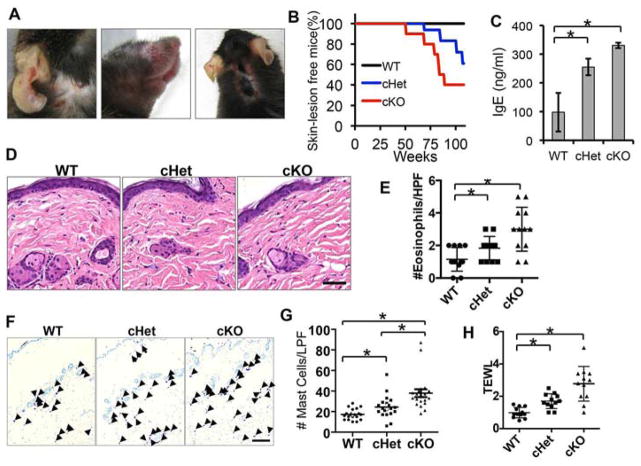
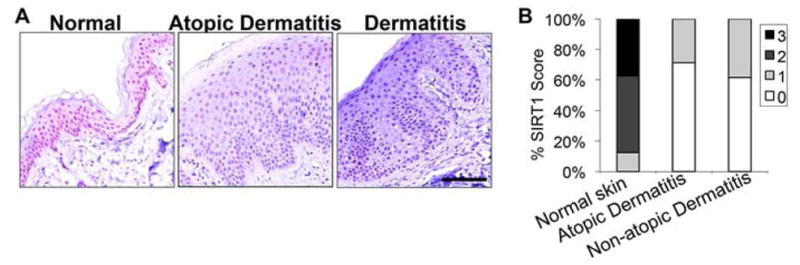
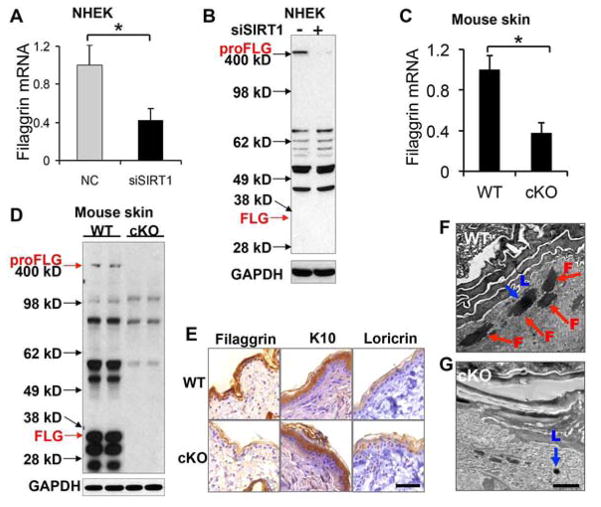
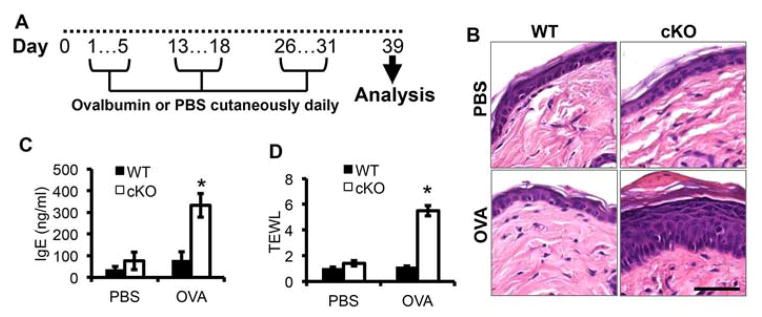
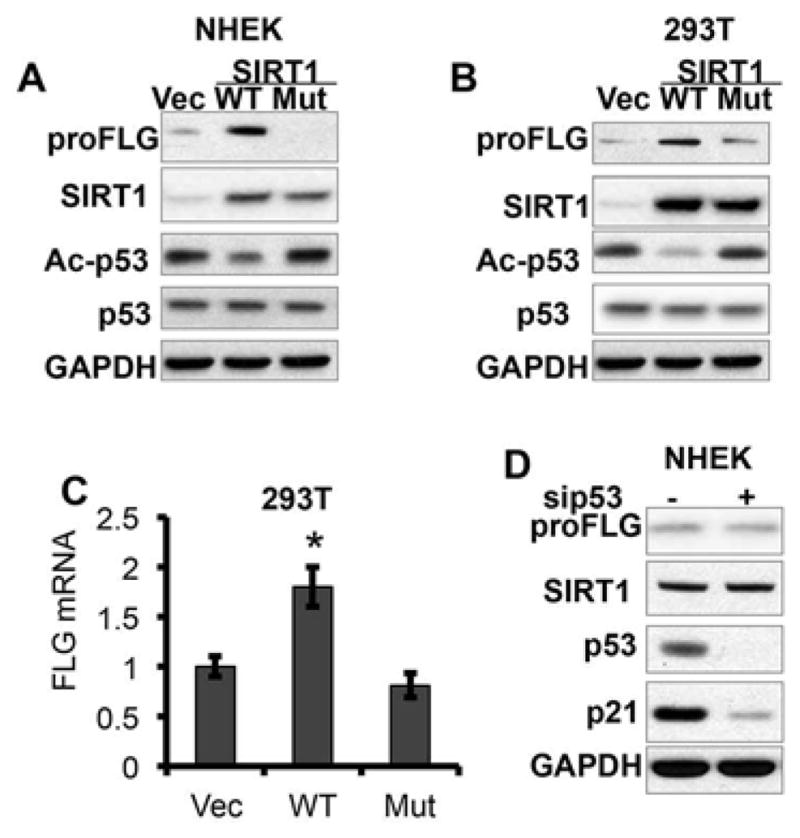
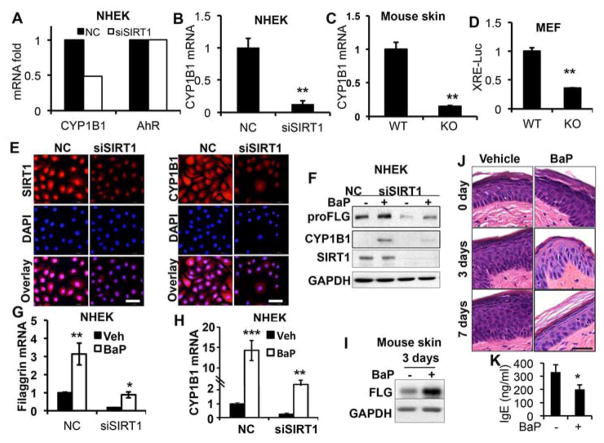
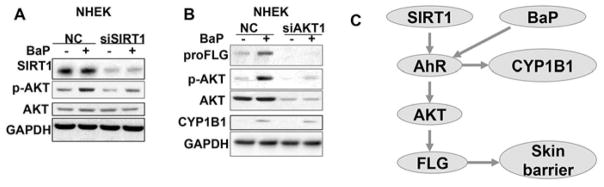
Here we show that FLG is regulated by the protein deacetylase SIRT1 and that SIRT1 is critical for skin barrier integrity. Epidermis-specific SIRT1 ablation causes AD-like skin lesions in mice, and mice with epidermal SIRT1 deletion are sensitive to percutaneous challenge by the protein allergen ovalbumin. In normal human keratinocytes and mouse skin SIRT1 knockdown or genetic deletion downregulates FLG, and regulation of FLG expression by SIRT1 requires the deacetylase activity of SIRT1. SIRT1 also promotes activation of the aryl hydrocarbon receptor, and the aryl hydrocarbon receptor ligand restores FLG expression in SIRT1-inhibited cells. Compared with normal human skin, SIRT1 is downregulated in both AD and non-AD lesions.
Our findings demonstrate a critical role of SIRT1 in skin barrier maintenance, open up new opportunities to use SIRT1 as a pharmacologic target, and might facilitate the development of mechanism-based agents for AD prevention and therapy.
皮肤屏障的完整性需要一个涉及结构蛋白丝聚蛋白(FLG)的高度协调的分子系统。皮肤屏障蛋白FLG的突变缺失使个体易患特应性皮炎(AD)。
我们试图确定沉默调节蛋白1(SIRT1)在皮肤屏障功能、FLG表达及AD发生发展中的作用。
通过苏木精-伊红染色检查皮肤特异性SIRT1缺失小鼠和野生型对照动物的皮肤组织学。采用免疫印迹、免疫组化、免疫荧光和逆转录-聚合酶链反应分析蛋白质和mRNA丰度。通过酶联免疫吸附测定评估血清抗体水平。
我们在此表明,FLG受蛋白脱乙酰酶SIRT1调控,且SIRT1对皮肤屏障完整性至关重要。表皮特异性SIRT1缺失导致小鼠出现类AD皮肤病变,表皮SIRT1缺失的小鼠对蛋白变应原卵清蛋白的经皮攻击敏感。在正常人角质形成细胞和小鼠皮肤中,SIRT1敲低或基因缺失会下调FLG,且SIRT1对FLG表达的调控需要其脱乙酰酶活性。SIRT1还促进芳烃受体的激活,芳烃受体配体可恢复SIRT1抑制细胞中的FLG表达。与正常人皮肤相比,SIRT1在AD和非AD病变中均下调。
我们的研究结果证明了SIRT1在维持皮肤屏障中的关键作用,为将SIRT1用作药物靶点开辟了新机会,并可能促进开发基于机制的AD预防和治疗药物。