Ziegler Amber N, Levison Steven W, Wood Teresa L
Department of Neurology &Neuroscience, New Jersey Medical School, Rutgers Biomedical &Health Sciences, Cancer Centre, 205 South Orange Avenue, Newark, NJ 07101, USA.
Nat Rev Endocrinol. 2015 Mar;11(3):161-70. doi: 10.1038/nrendo.2014.208. Epub 2014 Dec 2.
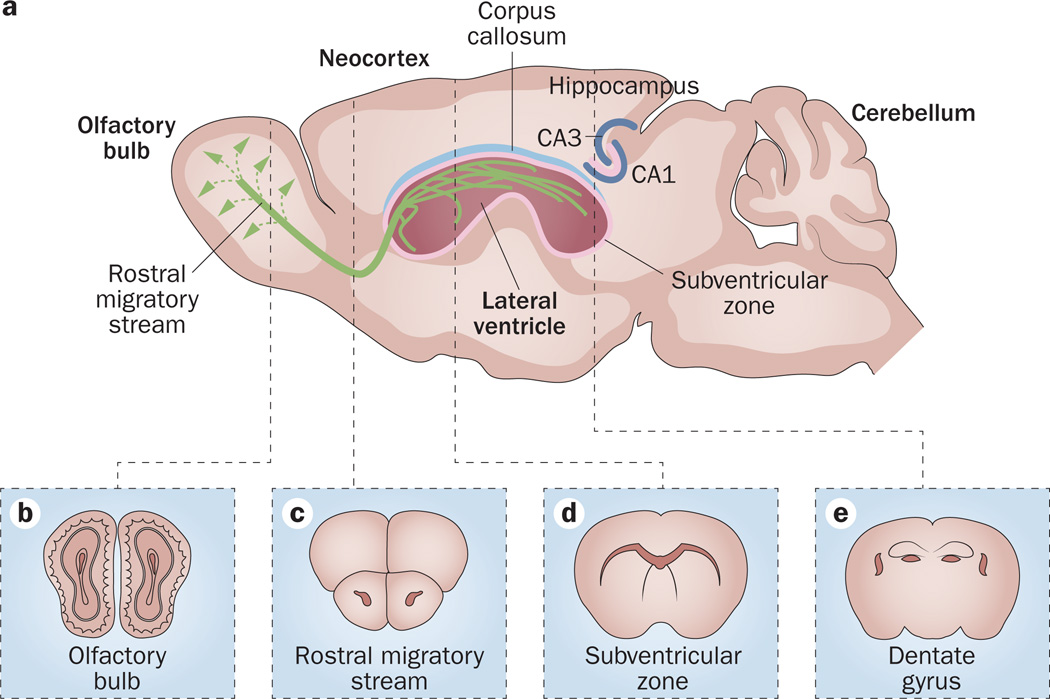
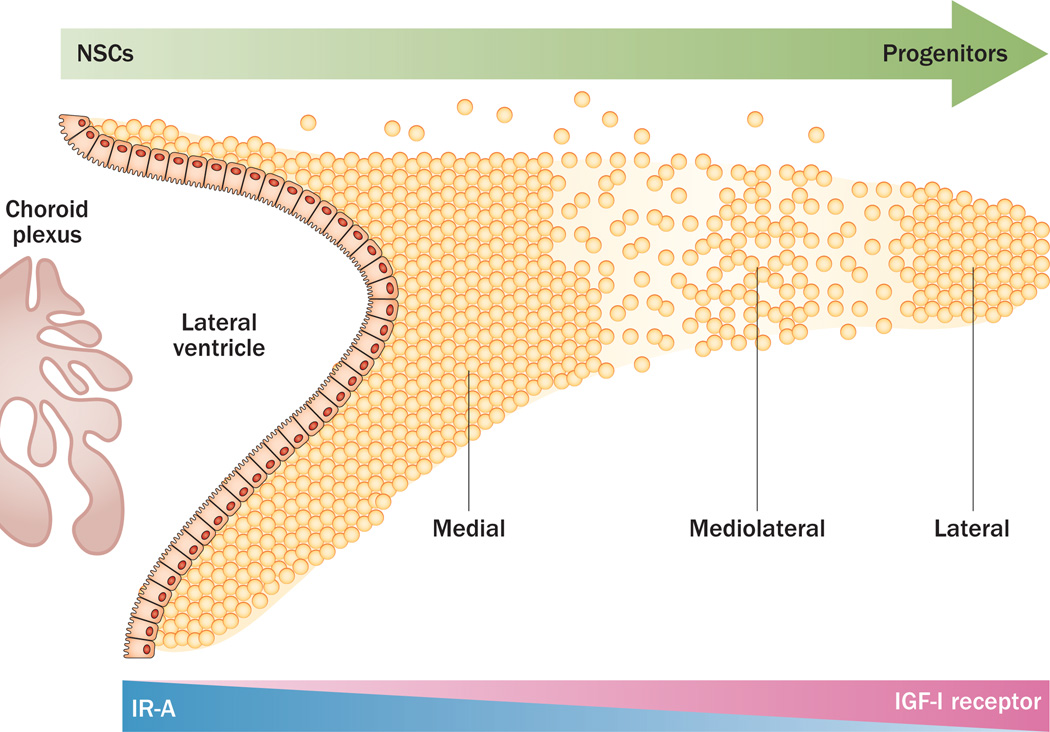
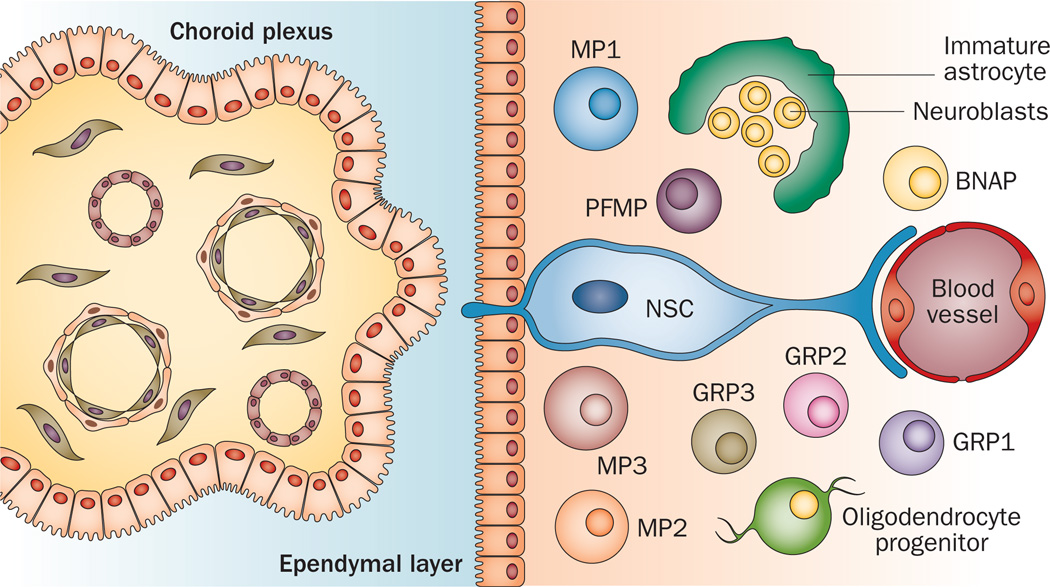
Neural stem cells (NSCs) are found in two regions in the adult brain: the subgranular zone (SGZ) in the hippocampal dentate gyrus and the subventricular zone (SVZ) adjacent to the lateral ventricles. Similarly to other somatic stem cells, adult NSCs are found within specialized niches that are organized to facilitate NSC self-renewal. Alterations in stem-cell homeostasis can contribute to the consequences of neurodegenerative diseases, healthy ageing and tissue repair after damage. Insulin and the insulin-like growth factors (IGFs) function in stem-cell homeostasis across species. Studies in the mammalian central nervous system support essential roles for IGF and/or insulin signalling in NSC self-renewal, neurogenesis, cognition and sensory function through distinct ligand-receptor interactions. IGF-II is of particular interest as a result of its production by the choroid plexus and presence in cerebrospinal fluid (CSF). CSF regulates and supports the development, division and migration of cells in the adult brain and is required for NSC maintenance. In this Review, we discuss emerging data on the functions of IGF-II and IGF and/or insulin receptor signalling in the context of NSC regulation in the SVZ and SGZ. We also propose a model for IGF-II in which the choroid plexus is a major component of the NSC niche.
神经干细胞(NSCs)存在于成人大脑的两个区域:海马齿状回的颗粒下区(SGZ)和侧脑室附近的室下区(SVZ)。与其他体细胞干细胞类似,成体神经干细胞存在于专门的微环境中,这些微环境的组织方式有助于神经干细胞自我更新。干细胞内稳态的改变可能会导致神经退行性疾病、健康衰老以及损伤后组织修复等后果。胰岛素和胰岛素样生长因子(IGFs)在跨物种的干细胞内稳态中发挥作用。对哺乳动物中枢神经系统的研究表明,胰岛素样生长因子和/或胰岛素信号通过不同的配体-受体相互作用,在神经干细胞自我更新、神经发生、认知和感觉功能中发挥重要作用。由于脉络丛产生胰岛素样生长因子-II(IGF-II)并存在于脑脊液(CSF)中,因此IGF-II尤其受到关注。脑脊液调节并支持成人大脑中细胞的发育、分裂和迁移,是神经干细胞维持所必需的。在本综述中,我们讨论了在室下区和颗粒下区神经干细胞调控背景下,关于IGF-II以及IGF和/或胰岛素受体信号功能的新数据。我们还提出了一个IGF-II模型,其中脉络丛是神经干细胞微环境的主要组成部分。