Kwilasz A J, Grace P M, Serbedzija P, Maier S F, Watkins L R
Department of Psychology and Neuroscience, and the Center for Neuroscience, University of Colorado-Boulder, Boulder, CO 80309-0345, USA.
Department of Psychology and Neuroscience, and the Center for Neuroscience, University of Colorado-Boulder, Boulder, CO 80309-0345, USA.
Neuropharmacology. 2015 Sep;96(Pt A):55-69. doi: 10.1016/j.neuropharm.2014.10.020. Epub 2014 Nov 4.
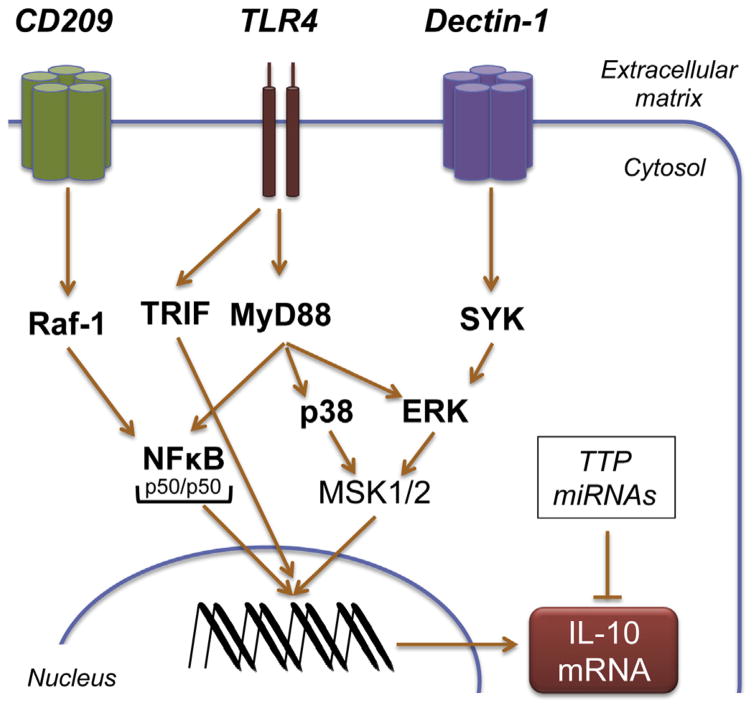
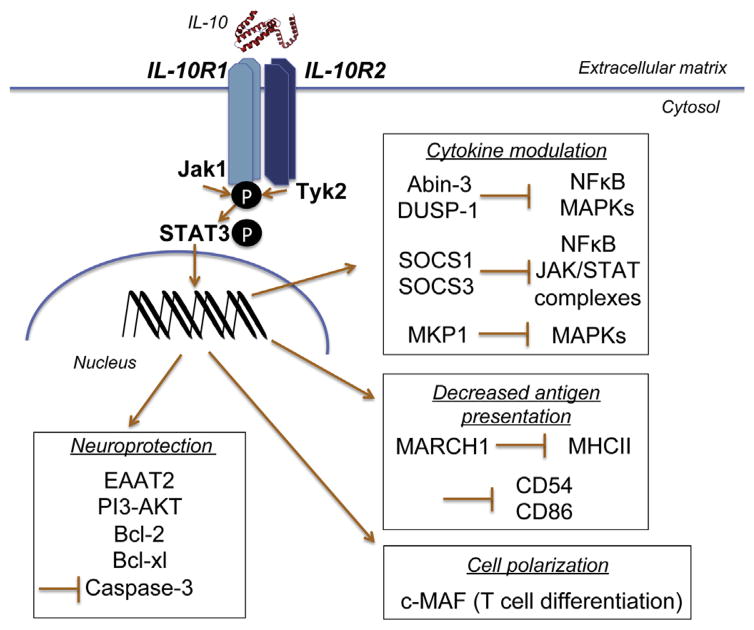
Neuroimmune diseases have diverse symptoms and etiologies but all involve pathological inflammation that affects normal central nervous system signaling. Critically, many neuroimmune diseases also involve insufficient signaling/bioavailability of interleukin-10 (IL-10). IL-10 is a potent anti-inflammatory cytokine released by immune cells and glia, which drives the regulation of a variety of anti-inflammatory processes. This review will focus on the signaling pathways and function of IL-10, the current evidence for insufficiencies in IL-10 signaling/bioavailability in neuroimmune diseases, as well as the implications for IL-10-based therapies to treating such problems. We will review in detail four pathologies as examples of the common etiologies of such disease states, namely neuropathic pain (nerve trauma), osteoarthritis (peripheral inflammation), Parkinson's disease (neurodegeneration), and multiple sclerosis (autoimmune). A number of methods to increase IL-10 have been developed (e.g. protein administration, viral vectors, naked plasmid DNA, plasmid DNA packaged in polymers to enhance their uptake into target cells, and adenosine 2A agonists), which will also be discussed. In general, IL-10-based therapies have been effective at treating both the symptoms and pathology associated with various neuroimmune diseases, with more sophisticated gene therapy-based methods producing sustained therapeutic effects lasting for several months following a single injection. These exciting results have resulted in IL-10-targeted therapeutics being positioned for upcoming clinical trials for treating neuroimmune diseases, including neuropathic pain. Although further research is necessary to determine the full range of effects associated with IL-10-based therapy, evidence suggests IL-10 may be an invaluable target for the treatment of neuroimmune disease. This article is part of a Special Issue entitled 'Neuroimmunology and Synaptic Function'.
神经免疫疾病具有多样的症状和病因,但均涉及影响正常中枢神经系统信号传导的病理性炎症。至关重要的是,许多神经免疫疾病还存在白细胞介素 -10(IL-10)信号传导/生物利用度不足的情况。IL-10是一种由免疫细胞和神经胶质细胞释放的强效抗炎细胞因子,它驱动多种抗炎过程的调节。本综述将聚焦于IL-10的信号传导途径和功能、神经免疫疾病中IL-10信号传导/生物利用度不足的现有证据,以及基于IL-10的疗法对治疗此类问题的意义。我们将详细综述四种病理情况,作为此类疾病状态常见病因的示例,即神经性疼痛(神经创伤)、骨关节炎(外周炎症)、帕金森病(神经退行性变)和多发性硬化症(自身免疫性疾病)。已开发出多种增加IL-10的方法(例如蛋白质给药、病毒载体、裸质粒DNA、包装在聚合物中以增强其对靶细胞摄取的质粒DNA以及腺苷2A激动剂),也将对此进行讨论。总体而言,基于IL-10的疗法在治疗与各种神经免疫疾病相关的症状和病理方面已取得成效,更复杂的基于基因疗法的方法在单次注射后可产生持续数月的治疗效果。这些令人振奋的结果使靶向IL-10的疗法有望用于即将开展的治疗神经免疫疾病(包括神经性疼痛)的临床试验。尽管需要进一步研究以确定与基于IL-10的疗法相关的全部效应,但有证据表明IL-10可能是治疗神经免疫疾病的一个极具价值的靶点。本文是名为“神经免疫学与突触功能”的特刊的一部分。