Gichuhi Stephen, Ohnuma Shin-ichi, Sagoo Mandeep S, Burton Matthew J
London School of Hygiene and Tropical Medicine, Keppel Street, London WC1E 7HT, UK; Department of Ophthalmology, University of Nairobi, P.O Box 19676-00202, Nairobi, Kenya.
UCL Institute of Ophthalmology, 11-43 Bath Street, London EC1V 9EL, UK.
Exp Eye Res. 2014 Dec;129:172-82. doi: 10.1016/j.exer.2014.10.015. Epub 2014 Oct 18.
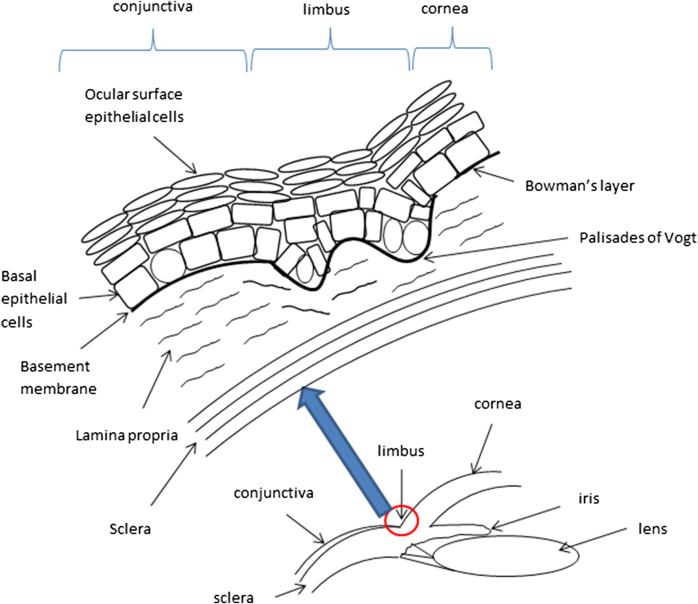
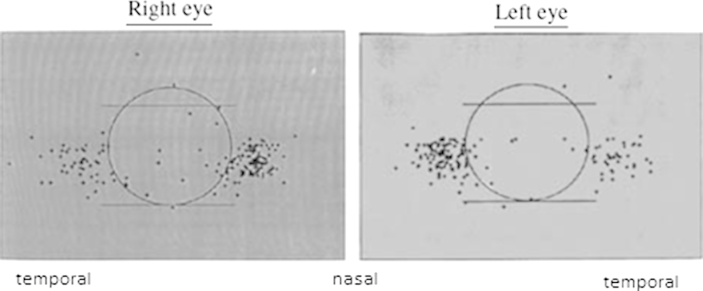
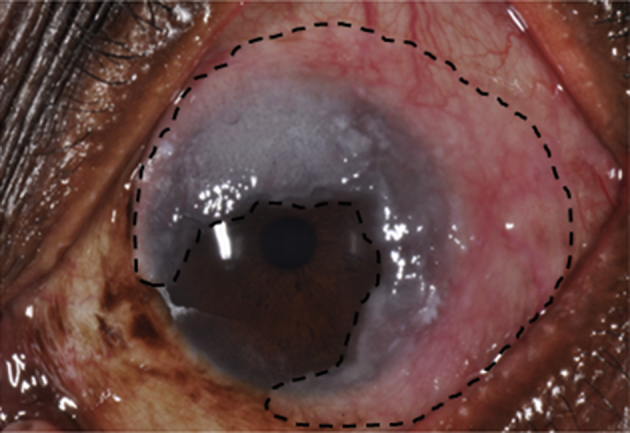
The incidence of ocular surface squamous neoplasia (OSSN) is strongly associated with solar ultraviolet (UV) radiation, HIV and human papilloma virus (HPV). Africa has the highest incidence rates in the world. Most lesions occur at the limbus within the interpalpebral fissure particularly the nasal sector. The nasal limbus receives the highest intensity of sunlight. Limbal epithelial crypts are concentrated nasally and contain niches of limbal epithelial stem cells in the basal layer. It is possible that these are the progenitor cells in OSSN. OSSN arises in the basal epithelial cells spreading towards the surface which resembles the movement of corneo-limbal stem cell progeny before it later invades through the basement membrane below. UV radiation damages DNA producing pyrimidine dimers in the DNA chain. Specific CC → TT base pair dimer transformations of the p53 tumour-suppressor gene occur in OSSN allowing cells with damaged DNA past the G1-S cell cycle checkpoint. UV radiation also causes local and systemic photoimmunosuppression and reactivates latent viruses such as HPV. The E7 proteins of HPV promote proliferation of infected epithelial cells via the retinoblastoma gene while E6 proteins prevent the p53 tumour suppressor gene from effecting cell-cycle arrest of DNA-damaged and infected cells. Immunosuppression from UV radiation, HIV and vitamin A deficiency impairs tumour immune surveillance allowing survival of aberrant cells. Tumour growth and metastases are enhanced by; telomerase reactivation which increases the number of cell divisions a cell can undergo; vascular endothelial growth factor for angiogenesis and matrix metalloproteinases (MMPs) that destroy the intercellular matrix between cells. Despite these potential triggers, the disease is usually unilateral. It is unclear how HPV reaches the conjunctiva.
眼表鳞状上皮肿瘤(OSSN)的发病率与太阳紫外线(UV)辐射、人类免疫缺陷病毒(HIV)和人乳头瘤病毒(HPV)密切相关。非洲是全球发病率最高的地区。大多数病变发生在睑裂范围内的角膜缘,尤其是鼻侧部分。鼻侧角膜缘接受的阳光强度最高。角膜缘上皮隐窝集中在鼻侧,基底层含有角膜缘上皮干细胞龛。这些细胞有可能是OSSN中的祖细胞。OSSN起源于基底上皮细胞,向表面扩散,类似于角膜缘干细胞后代在侵入下方基底膜之前的移动。紫外线辐射会损伤DNA,在DNA链中产生嘧啶二聚体。在OSSN中,p53肿瘤抑制基因会发生特定的CC→TT碱基对二聚体转化,使DNA受损的细胞通过G1-S细胞周期检查点。紫外线辐射还会导致局部和全身的光免疫抑制,并使潜伏病毒(如HPV)重新激活。HPV的E7蛋白通过视网膜母细胞瘤基因促进受感染上皮细胞的增殖,而E6蛋白则阻止p53肿瘤抑制基因使DNA受损和受感染的细胞发生细胞周期停滞。紫外线辐射、HIV和维生素A缺乏导致的免疫抑制会损害肿瘤免疫监视,使异常细胞得以存活。端粒酶重新激活可增加细胞可经历的细胞分裂次数,血管内皮生长因子促进血管生成,基质金属蛋白酶(MMPs)破坏细胞间基质,这些因素都会促进肿瘤生长和转移。尽管存在这些潜在诱因,但该病通常为单侧性。目前尚不清楚HPV是如何到达结膜的。