Zirnsak Marc, Moore Tirin
Department of Neurobiology, and Howard Hughes Medical Institute, Stanford University School of Medicine, Stanford, CA 94305, USA.
Department of Neurobiology, and Howard Hughes Medical Institute, Stanford University School of Medicine, Stanford, CA 94305, USA.
Trends Cogn Sci. 2014 Dec;18(12):621-8. doi: 10.1016/j.tics.2014.10.002. Epub 2014 Nov 11.
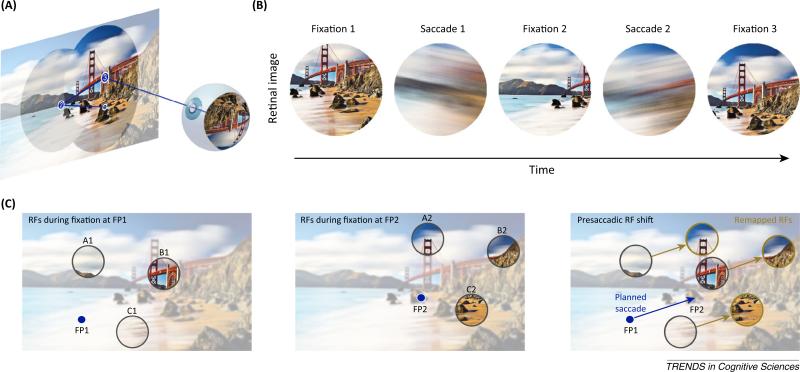
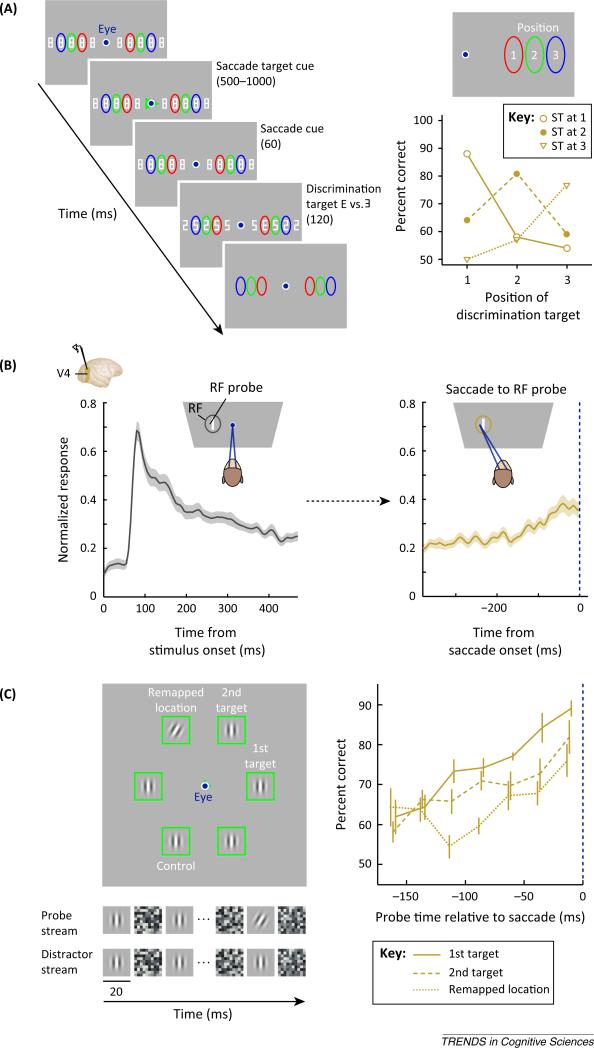
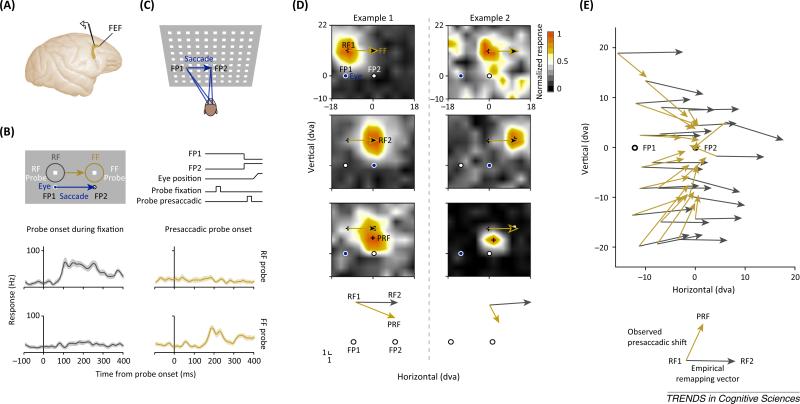
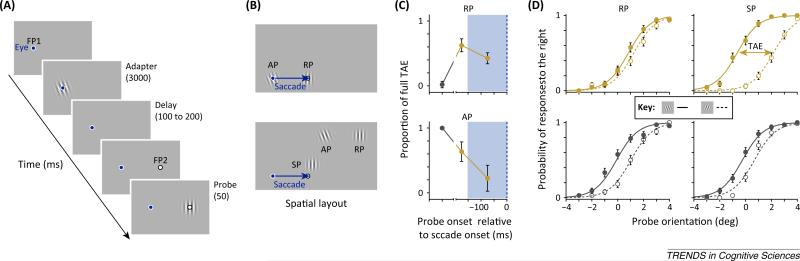
Saccadic eye movements cause frequent and substantial displacements of the retinal image, but those displacements go unnoticed. It has been widely assumed that this perceived stability emerges from the shifting of visual receptive fields from their current, presaccadic locations to their future, postsaccadic locations in anticipation of the retinal consequences of saccades. Although evidence consistent with this anticipatory remapping has accumulated over the years, more recent work suggests an alternative view. In this opinion article, we examine the evidence of presaccadic receptive field shifts and their relationship to the perceptual changes that accompany saccades. We argue that both reflect the selection of targets for saccades rather than the anticipation of a displaced retinal image.
扫视眼动会导致视网膜图像频繁且大幅度的位移,但这些位移却未被察觉。人们普遍认为,这种感知到的稳定性源于视觉感受野从当前扫视前的位置,预期扫视引起的视网膜变化,转移到未来扫视后的位置。尽管多年来积累了与这种预期性重映射一致的证据,但最近的研究提出了另一种观点。在这篇观点文章中,我们审视了扫视前感受野转移的证据及其与扫视伴随的感知变化之间的关系。我们认为,这两者都反映了扫视目标的选择,而非对视网膜图像位移的预期。