Golebiewska Ewelina M, Poole Alastair W
Medical Sciences Building, School of Physiology and Pharmacology, University of Bristol, University Walk, BS8 1TD Bristol, UK.
Medical Sciences Building, School of Physiology and Pharmacology, University of Bristol, University Walk, BS8 1TD Bristol, UK.
Blood Rev. 2015 May;29(3):153-62. doi: 10.1016/j.blre.2014.10.003. Epub 2014 Oct 31.
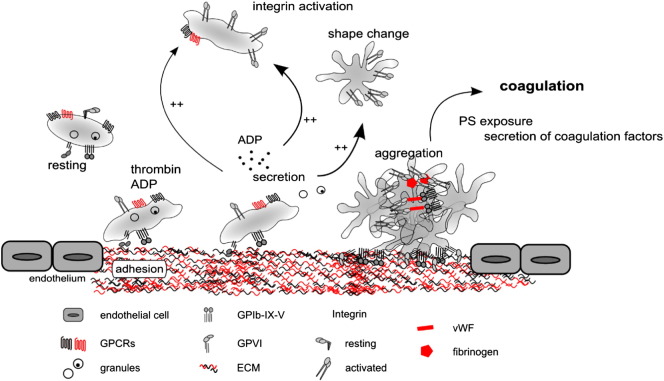
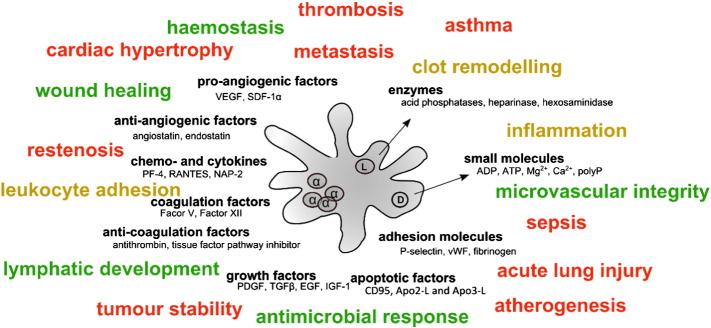
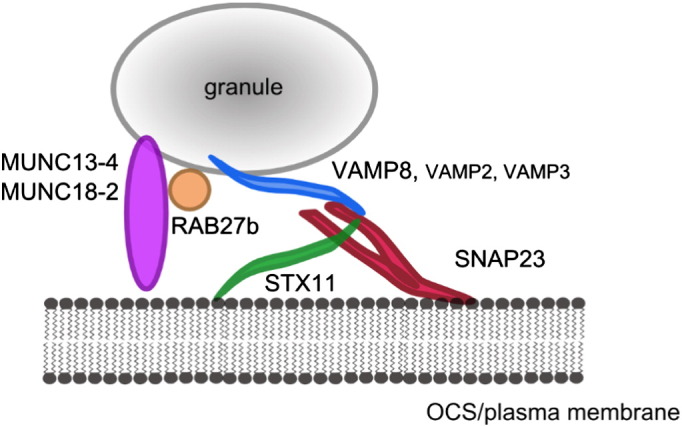
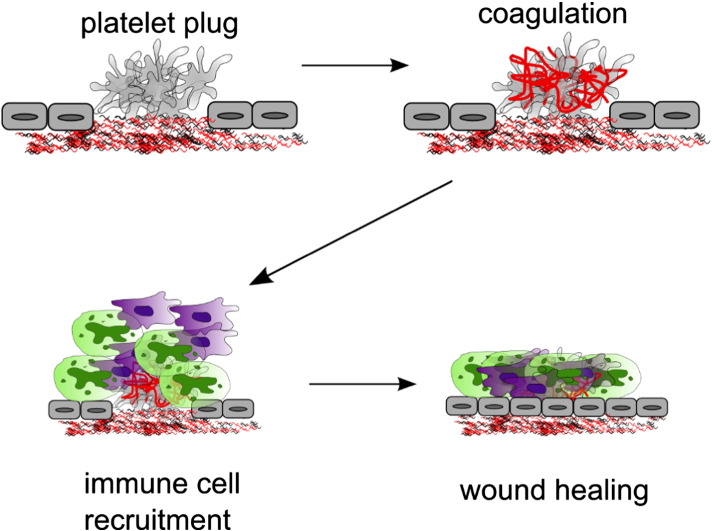
Upon activation, platelets secrete more than 300 active substances from their intracellular granules. Platelet dense granule components, such as ADP and polyphosphates, contribute to haemostasis and coagulation, but also play a role in cancer metastasis. α-Granules contain multiple cytokines, mitogens, pro- and anti-inflammatory factors and other bioactive molecules that are essential regulators in the complex microenvironment of the growing thrombus but also contribute to a number of disease processes. Our understanding of the molecular mechanisms of secretion and the genetic regulation of granule biogenesis still remains incomplete. In this review we summarise our current understanding of the roles of platelet secretion in health and disease, and discuss some of the hypotheses that may explain how platelets may control the release of its many secreted components in a context-specific manner, to allow platelets to play multiple roles in health and disease.
激活后,血小板从其细胞内颗粒中分泌出300多种活性物质。血小板致密颗粒成分,如ADP和多磷酸盐,有助于止血和凝血,但在癌症转移中也起作用。α-颗粒含有多种细胞因子、有丝分裂原、促炎和抗炎因子以及其他生物活性分子,这些分子是正在形成的血栓复杂微环境中的重要调节因子,但也参与许多疾病过程。我们对分泌的分子机制和颗粒生物发生的基因调控的理解仍然不完整。在这篇综述中,我们总结了目前对血小板分泌在健康和疾病中的作用的理解,并讨论了一些假说,这些假说可能解释血小板如何以上下文特异性方式控制其许多分泌成分的释放,从而使血小板在健康和疾病中发挥多种作用。