Cusick Kathleen D, Fitzgerald Lisa A, Pirlo Russell K, Cockrell Allison L, Petersen Emily R, Biffinger Justin C
National Research Council Associateship, U.S. Naval Research Laboratory, Washington, District of Columbia, United States of America.
Chemistry Division, U.S. Naval Research Laboratory, Washington, District of Columbia, United States of America.
PLoS One. 2014 Dec 4;9(12):e112706. doi: 10.1371/journal.pone.0112706. eCollection 2014.
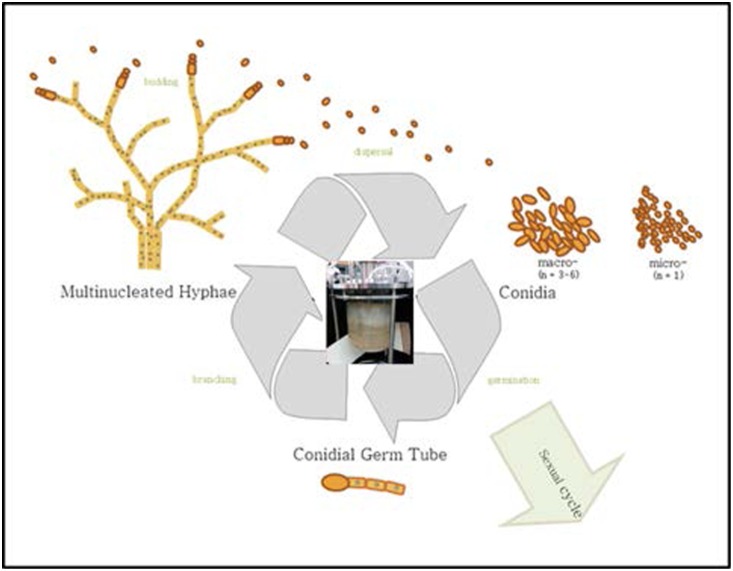
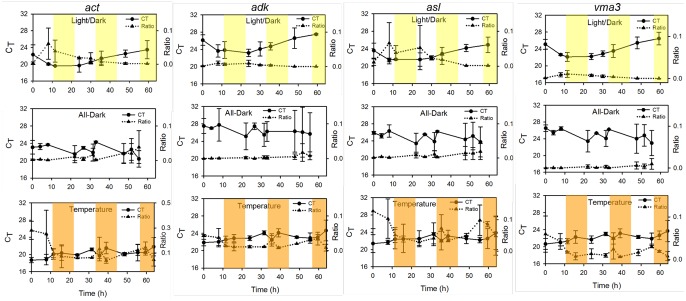
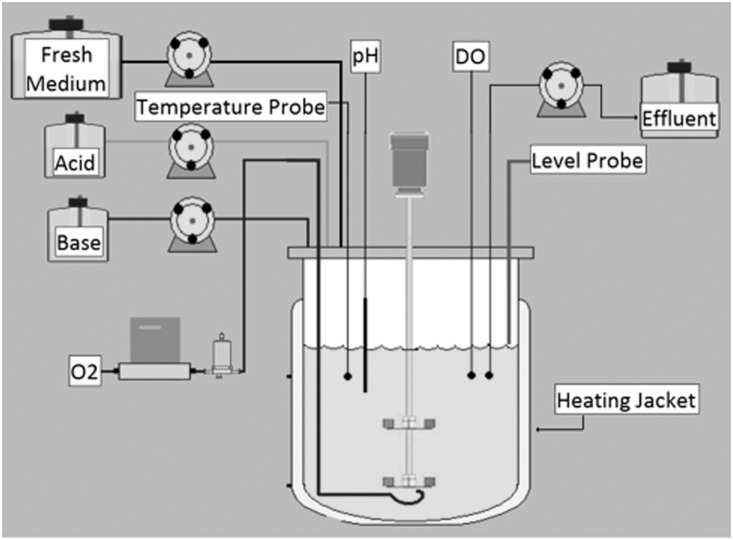
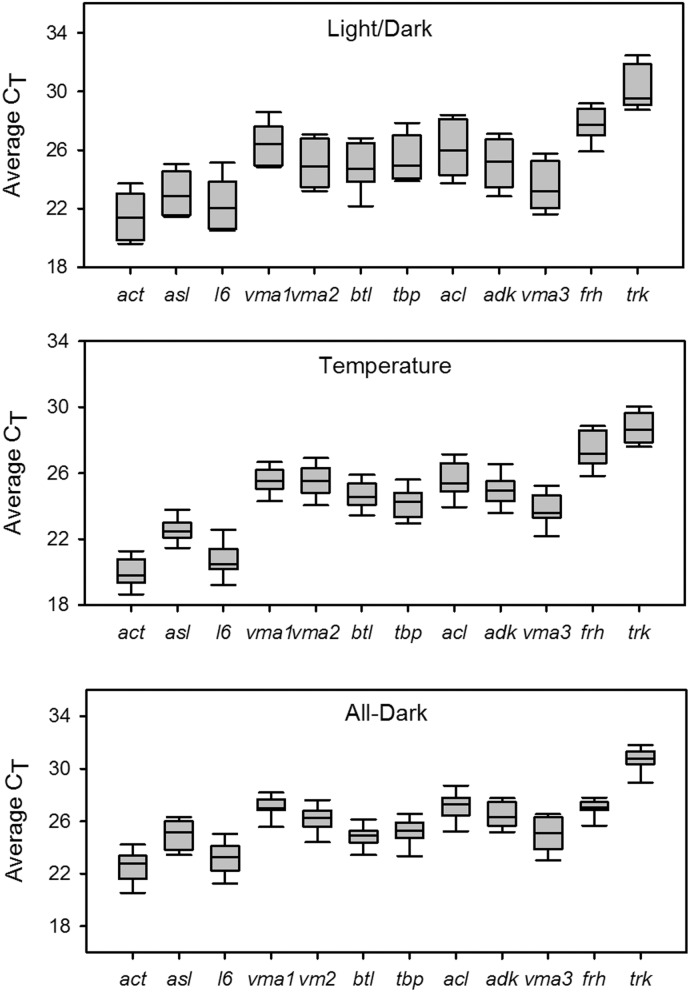
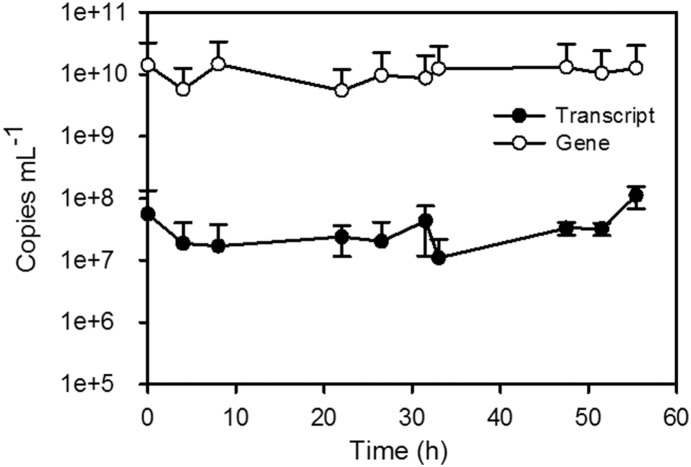
Neurospora crassa has served as a model organism for studying circadian pathways and more recently has gained attention in the biofuel industry due to its enhanced capacity for cellulase production. However, in order to optimize N. crassa for biotechnological applications, metabolic pathways during growth under different environmental conditions must be addressed. Reverse-transcription quantitative PCR (RT-qPCR) is a technique that provides a high-throughput platform from which to measure the expression of a large set of genes over time. The selection of a suitable reference gene is critical for gene expression studies using relative quantification, as this strategy is based on normalization of target gene expression to a reference gene whose expression is stable under the experimental conditions. This study evaluated twelve candidate reference genes for use with N. crassa when grown in continuous culture bioreactors under different light and temperature conditions. Based on combined stability values from NormFinder and Best Keeper software packages, the following are the most appropriate reference genes under conditions of: (1) light/dark cycling: btl, asl, and vma1; (2) all-dark growth: btl, tbp, vma1, and vma2; (3) temperature flux: btl, vma1, act, and asl; (4) all conditions combined: vma1, vma2, tbp, and btl. Since N. crassa exists as different cell types (uni- or multi-nucleated), expression changes in a subset of the candidate genes was further assessed using absolute quantification. A strong negative correlation was found to exist between ratio and threshold cycle (CT) values, demonstrating that CT changes serve as a reliable reflection of transcript, and not gene copy number, fluctuations. The results of this study identified genes that are appropriate for use as reference genes in RT-qPCR studies with N. crassa and demonstrated that even with the presence of different cell types, relative quantification is an acceptable method for measuring gene expression changes during growth in bioreactors.
粗糙脉孢菌一直是研究昼夜节律途径的模式生物,最近因其增强的纤维素酶生产能力而在生物燃料行业受到关注。然而,为了优化粗糙脉孢菌用于生物技术应用,必须研究其在不同环境条件下生长时的代谢途径。逆转录定量PCR(RT-qPCR)是一种提供高通量平台的技术,可用于随时间测量大量基因的表达。选择合适的内参基因对于使用相对定量的基因表达研究至关重要,因为该策略基于将靶基因表达归一化为在实验条件下表达稳定的内参基因。本研究评估了在不同光照和温度条件下在连续培养生物反应器中生长的粗糙脉孢菌的12个候选内参基因。根据NormFinder和Best Keeper软件包的综合稳定性值,以下是在以下条件下最合适的内参基因:(1)光/暗循环:btl、asl和vma1;(2)全暗生长:btl、tbp、vma1和vma2;(3)温度波动:btl、vma1、act和asl;(4)所有条件组合:vma1、vma2、tbp和btl。由于粗糙脉孢菌以不同的细胞类型(单核或多核)存在,因此使用绝对定量进一步评估了一部分候选基因的表达变化。发现比值与阈值循环(CT)值之间存在强烈的负相关,表明CT变化是转录本波动的可靠反映,而不是基因拷贝数的波动。本研究结果确定了适用于粗糙脉孢菌RT-qPCR研究的内参基因,并表明即使存在不同的细胞类型,相对定量也是测量生物反应器中生长过程中基因表达变化的可接受方法。