Hübel Niklas, Dahlem Markus A
Department of Theoretical Physics, Technische Universität Berlin, Berlin, Germany.
Department of Physics, Humboldt Universität zu Berlin, Berlin, Germany.
PLoS Comput Biol. 2014 Dec 4;10(12):e1003941. doi: 10.1371/journal.pcbi.1003941. eCollection 2014 Dec.
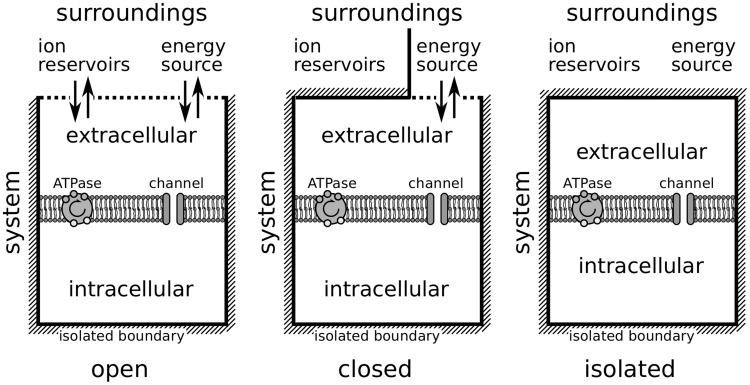
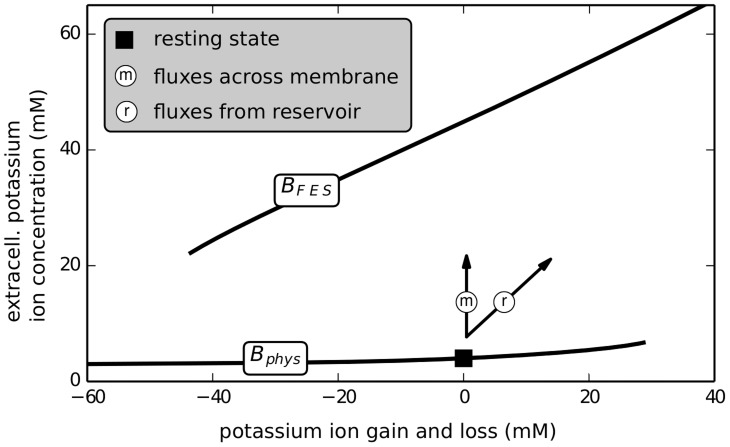
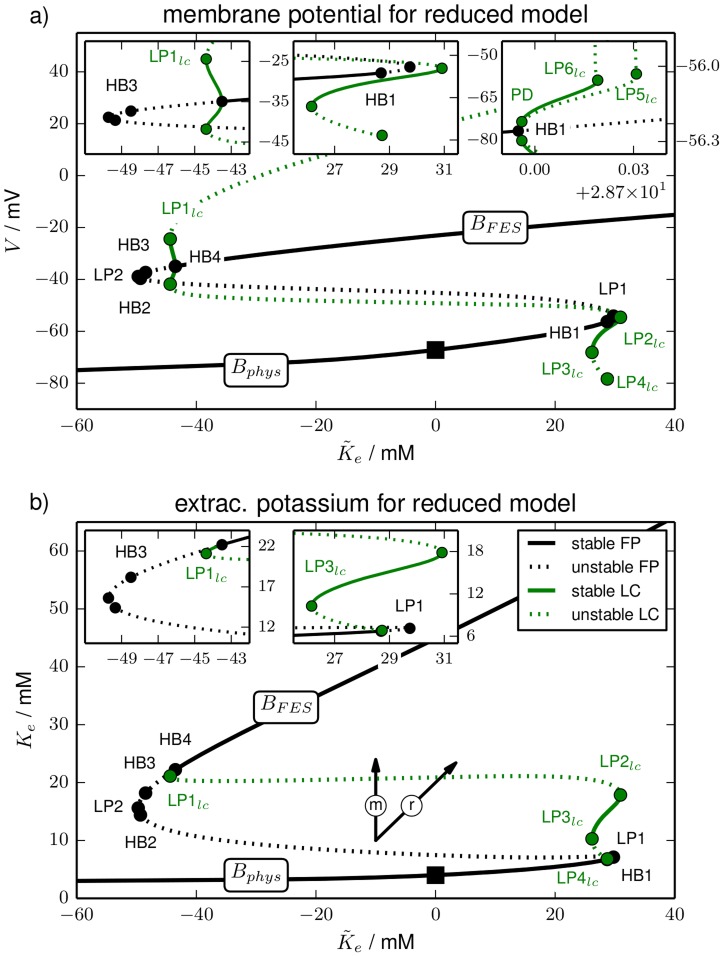
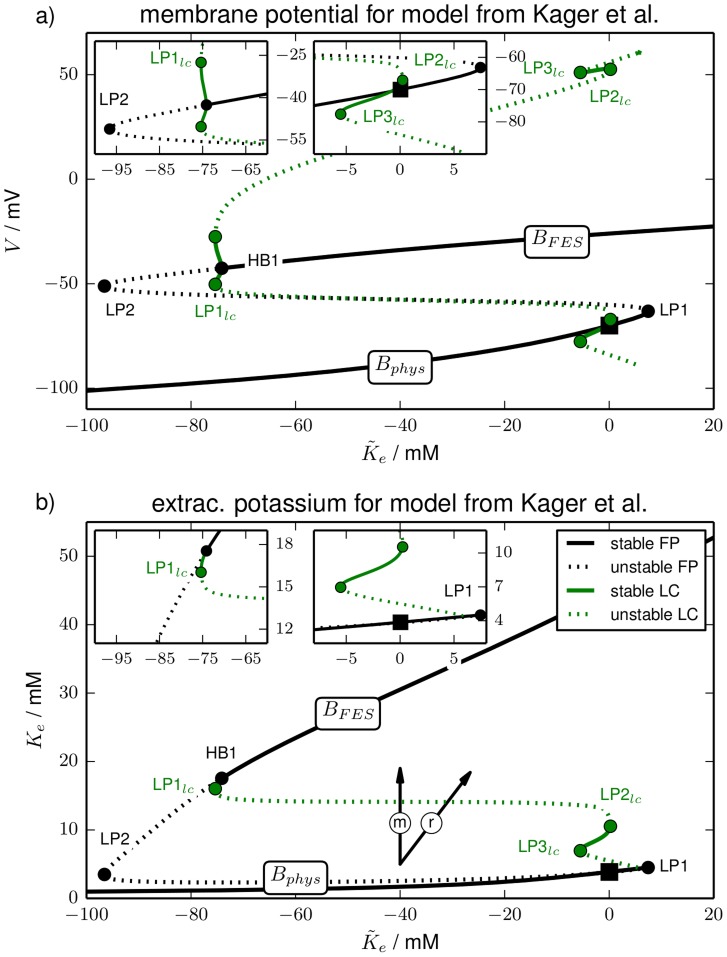
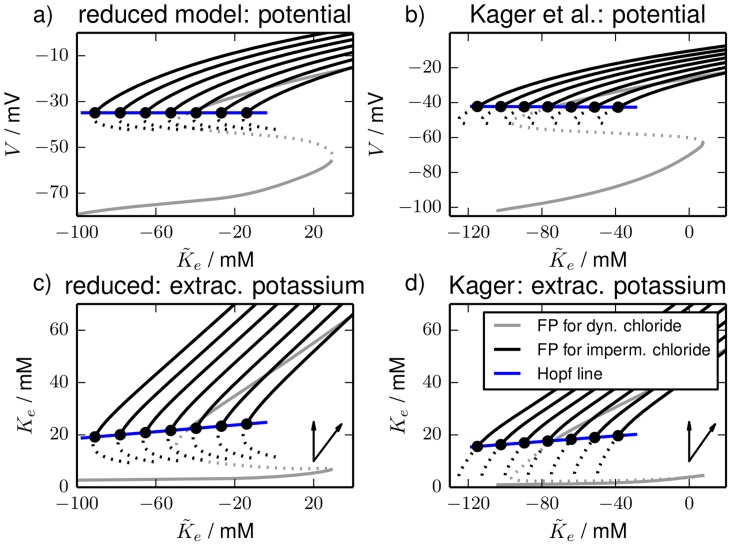
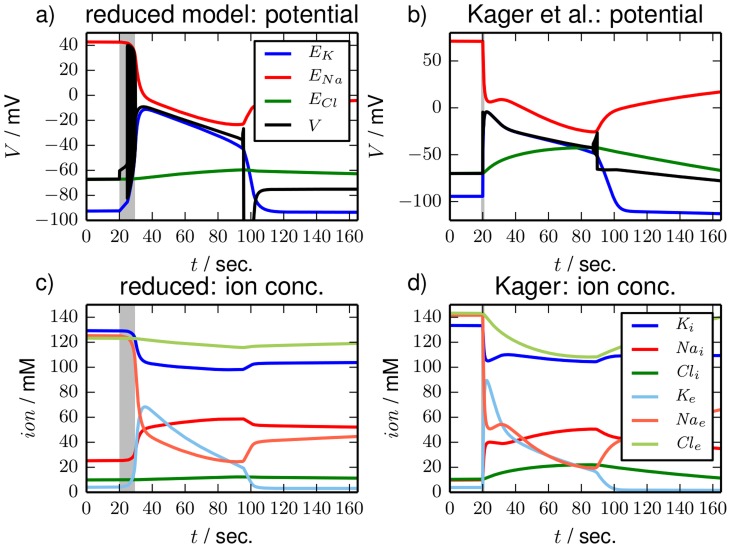
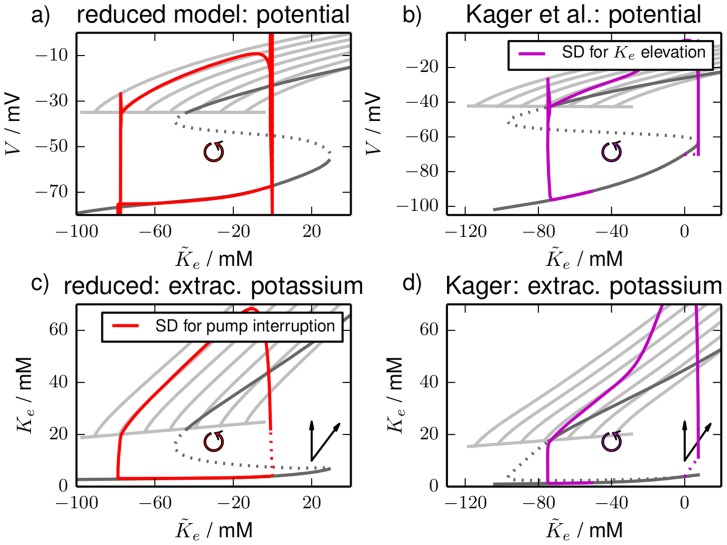
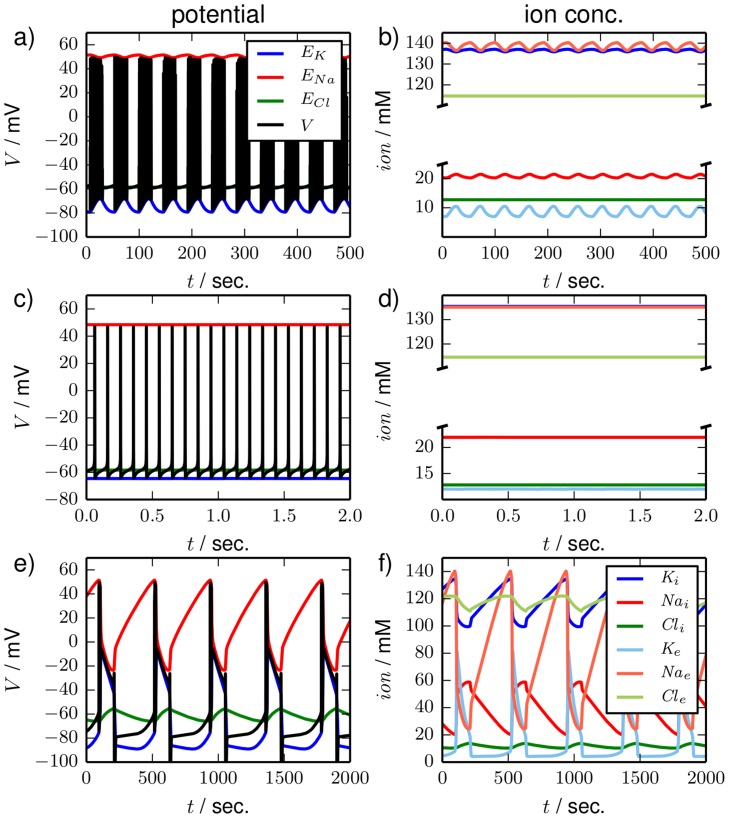
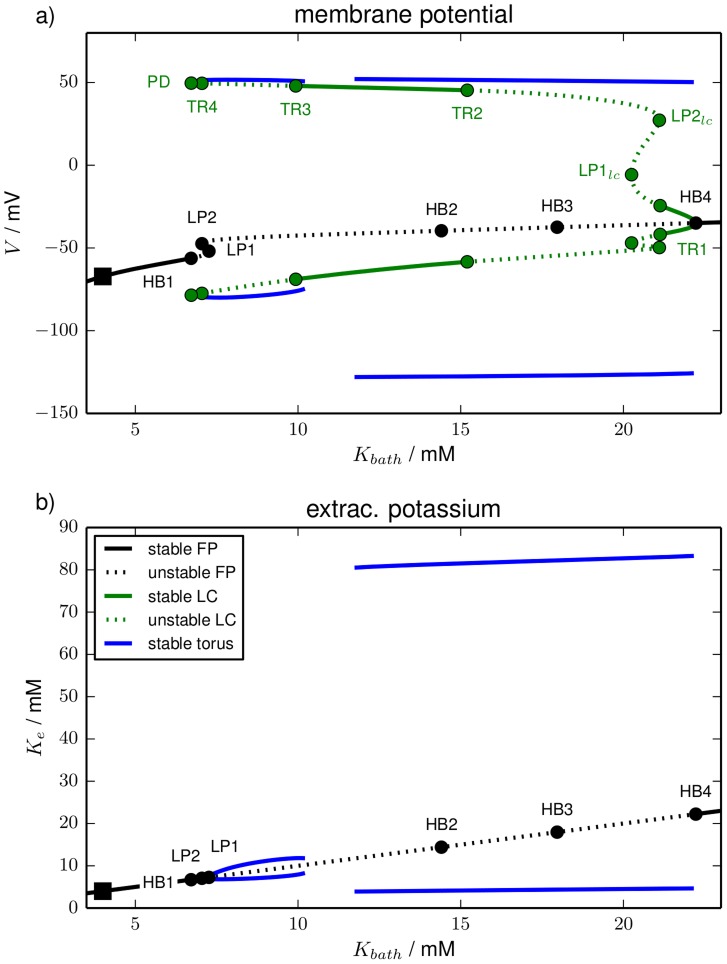
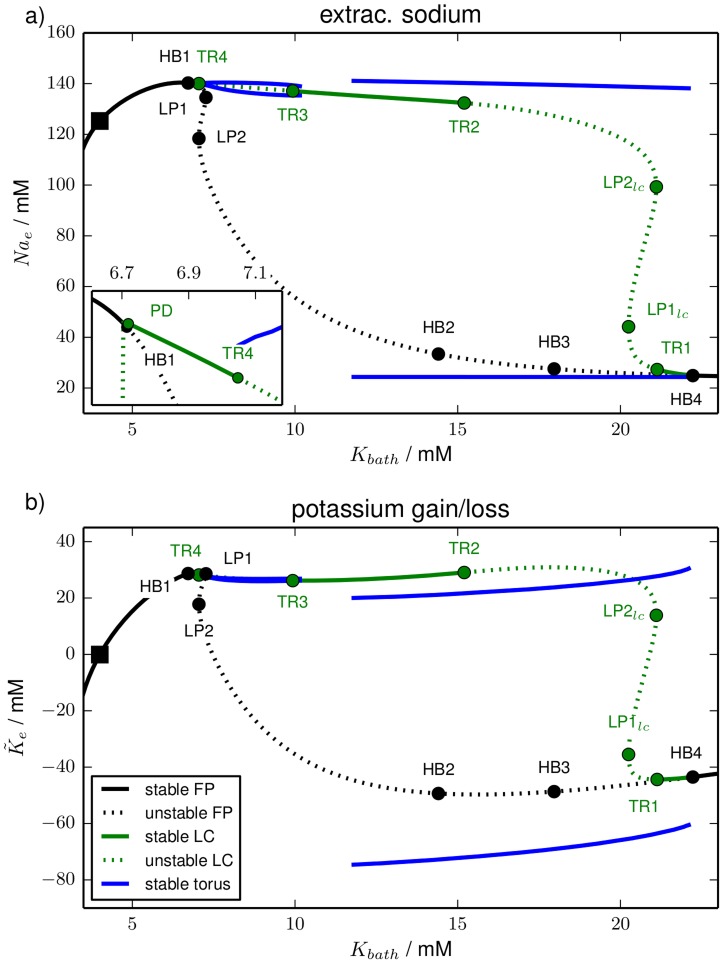
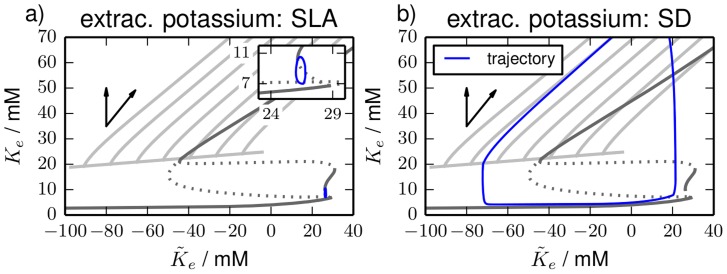
The classical Hodgkin-Huxley (HH) model neglects the time-dependence of ion concentrations in spiking dynamics. The dynamics is therefore limited to a time scale of milliseconds, which is determined by the membrane capacitance multiplied by the resistance of the ion channels, and by the gating time constants. We study slow dynamics in an extended HH framework that includes time-dependent ion concentrations, pumps, and buffers. Fluxes across the neuronal membrane change intra- and extracellular ion concentrations, whereby the latter can also change through contact to reservoirs in the surroundings. Ion gain and loss of the system is identified as a bifurcation parameter whose essential importance was not realized in earlier studies. Our systematic study of the bifurcation structure and thus the phase space structure helps to understand activation and inhibition of a new excitability in ion homeostasis which emerges in such extended models. Also modulatory mechanisms that regulate the spiking rate can be explained by bifurcations. The dynamics on three distinct slow times scales is determined by the cell volume-to-surface-area ratio and the membrane permeability (seconds), the buffer time constants (tens of seconds), and the slower backward buffering (minutes to hours). The modulatory dynamics and the newly emerging excitable dynamics corresponds to pathological conditions observed in epileptiform burst activity, and spreading depression in migraine aura and stroke, respectively.
经典的霍奇金 - 赫胥黎(HH)模型在描述峰电位发放动力学时忽略了离子浓度的时间依赖性。因此,该动力学过程被限制在毫秒级的时间尺度上,这一尺度由膜电容乘以离子通道电阻以及门控时间常数决定。我们在一个扩展的HH框架中研究慢动力学,该框架包括随时间变化的离子浓度、离子泵和缓冲机制。跨神经元膜的通量会改变细胞内和细胞外的离子浓度,而细胞外离子浓度也可通过与周围环境中的储备库接触而发生变化。系统的离子得失被确定为一个分岔参数,其重要性在早期研究中未被认识到。我们对分岔结构以及相空间结构的系统研究,有助于理解在这类扩展模型中出现的离子稳态中新的兴奋性的激活和抑制。调节峰电位发放频率的调制机制也可以用分岔来解释。在三个不同的慢时间尺度上的动力学过程,分别由细胞体积与表面积之比和膜通透性(秒级)、缓冲时间常数(数十秒)以及较慢的逆向缓冲过程(数分钟到数小时)决定。调制动力学和新出现的可兴奋动力学分别对应于癫痫样爆发活动、偏头痛先兆和中风中的扩散性抑制所观察到的病理状况。