Auclair Ghislain, Guibert Sylvain, Bender Ambre, Weber Michael
Genome Biol. 2014;15(12):545. doi: 10.1186/s13059-014-0545-5.
In the mouse, the patterns of DNA methylation are established during early embryonic development in the epiblast. We quantified the targets and kinetics of DNA methylation acquisition in epiblast cells, and determined the contribution of the de novo methyltransferases DNMT3A and DNMT3B to this process.
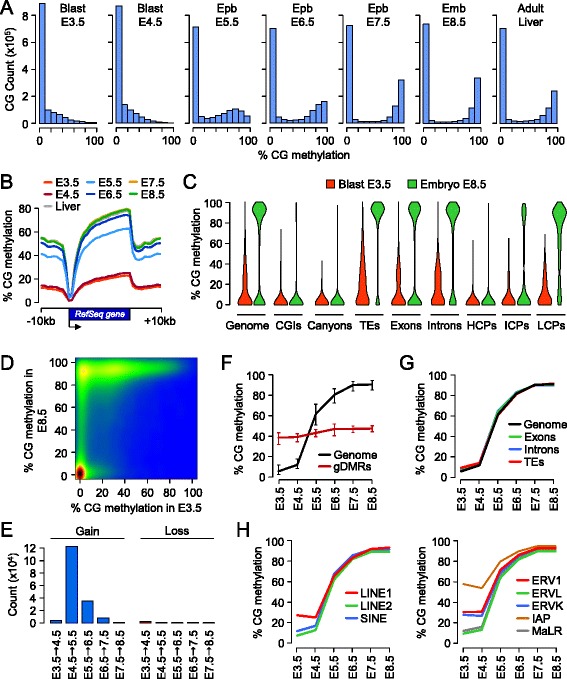
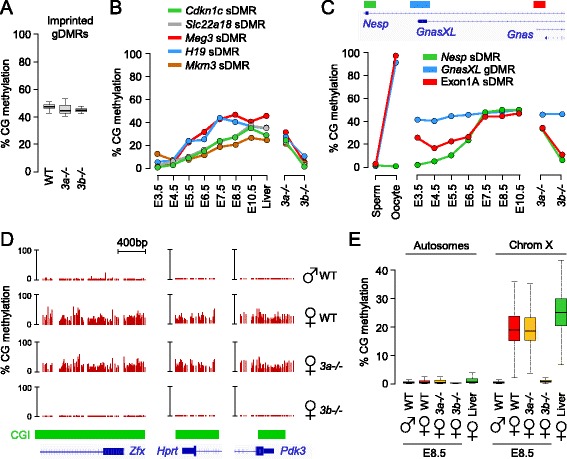
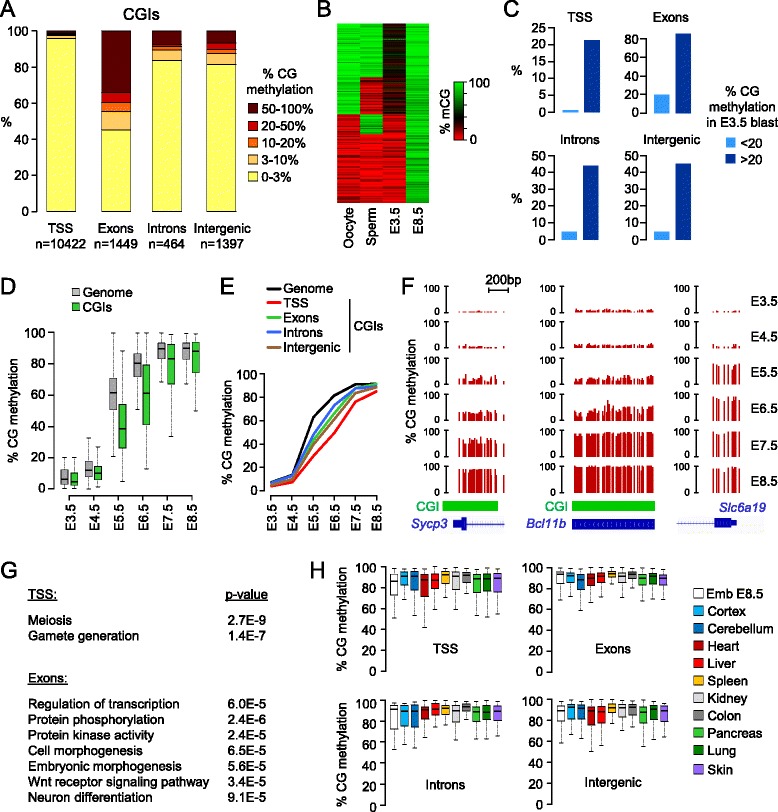
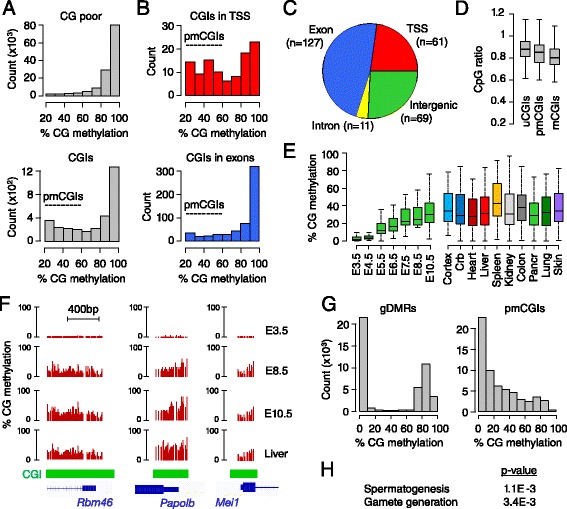
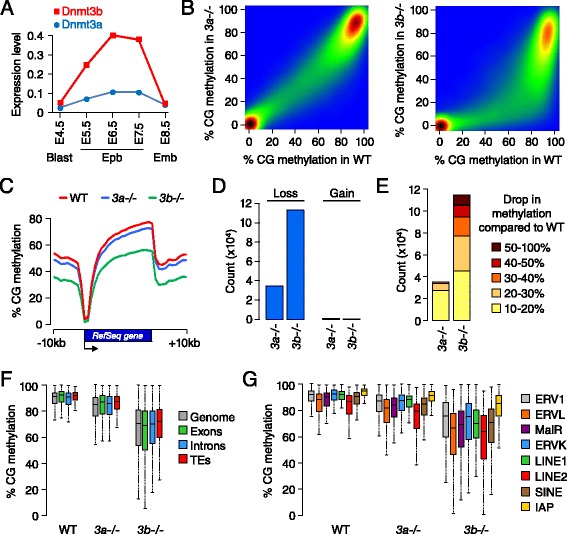
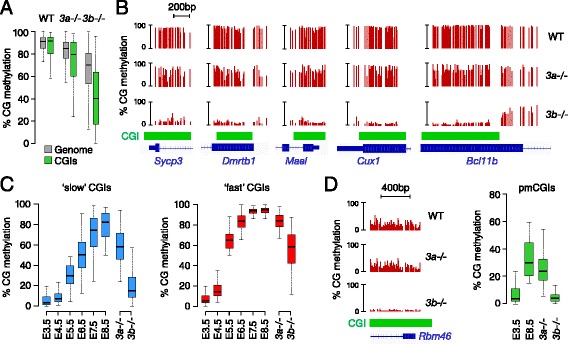
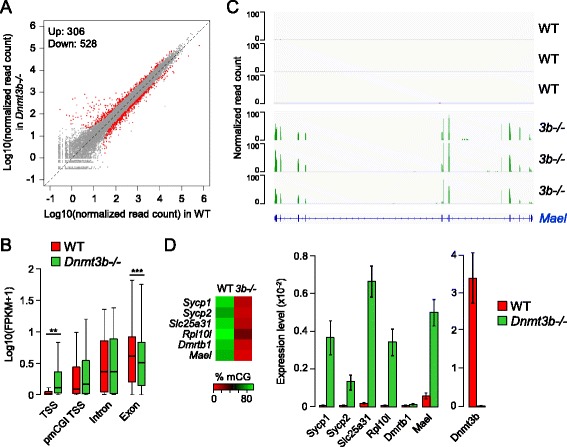
We generated single-base maps of DNA methylation from the blastocyst to post-implantation stages and in embryos lacking DNMT3A or DNMT3B activity. DNA methylation is established within two days of implantation between embryonic days 4.5 and 6.5. The kinetics of de novo methylation are uniform throughout the genome, suggesting a random mechanism of deposition. In contrast, many CpG islands acquire methylation slowly in late epiblast cells. Five percent of CpG islands gain methylation and are found in the promoters of germline genes and in exons of important developmental genes. The onset of global methylation correlates with the upregulation of Dnmt3a/b genes in the early epiblast. DNMT3A and DNMT3B act redundantly to methylate the bulk genome and repetitive elements, whereas DNMT3B has a prominent role in the methylation of CpG islands on autosomes and the X chromosome. Reduced CpG island methylation in Dnmt3b-deficient embryos correlates with gene reactivation in promoters but reduced transcript abundance in gene bodies. Finally, DNMT3B establishes secondary methylation marks at imprinted loci, which distinguishes bona fide germline from somatic methylation imprints.
We reveal that the DNMT3 de novo methyltransferases play both redundant and specific functions in the establishment of DNA methylation in the mouse embryo.
在小鼠中,DNA甲基化模式在胚泡期的上胚层早期胚胎发育过程中建立。我们对胚胎细胞中DNA甲基化获得的靶点和动力学进行了量化,并确定了从头甲基转移酶DNMT3A和DNMT3B在此过程中的作用。
我们生成了从囊胚期到植入后阶段以及缺乏DNMT3A或DNMT3B活性的胚胎的单碱基DNA甲基化图谱。DNA甲基化在植入后第4.5天至6.5天之间的两天内建立。从头甲基化的动力学在整个基因组中是一致的,这表明存在一种随机的沉积机制。相比之下,许多CpG岛在晚期上胚层细胞中甲基化缓慢。5%的CpG岛获得甲基化,这些CpG岛存在于种系基因的启动子和重要发育基因的外显子中。全基因组甲基化的开始与早期上胚层中Dnmt3a/b基因的上调相关。DNMT3A和DNMT3B在甲基化大部分基因组和重复元件方面起冗余作用,而DNMT3B在常染色体和X染色体上的CpG岛甲基化中起主要作用。Dnmt3b缺陷胚胎中CpG岛甲基化减少与启动子中的基因重新激活相关,但基因体内的转录本丰度降低。最后,DNMT3B在印记位点建立次级甲基化标记,这将真正的种系甲基化印记与体细胞甲基化印记区分开来。
我们揭示了DNMT3从头甲基转移酶在小鼠胚胎DNA甲基化建立过程中发挥了冗余和特定的功能。