Ghosh Aparajita, Banerjee Tanushree, Bhandary Suman, Surolia Avadhesha
Division of Molecular Medicine, Bose Institute, Centenary Campus, Kolkata, West Bengal, India.
Department of Biotechnology, University of Pune, Pune, India.
Int J Nanomedicine. 2014 Nov 20;9:5373-87. doi: 10.2147/IJN.S62756. eCollection 2014.
The present study was conducted to overcome the disadvantages associated with the poor water solubility and low bioavailability of curcumin by synthesizing nanotized curcumin and demonstrating its efficacy in treating malaria.
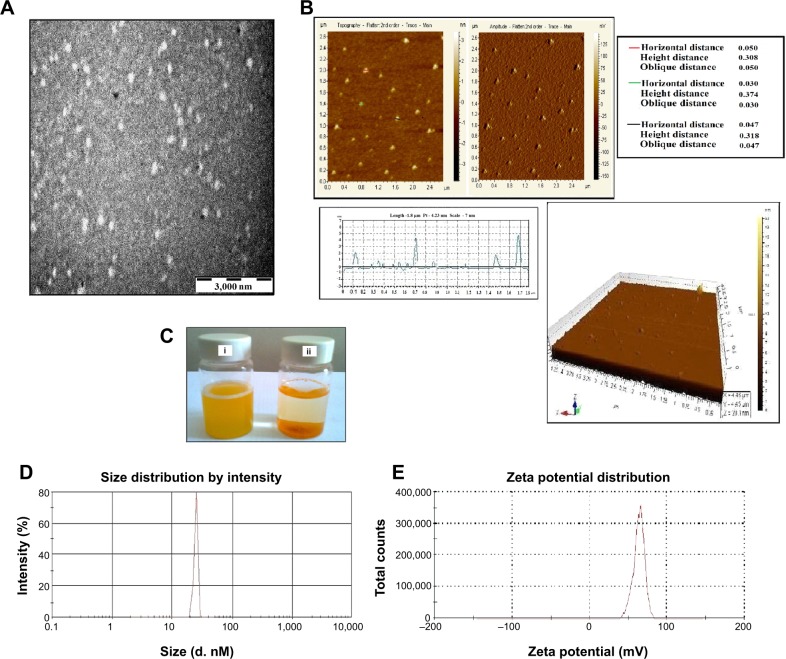
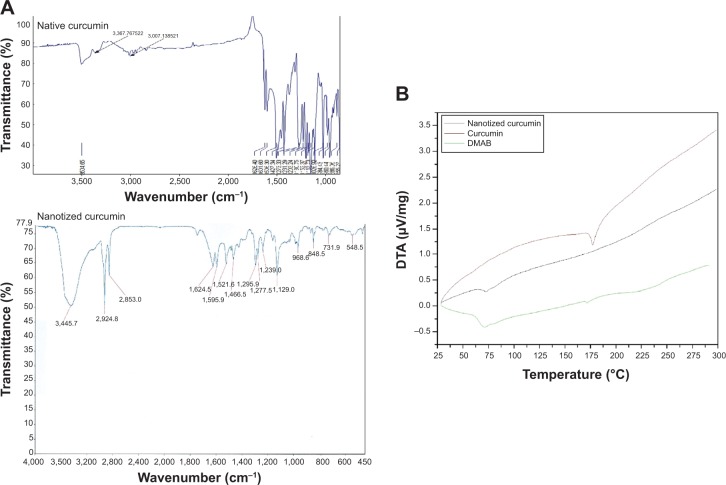
Nanotized curcumin was prepared by a modified emulsion-diffusion-evaporation method and was characterized by means of transmission electron microscopy, atomic force microscopy, dynamic light scattering, Zetasizer, Fourier transform infrared spectroscopy, and differential thermal analysis. The novelty of the prepared nanoformulation lies in the fact that it was devoid of any polymeric matrices used in conventional carriers. The antimalarial efficacy of the prepared nanotized curcumin was then checked both in vitro and in vivo.
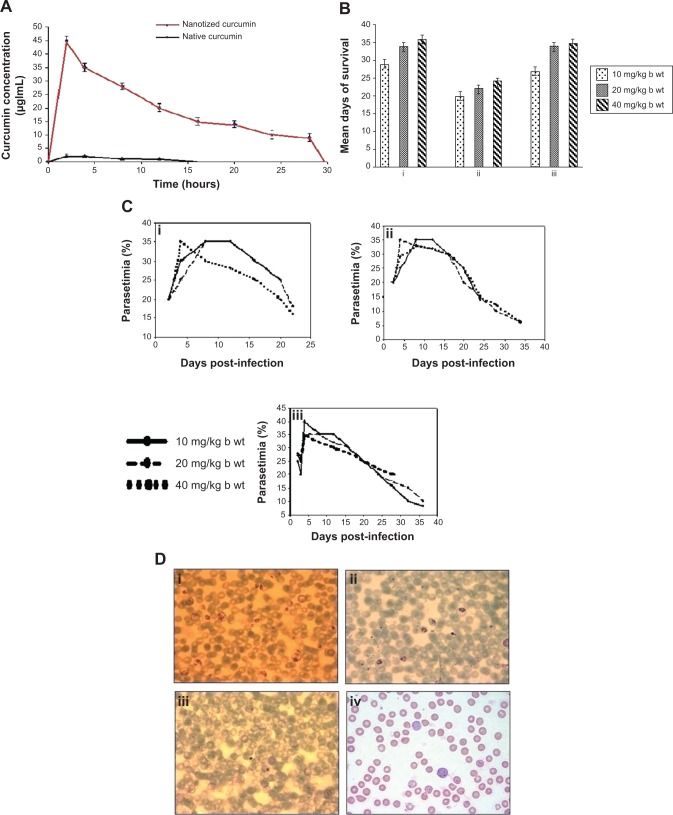
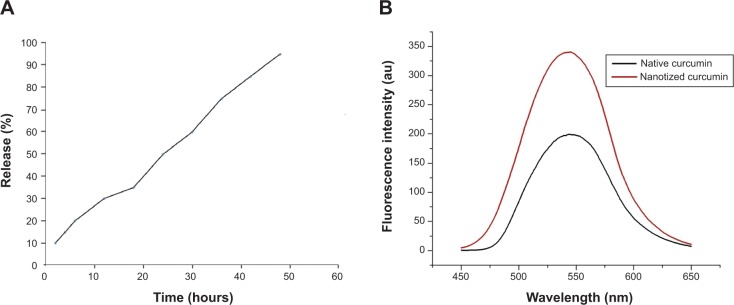
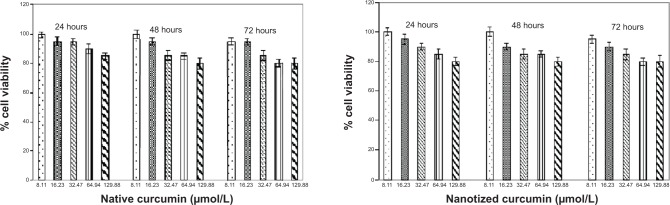
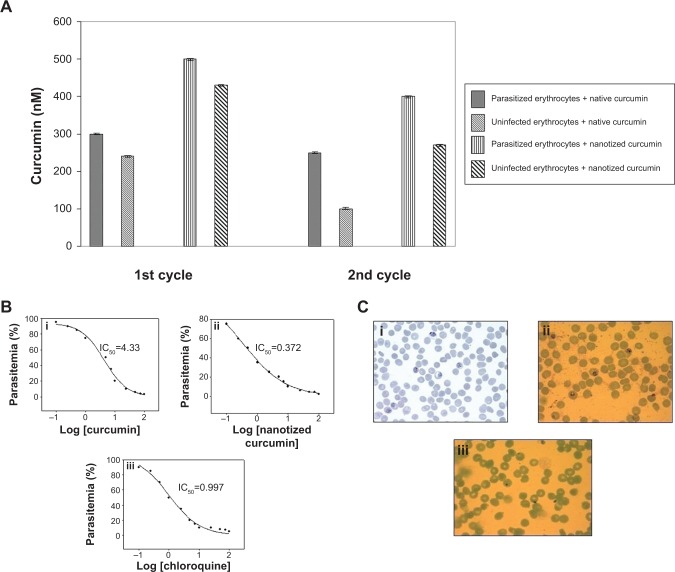
The nanopreparation was found to be non-toxic and had a particle size distribution of 20-50 nm along with improved aqueous dispersibility and an entrapment efficiency of 45%. Nanotized curcumin (half maximal inhibitory concentration [IC50]: 0.5 μM) was also found to be ten-fold more effective for growth inhibition of Plasmodium falciparum in vitro as compared to its native counterpart (IC50: 5 μM). Oral bioavailability of nanotized curcumin was found to be superior to that of its native counterpart. Moreover, when Plasmodium berghei-infected mice were orally treated with nanotized curcumin, it prolonged their survival by more than 2 months with complete clearance of parasites in comparison to the untreated animals, which survived for 8 days only.
Nanotized curcumin holds a considerable promise in therapeutics as demonstrated here for treating malaria as a test system.
本研究旨在通过合成纳米姜黄素并证明其治疗疟疾的功效,克服姜黄素水溶性差和生物利用度低的缺点。
采用改良的乳化-扩散-蒸发法制备纳米姜黄素,并通过透射电子显微镜、原子力显微镜、动态光散射、Zetasizer、傅里叶变换红外光谱和差热分析对其进行表征。所制备的纳米制剂的新颖之处在于它不含传统载体中使用的任何聚合物基质。然后在体外和体内检查所制备的纳米姜黄素的抗疟功效。
发现该纳米制剂无毒,粒径分布为20 - 50 nm,具有改善的水分散性和45%的包封率。还发现纳米姜黄素(半数最大抑制浓度[IC50]:0.5 μM)在体外对恶性疟原虫生长抑制的效果比其天然对应物(IC50:5 μM)高十倍。纳米姜黄素的口服生物利用度优于其天然对应物。此外,当用纳米姜黄素口服治疗感染伯氏疟原虫的小鼠时,与未治疗的动物(仅存活8天)相比,它使小鼠的存活时间延长了2个多月,并且寄生虫完全清除。
如本文以治疗疟疾作为测试系统所证明的,纳米姜黄素在治疗学方面具有相当大的前景。