Chamontin Célia, Rassam Patrice, Ferrer Mireia, Racine Pierre-Jean, Neyret Aymeric, Lainé Sébastien, Milhiet Pierre-Emmanuel, Mougel Marylène
CPBS, UMR5236 CNRS, University of Montpellier, 34293 Montpellier, France.
Centre de Biochimie Structurale, UMR5048 CNRS, University of Montpellier, 34090 Montpellier, France.
Nucleic Acids Res. 2015 Jan;43(1):336-47. doi: 10.1093/nar/gku1232. Epub 2014 Dec 8.
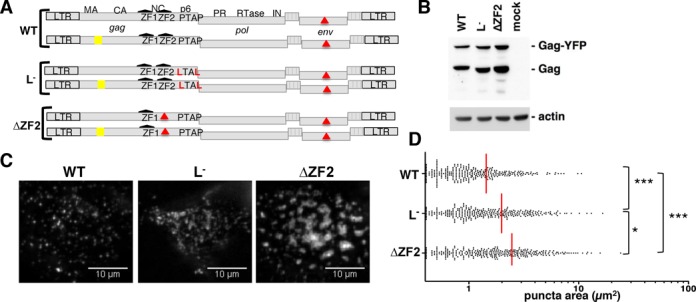
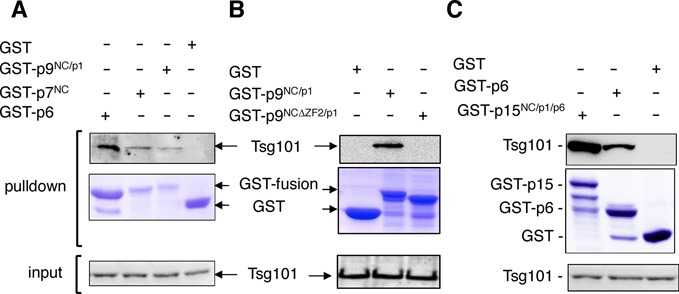
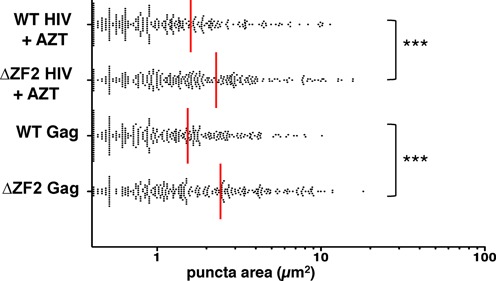
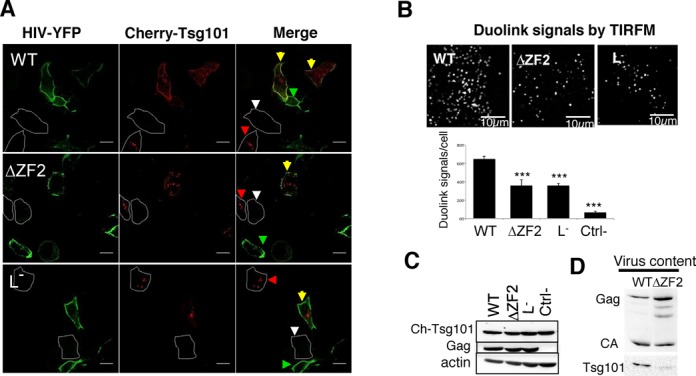
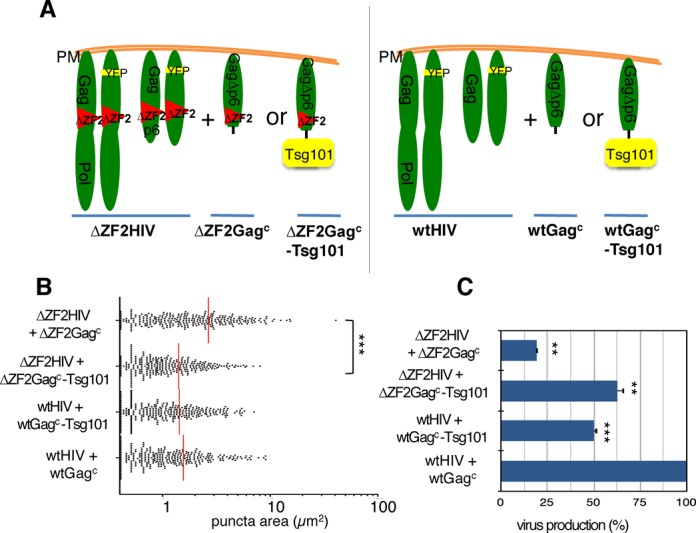
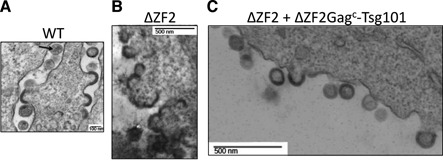
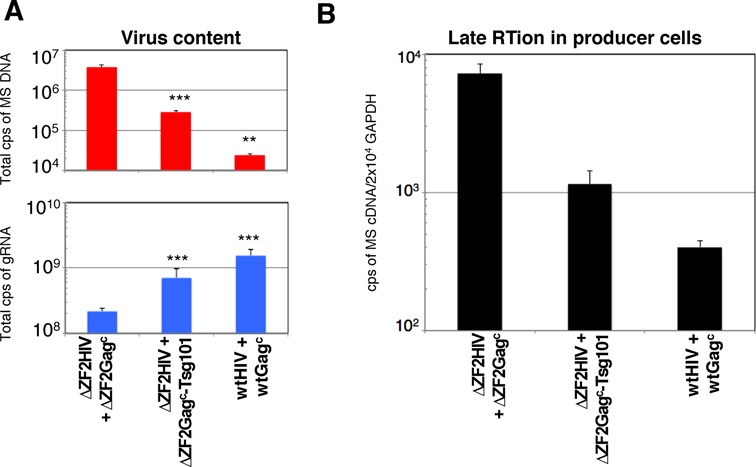
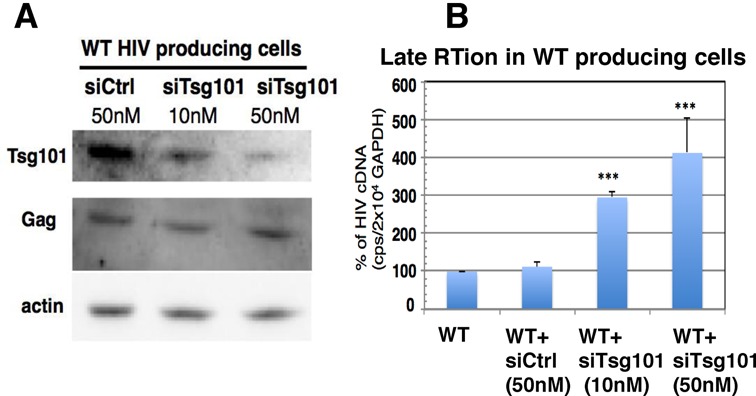
HIV-1, the agent of the AIDS pandemic, is an RNA virus that reverse transcribes its RNA genome (gRNA) into DNA, shortly after its entry into cells. Within cells, retroviral assembly requires thousands of structural Gag proteins and two copies of gRNA as well as cellular factors, which converge to the plasma membrane in a finely regulated timeline. In this process, the nucleocapsid domain of Gag (GagNC) ensures gRNA selection and packaging into virions. Subsequent budding and virus release require the recruitment of the cellular ESCRT machinery. Interestingly, mutating GagNC results into the release of DNA-containing viruses, by promo-ting reverse transcription (RTion) prior to virus release, through an unknown mechanism. Therefore, we explored the biogenesis of these DNA-containing particles, combining live-cell total internal-reflection fluorescent microscopy, electron microscopy, trans-complementation assays and biochemical characterization of viral particles. Our results reveal that DNA virus production is the consequence of budding defects associated with Gag aggregation at the plasma membrane and deficiency in the recruitment of Tsg101, a key ESCRT-I component. Indeed, targeting Tsg101 to virus assembly sites restores budding, restricts RTion and favors RNA packaging into viruses. Altogether, our results highlight the role of GagNC in the spatiotemporal control of RTion, via an ESCRT-I-dependent mechanism.
人类免疫缺陷病毒1型(HIV-1)是艾滋病大流行的病原体,它是一种RNA病毒,在进入细胞后不久就会将其RNA基因组(gRNA)逆转录为DNA。在细胞内,逆转录病毒组装需要数千个结构Gag蛋白、两份gRNA以及细胞因子,它们在精确调控的时间轴上汇聚到质膜。在此过程中,Gag的核衣壳结构域(GagNC)确保gRNA的选择并包装进病毒粒子。随后的出芽和病毒释放需要募集细胞内的内体分选转运复合体(ESCRT)机制。有趣的是,通过一种未知机制,在病毒释放前促进逆转录,使GagNC发生突变会导致含DNA病毒的释放。因此,我们结合活细胞全内反射荧光显微镜、电子显微镜、反式互补分析以及病毒粒子的生化特性分析,探索了这些含DNA粒子的生物发生过程。我们的结果表明,DNA病毒的产生是由于与质膜上Gag聚集相关的出芽缺陷以及关键ESCRT-I组分Tsg101募集不足所致。事实上,将Tsg101靶向病毒组装位点可恢复出芽、限制逆转录并有利于RNA包装进病毒。总之,我们的结果突出了GagNC通过一种依赖ESCRT-I的机制在逆转录的时空控制中的作用。